Monthly Archives: July 2026

Moko-chan – Interview on THE GHOST IN THE SHELL

Original interview from SCREENα vol.8 2026, original interviewer: 横森文; genga from the official 2nd PV.


Ghost in the Shell had a huge influence on me, both creatively and in how I see life.

— First of all, please tell us about your encounter with Ghost in the Shell.

I encountered Shirow Masamune-sensei‘s manga [“攻殻機動隊”, 1989-1991] and Director Oshii Mamoru’s “GHOST IN THE SHELL: Koukaku Kidoutai” [“GHOST IN THE SHELL / 攻殻機動隊”, 1995] movie around the same time. I loved both, and both influenced me. What personally struck me the most—and this is true of both—is the way they turn even the outermost frame of the work itself into part of their expression.

— What do you mean by that?

For example, the original author Shirow Masamune-sensei usually writes notes in the margins of the page, essentially a declaration that “this is manga”. It’s as if there’s another layer on the outside of the body, and his expression feels multi-layered. Director Oshii does the same thing, on top of establishing that “this is anime”, he then turns that expression back on itself to create meaning, with something like “but it’s incredibly and relentlessly dark”. I suppose it can be described as making the meta-layer itself into a site of expression.
I feel like Ghost in the Shell opened the door to that sensibility for me. That’s why both the manga and the movie had a huge influence on me, both creatively and in how I see life. Even as I live my own life, I feel like there’s always an annotation coming in from a layer above.

— What would you say Director Oshii’s influence was in particular?

I believe Director Oshii’s works are actually really humorous and wonderful. The direction is never monolithic. Characters mutter away without moving a muscle. Watched on that layer, it feels serious, but if you watch it one layer above, it’s like, hold on, this is anime…!? What do you mean it’s this dark and static for an anime!? That’s how it starts to feel. It’s like he builds a “waiting for you to call it out” structure right into the work, on the very top layer. I always get the feeling that he’s trying to surprise you, or make you laugh.
In life, we sometimes get swallowed up by our own emotions, but no matter what the emotion is, it only holds true within that particular “field of meaning”. I’d like to keep that in mind, and hope I can always go about my life with a smile on my face. The one who showed me that approach, of building in a multi-layered structure and planting humor within it, was Director Oshii, I think.

Ghost in the Shell, made by the very person who opened your eyes to all this, already stands as a masterpiece. In this context, what made you decide to instead deliberately lean closer to the original manga in adapting the same work?

From as early as the proposal phase, it was already decided that this time it would be “based on the original manga”. That said, how closely to adhere to the original was left up to me; they kept it vague, without pinning down anything specifically. But once we were actually about to begin, listening to the opinions and inputs of various people made me change my mind, and I decided that: “We’re actually going to adapt the original itself into anime”. The reason being, the original manga The Ghost in the Shell has a very long history, and it’s a work packed with as many personal feelings to it as there are people who love it. To take that, reinterpret it, and put my own version out there felt somehow wrong, like I’d be appropriating the work. That’s what made me change my mind. After all, I’m an anime-maker, a moving-pictures director. It’s up to the original author to decide what to depict, and what’s up to me is the how… That’s the mindset I intended to approach this project with.
So… anyway, I just gave it everything I had (laughs). I mean, Shirow-sensei‘s original manga is anything but easy to follow, you know. What does this even mean, why does this particular phrasing show up here… Of course all kinds of puzzles came up, so at that point all I could do was give it my all.

— I agree, the original really is a challenging read.

I went into it feeling it was okay to admit the things I didn’t understand. When you think about it, human beings actually understand very little about the world. It’s even hard to say we truly understand ourselves. And in reality, even the pros don’t really know how to make an anime that works. In the end, I’ve come to feel that whether you understand it or don’t, whether you have some intention behind it or not, none of that actually matters all that much. What really matters is to open your heart and let your body act, I guess?
When I let my hands move on their own, the phrasings and the comedic sense that I struggled to grasp at first just clicked. In that instant, I felt the original work and my heart melting into each other. I think what I was trying to do was fuse with the original manga spiritually, somewhere beyond intent or understanding. Whether I actually pulled it off, I don’t know, but that was my approach. So, yeah, all I could do was throw my whole body into it.

— And as part of your approach, it seems you chose to use very little CG in the production.

Since I was trying to do things the way I just described, I chose to stick to hand-drawn animation. I thought it would be beneficial to challenge the limits of the body. Even the scenes with the Fuchikomas (the AI-equipped tanks) rolling around were hand-drawn to a considerable extent. But it’s not like I intentionally tried to lower the usage of 3DCG. Before the production started, I tried my hand at some 3D software, and I feel like there are many interesting expressions that you can only achieve with 3D. So, for this project, the desire to do the things that you can only pursue in 3D became a sort of underlying theme in my own mind. Anything we could pull off by hand if we put in enough effort, we drew by hand; in exchange, the idea was that this would free up the energy to pour into the spots that could only be achieved in 3D. For example, the action sequence where the Fuchikomas get shot at and scramble to escape; I wanted to swing the camera around freely, so we built a set in 3D exactly to the art-direction specs, and shot the scene within the three-dimensional space where we actually had the Fuchikomas run around. We made the entire set for just a handful of cuts, so it was really a luxurious use of 3D. But ultimately, the richness of the result came through on screen, so I’m glad we did it. It turned out a really, really fun cut. I’m truly grateful.
Additionally, we meticulously used 3D for a bunch of other things, like the cars and roads. It made me re-evaluate the strengths of 3DCG, and I think it’s that the depiction of space is more mathematical than what humans can draw. Hand-drawing is a world of physicality, so when mathematics—something the body can’t intervene in—suddenly enters that world, it’s as if you’re being shown, forcefully, that the world doesn’t belong to humans. There was a floaty kind of pleasure in that, and I found it a lot of fun.

— In leaning closer to the original’s artwork this time, what did you come to newly appreciate as the appeal of Shirow-sensei’s work?

Shirow-sensei‘s art feels very warm, soft and gentle. His drawings have a lot of heart. That feeling was something I wanted to treasure in the animation itself. As I said earlier, I wanted to challenge this project purely as a moving-pictures director, delegating all the decisions regarding its ideology and philosophy to the original work. However, during the actual production, there were some scenes where it was necessary I made those decisions myself. On those occasions, I gazed at the manga, and tried to think my way into the mindset of the person who made those drawings. So, what I was really doing was assimilating myself as much as possible with Shirow-sensei through his art, sort of like a spirit medium channeling the dead [Shirow Masamune is, for the record, still very much alive, t.n.]… It really was quite a spiritual way of working.

— I have to say, I’m very surprised. This project is your directorial debut, and usually you’d want to stamp your own personal touch on your first work. To set that aside and devote yourself to channeling Shirow-sensei‘s worldview like a medium… that’s a pretty remarkable thing to do.

I mean, I can’t confidently say that I understand Ghost in the Shell. That said, I couldn’t very well make it while still not understanding it either, so I think that was the only way. It meant entrusting my own body and career to someone else’s soul, so that part really did take some resolve and felt like a real challenge, even to myself. But I wanted to venture into territory I didn’t understand, and I did actually manage to reach that unknown place, so it was fun. I feel like I became a different person after working on this.
In terms of the visual construction, I believe the aspect Shirow-sensei treats with the most care is the fact that “the characters exist in their world”. So, I particularly paid attention to the credibility of the space, and to make the movement that exists there feel authentic. There are all sorts of ways to perceive space and motion, so unless you unify everything under a single cognitive tendency, the whole worldview starts to unravel. I did my best in that regard… However, unifying things right down to the cognitive tendency of space in a TV series did feel like a pretty tall order. I’ve heard that with theatrical films, you can chase this kind of attention to detail much further. So, if I could someday carry this world all the way to a feature film, that would make me really happy.


China – Interview on Kamiina Botan, Yoeru Sugata wa Yuri no Hana

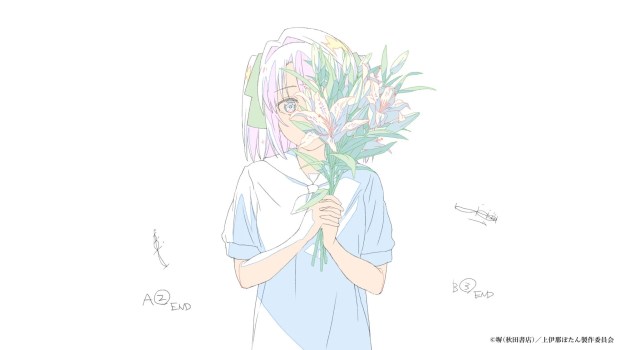
Original interview from Febri, published on May 05th 2026, as part of the Kamiina Botan Staff Relay Interview series, original interviewer: 太田祥暉 (oriminart); genga from the official website.


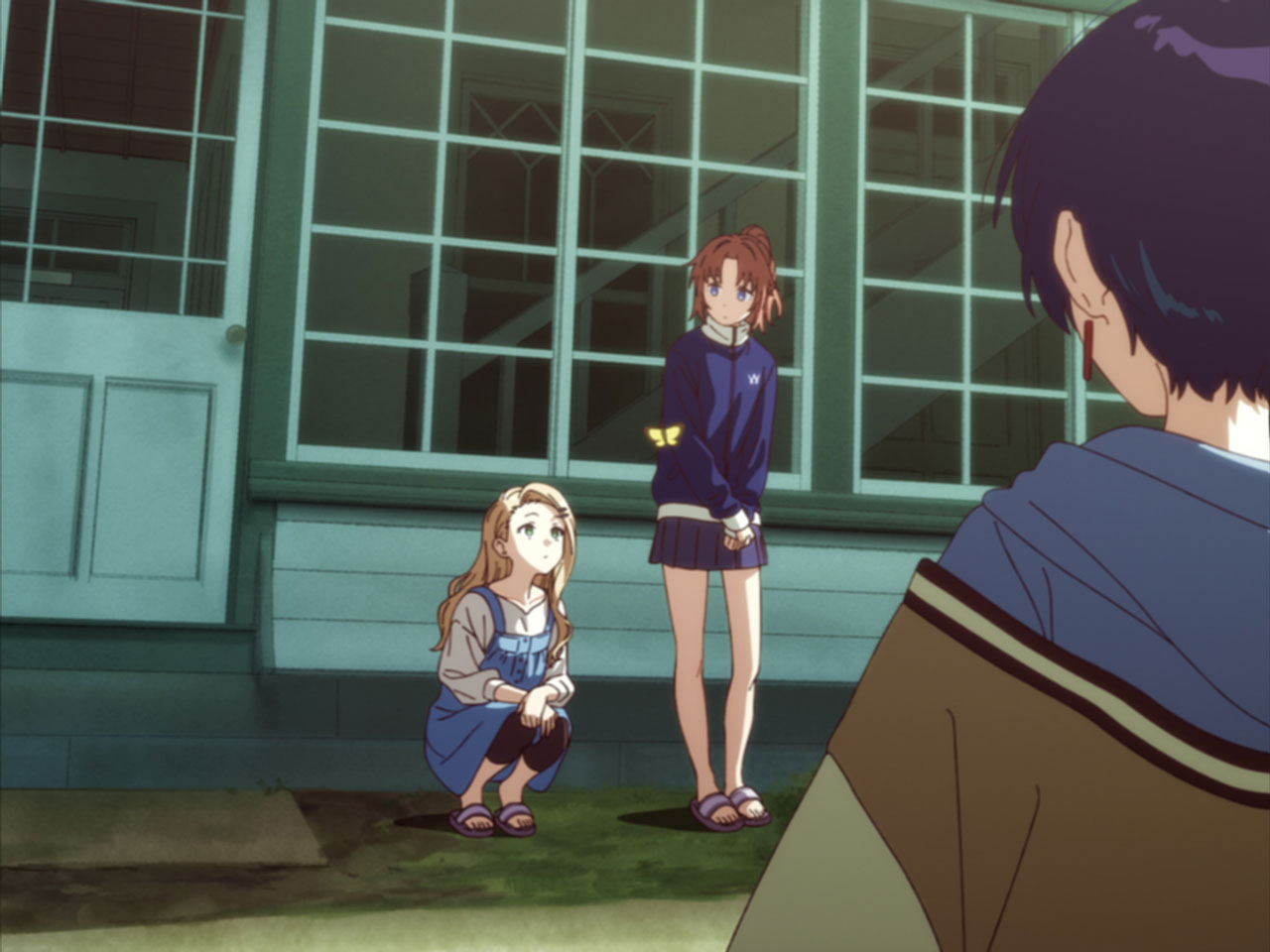
“Kamiina Botan, Yoeru Sugata wa Yuri no Hana” (from now on, just Kamiina Botan) has showcased the personality and idiosyncrasies of the enshutsu & animators in each episode, and this policy isn’t limited just to the show itself, but has been applied to the opening movie as well. Today we invited China, who was in charge of the enshutsu and storyboard, to talk at length about this peculiar opening movie, which exists in two versions, the regular one from the broadcast and a “complete version” in a 4:3 aspect ratio.


I realized they wanted an OP movie that would express my personality

— The OP movie for Kamiina Botan has a “complete version”, different from the one included in the broadcast, which was made in 4:3. What was the occasion that first drew you to this aspect ratio?

The first time I directed an MV [“Sore wo Ai to Yobu Dake”, それを愛と呼ぶだけ, 2020], this was my chance to work in a format different from TV Anime, so I thought I’d make something I simply couldn’t do for TV. That time was the first occasion. For that MV, at first I drew the storyboard using Cinema Scope [2.35:1], but when I asked Tsuchigami Itsuki, who was participating as an animator, for his feedback, he suggested: “Rather than using Cinema Scope to emphasize space, wouldn’t it suit you better to place the emphasis on the characters with 4:3?”. I took his advice, and while making anime in the 4:3 aspect ratio, I realized that kind of frame is a perfect fit for the expressions I want to evoke on the screen. From that moment onward, I kept using that aspect ratio in the works I directed, like “Detarame na Sekai no Melodrama” [でたらめな世界のメロドラマ, 2023] and “First Line” [ファーストライン, 2024], and perfected it with a trial-and-error process.

— I see. So, while you were still experimenting with it, the offer to work on the opening movie for Kamiina came in.

Yes. However, this time, I wasn’t planning on using 4:3 from the start. During the brainstorming session with Production Assistants (Shota) Hiyama-san and (Norimasa) Fujita-san, and Animation Director (Sakura) Watabe-san we had before I started working on the storyboard, we discussed with the assumption that it would be made in 16:9. But as I started working on it in 16:9, I couldn’t quite put it together in a way that felt good… So, I once again tried to reconsider my approach towards this work. I was invited on this project by (Hikaru) Murakami-san, who I’ve known since “Yama no Susume”, and not only that, but I knew this show would feature a solo-key animation episode by (Yuusuke) Matsuo-san, and the ED movies by (Kou) Yoshinari-san… Since I was called on this kind of production, I realized I too should have made something that would truly express my personality. So, I thought I’d make “something I wouldn’t be able to do in TV anime”, and “if I go too far, I’ll let Director Sakuma or Hey-sensei pull the brakes”. So, I changed the canvas’ aspect ratio to 4:3 and started redrawing the storyboards.

— And that idea got accepted as-is. The OP movie tells a short story, how did you go about its composition?

First of all, when I was reading the original, I thought the protagonist, Kamiina Botan, was a very elusive and inscrutable character. My first idea was that it would be interesting to explore the relationships between the girls at the dorm, while presenting the question of who she really is in a documentary-like fashion. That said, not much of that suspense element actually remains… As for the visual gimmick, the movie is structured around the dorm girls taking turns filming each other with an 8mm camera; the idea being that by evoking the relationship between the character holding the camera and the one being filmed, I wanted to portray the “direction” of their relationship, like an “arrow”, which is one of the work’s key concepts. Also, in order to bring out a sense of realism, I made the OP at 18 frames per second, as if it were filmed using the same camera they have in the show. Due to equipment-related reasons, this caused a lot of trouble to the photography and editing teams, but I felt that by not just going for an 8mm-like visual aesthetic, and instead also matching the frame-rate to that of the actual film Botan and the others are taking, we could bring out a greater sense of reality.

— The OP also makes frequent use of cinecalligraphy-like cuts [a technique where text, lines, and drawings are created by physically scratching the film surface], could you tell us more about that?

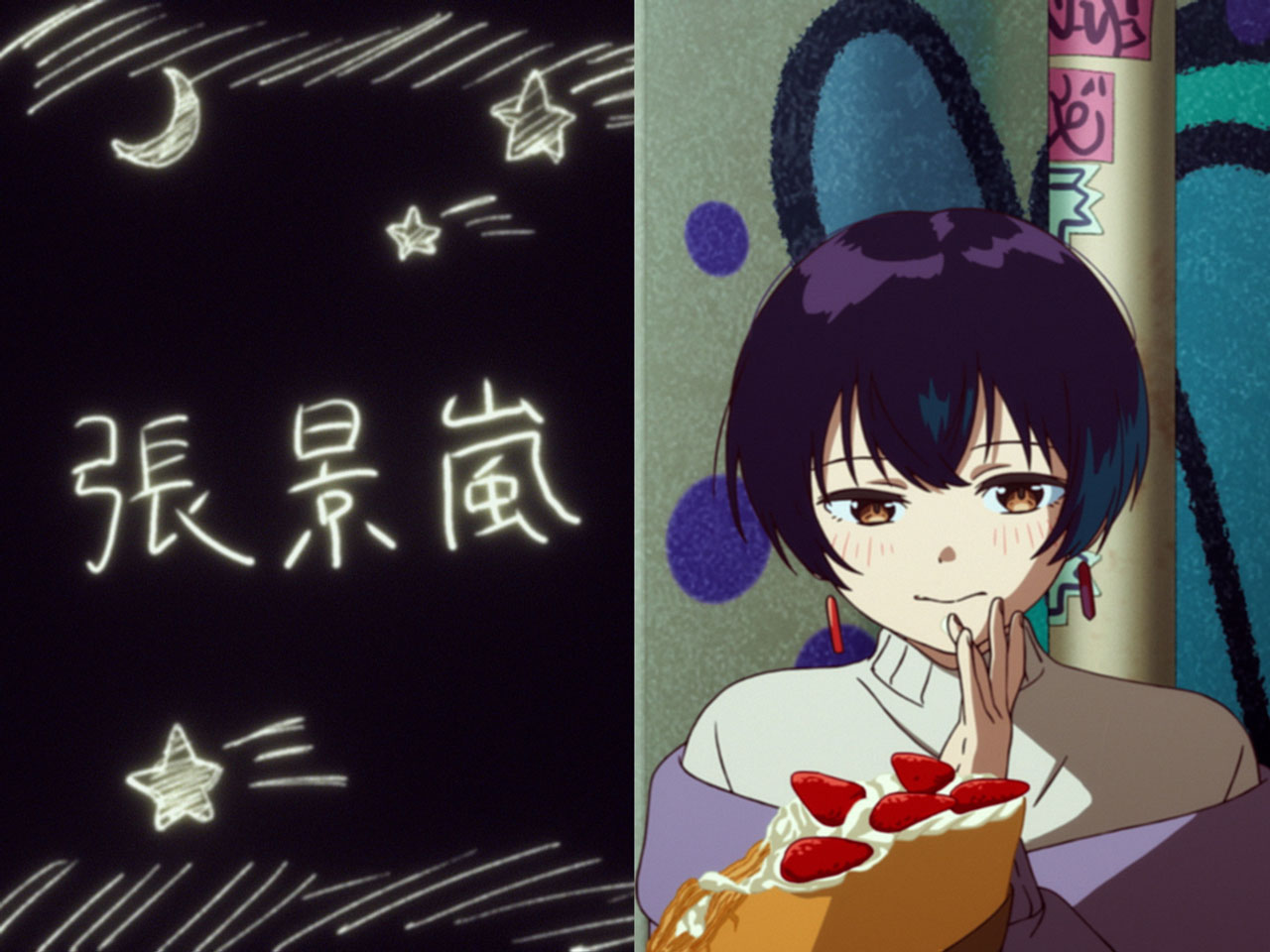
When I was trying to figure out what sort of things Botan and the others would likely play around with, I thought of cinecalligraphy. It’s a technique used in some trendy MVs, and I thought they might be watching those kinds of things. By the way, each character has her own defined handwriting, so we used reference material for each of them to make those cuts.

The only request was: “Don’t make the Director’s credit too big”

— Well then, I’d like to talk about things following the order in which they appear. From the intro into the opening vocals, Botan turns around and rises from her chair, and the A-section of the song features candid shots of the dorm residents.

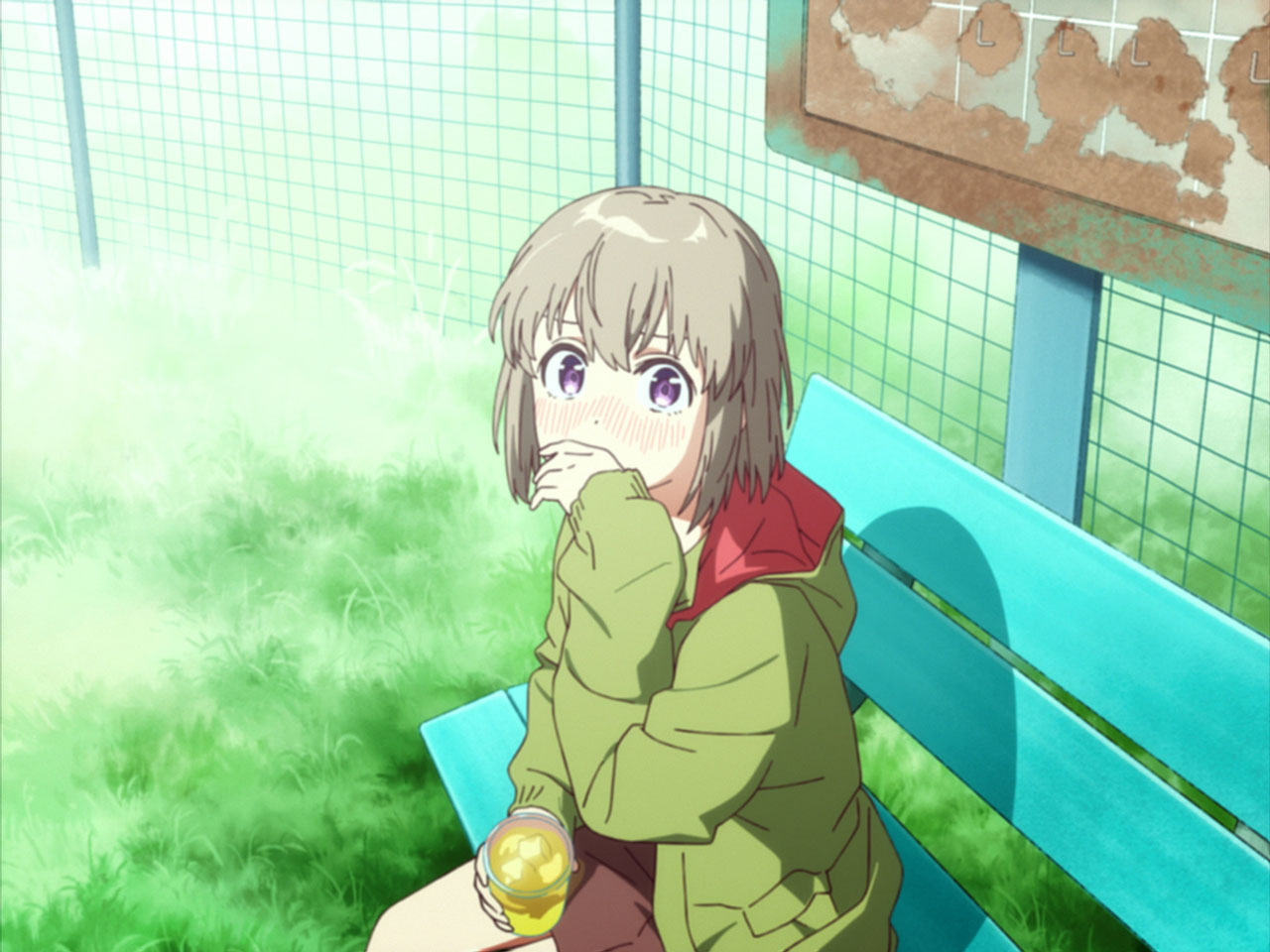
The concept for this OP was “the dorm girls pointing the camera at each other”. How would each of them react to the camera being pointed their way? What expressions would they make? Or even, with what sense of distance would they point the camera? I thought up each cut while keeping these questions in mind. I was also conscious of using lighting to indirectly imply the feelings the character filming has for the subject. And I chose the shots by thinking what moments would the girl recording think of as dear of the girl being filmed. The shot of Kanade looking at her PC with hollow eyes was also perceived as dear and lovely by the character filming it… that was the idea behind it.

— When B-section starts, balloons appear, and the outside of the dorm also makes its appearance.

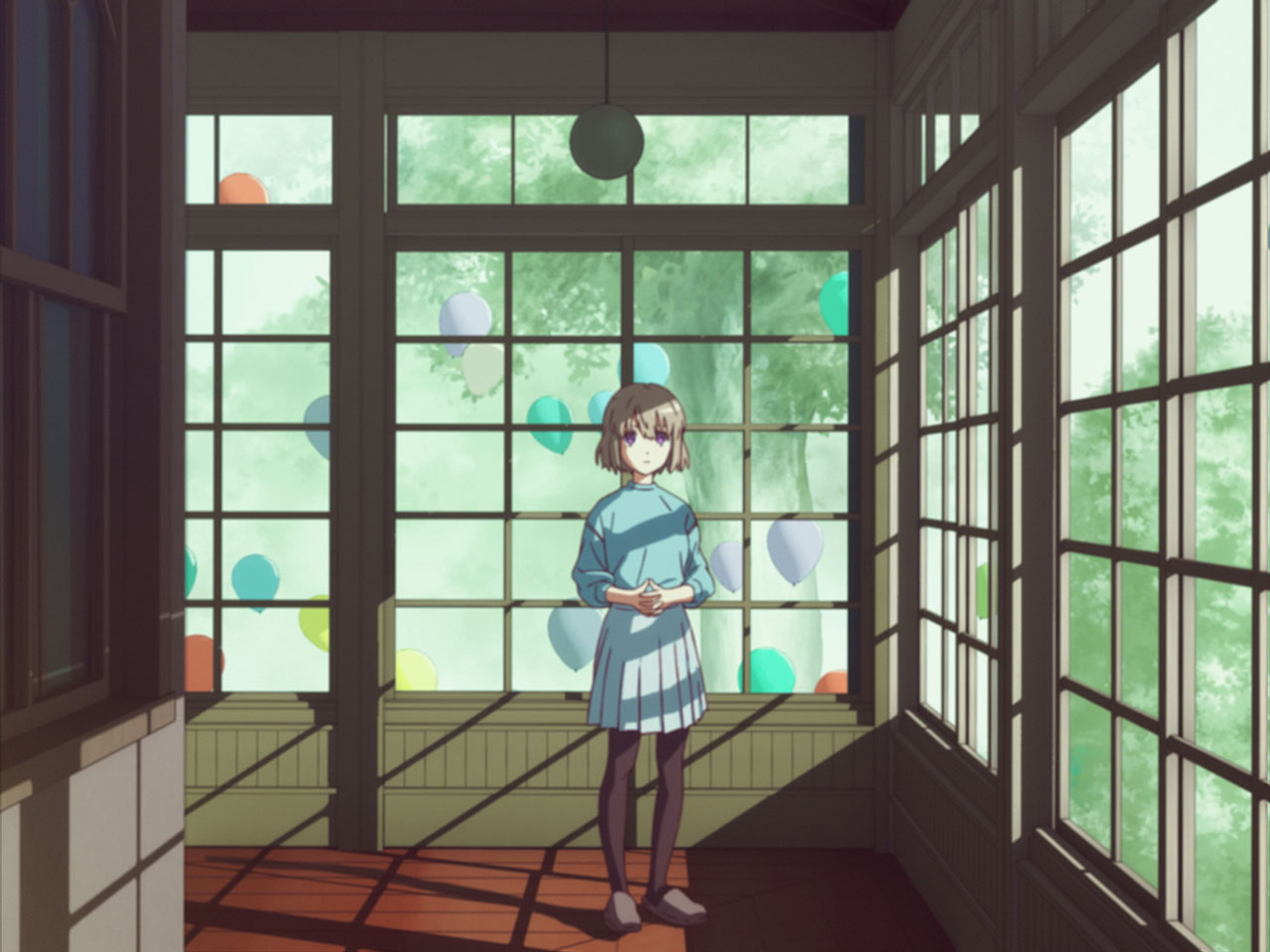
I was thinking of Botan and the others trying to set up a surprise for Ibuki, and those shots are the result. I wanted the balloons to release at the beginning of the chorus, so I started from there and worked things backwards. Also, the reason I made the dorm the setting for the OP, is because I believe the main characters of Kamiina Botan aren’t just the six students residing there, but also the dorm’s building itself. If it weren’t for it, the six of them wouldn’t have met, so I wanted to beautifully portray the dorm as a proper character as well.

— And when the chorus starts, the lyrics “Nee” appear on the screen as cinecalligraphy.

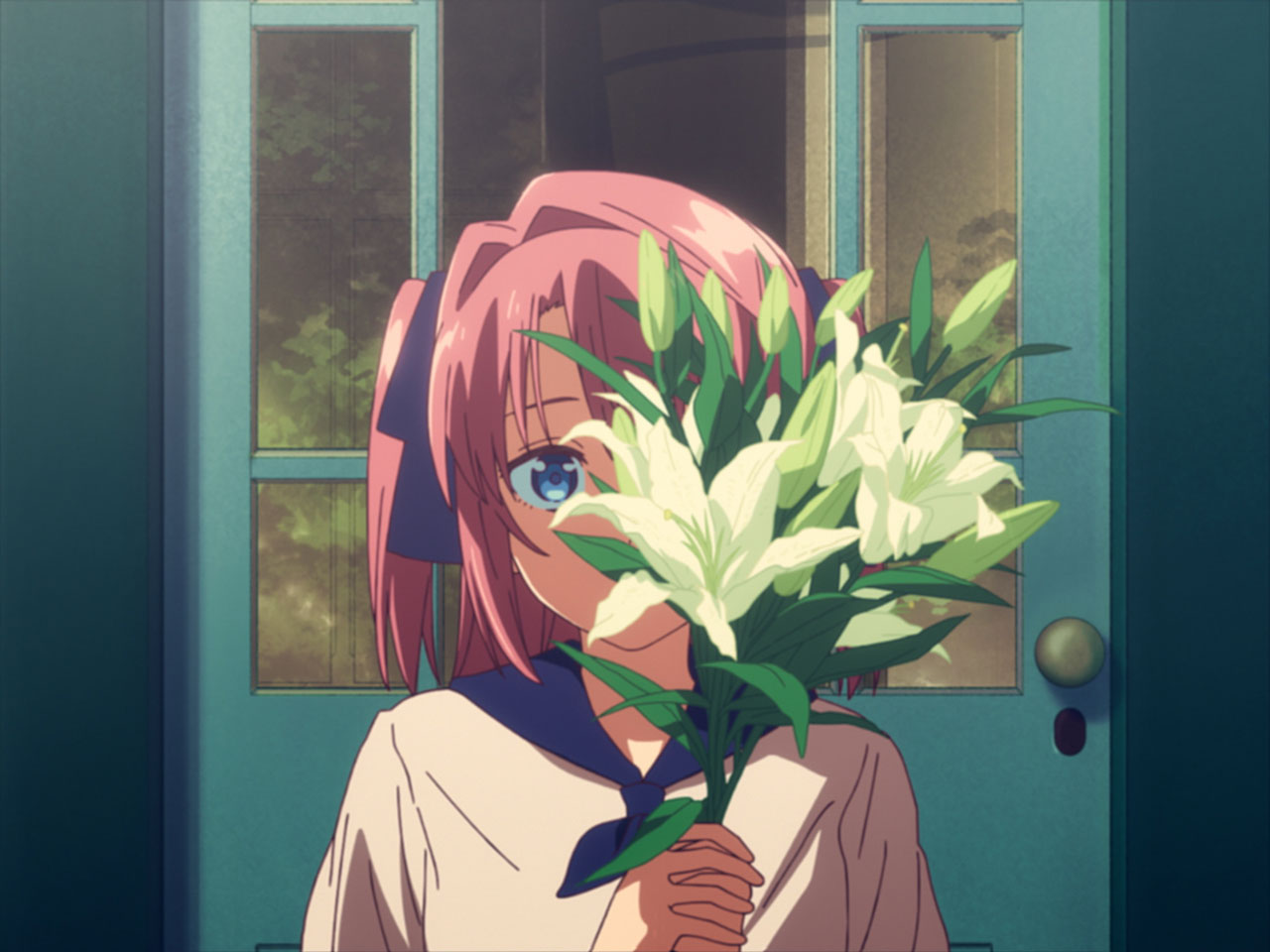
The “Nee” followed by the cut of Ibuki turning around, was something I really wanted to do from the very beginning of when I started working on the storyboards; I designed the OP around that cut. At the start of the OP, there’s also a cut of Botan turning around, and I wanted to emphasize the contrast between them. The opening cut is filmed from a distance, highlighting the blur of the automatic zoom, while the chorus one features the blur of the character filming physically pulling back from the subject. In both cases, I held the shots longer in order to make the most of that handheld camera feel. This chorus cut was built on the camera work by the 3D team, with (Naoya) Morotomi-san handling Ibuki’s key animation, and the team at Production I.G taking care of the in-between animation. I’m truly grateful that everyone, including Animation Director Watabe-san, stuck with me patiently through the many retakes. I think it came together into a really good cut.

— During the chorus, we move around the dorm’s garden, and then land on a very cute cut featuring Botan lying down, correct?

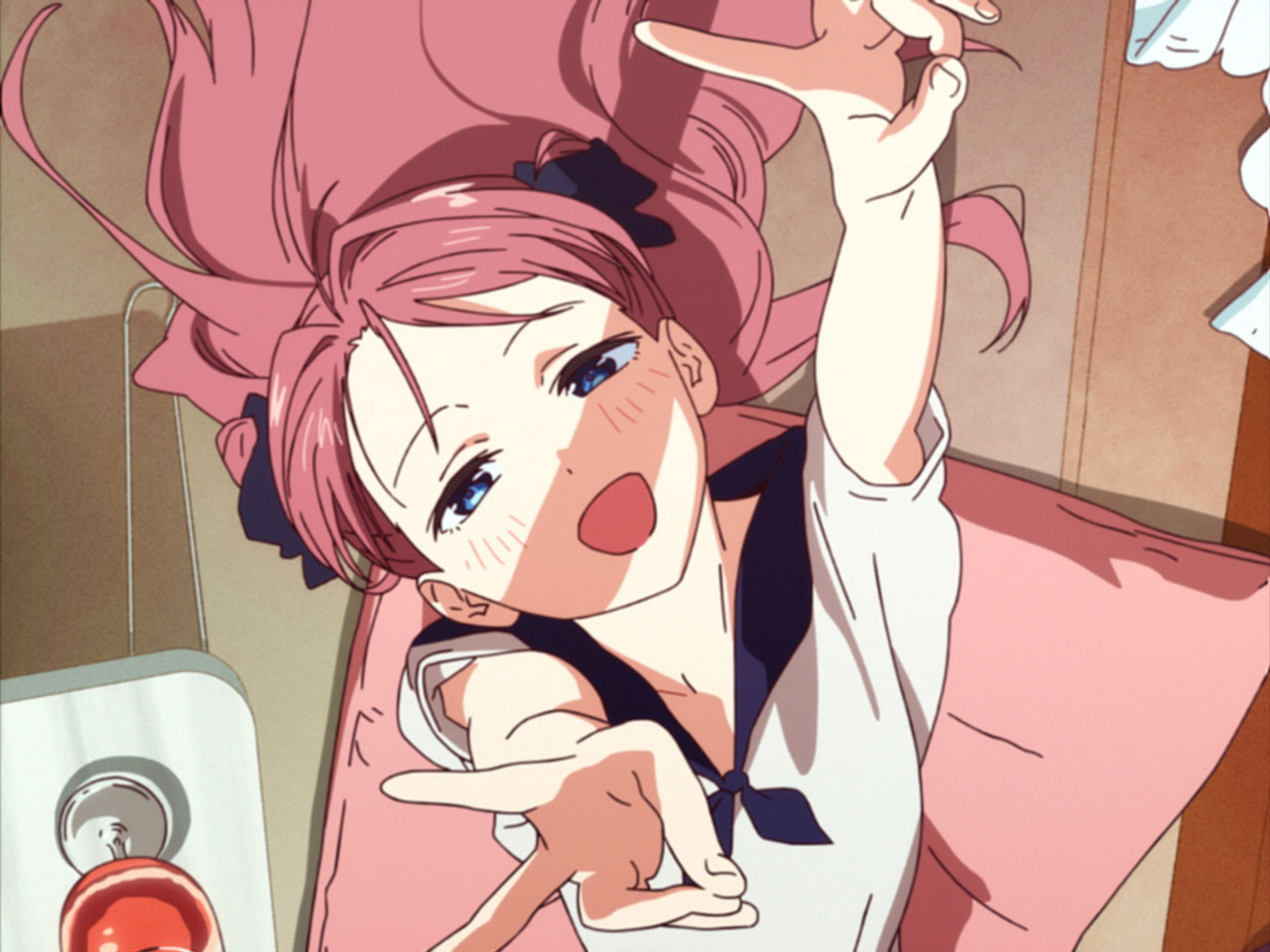
It connects back to the theme I was originally thinking about―“who is Botan?”. I wanted to capture the many different sides of Botan, even just in her smiles. I asked (Manami) Honda-san to handle the key animation of the cut in the garden, and (Komoto) Yusei-san the peace-sign cut. The latter in particular, I thought of it as the second defining cut of the OP, and it’s also the one where Soigne‘s name comes up, so I’m really glad it turned out so cute.

— Then, there’s a series of cuts showing each character’s name, but in the storyboards, they were supposed to show the song’s lyrics instead. What happened?

When drawing the storyboard, I tried to present it in kind of a meta way, by lining up the characters with parts of the lyrics that would match them. However, as the production went on and I got more and more absorbed in the world of Botan and the others myself, I felt that kind of approach was somewhat misaligned, so I reworked it into its current form. The cinecalligraphy cuts involved trial and error right up to the end, and ultimately I was able to push through by directly inputting the TP [trace-and-paint] materials myself.

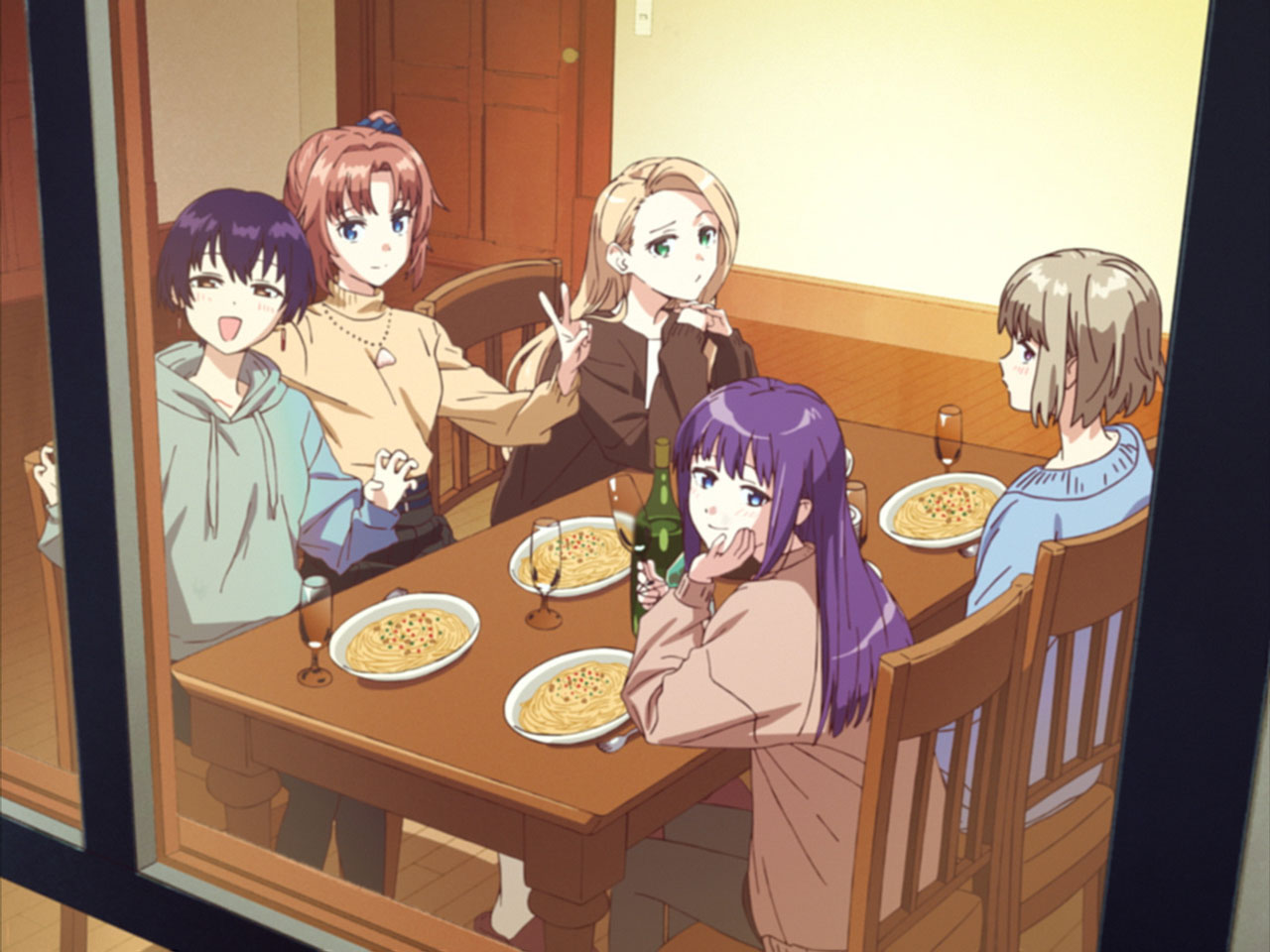
— Toward the final stretch, starting from the cut key-animated by Miyahara Takuya-san where the five girls are filmed through the glass, cuts featuring larger groups of characters appear for the first time. What was the reasoning behind that?

As the frame gets more crowded, I feel the shots start to feel more anime-like… so I wanted to avoid that kind of compositions in the early parts. So, the basic approach was to focus on one character at a time, but I also wanted to leave room for the camera to turn toward the kind of inconsequential everyday scenes you might find in the dorm, and that’s the nuance I tried to build into the structure.

— After that, there are a few cuts featuring the relationship between Botan and Ibuki.

I lined up the “Kimi” [“You”] and “Asu” [“Tomorrow”] lyrics with Botan and Ibuki, respectively. Here too, in the original storyboard, the actual lyrics “Kimi” and “Asu” were supposed to show up… But this movie is supposed to be something that the characters themselves are filming with an 8mm camera and then editing, so I thought that making the song’s lyrics appear would be somewhat wrong.

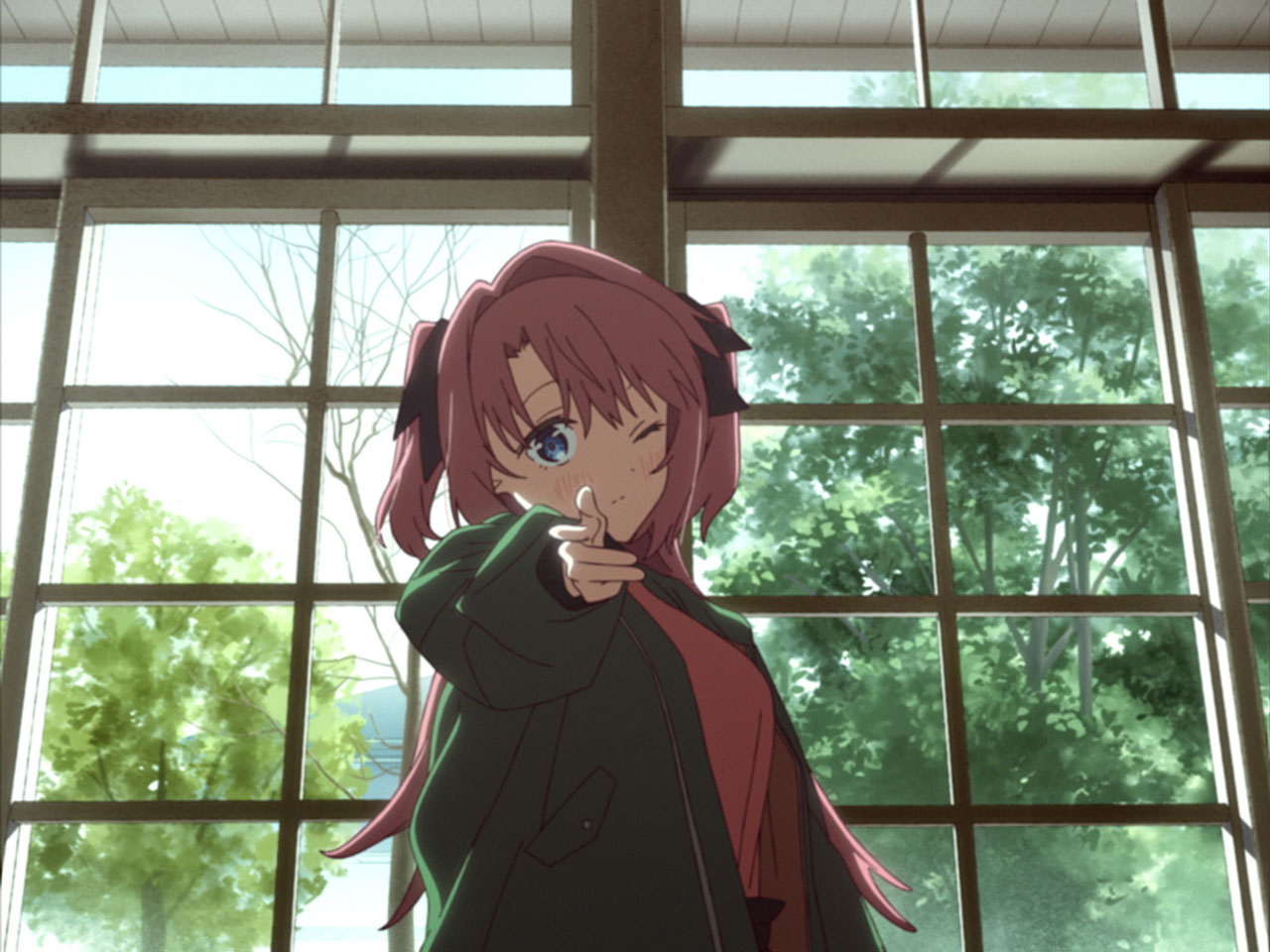
— At last, after making the “Bang!” gun-firing gesture, Botan steps out of the frame.

That’s the cut where Director Sakuma’s name gets shot. At the storyboard meeting, the only request I had from him was: “Don’t make the Director’s credit too big”. So I honored that (laughs), and thought: “Well, if I can’t make it big, I might as well shoot it”. I always put a lot of care into how the title appears in rhythm with the music, so I’m glad a fun idea came to me this time as well.

I’d like you to enjoy the differences with the broadcast version too

— By the way, the peace sign at the end of the “complete version” isn’t there in the storyboard…

At first, the storyboard closed off with Botan doing the firing gesture, but once we put it all together, I felt it was missing something. So, I let my imagination run with the question of what the particular girl holding the camera would do next, and that’s how it took its current shape.

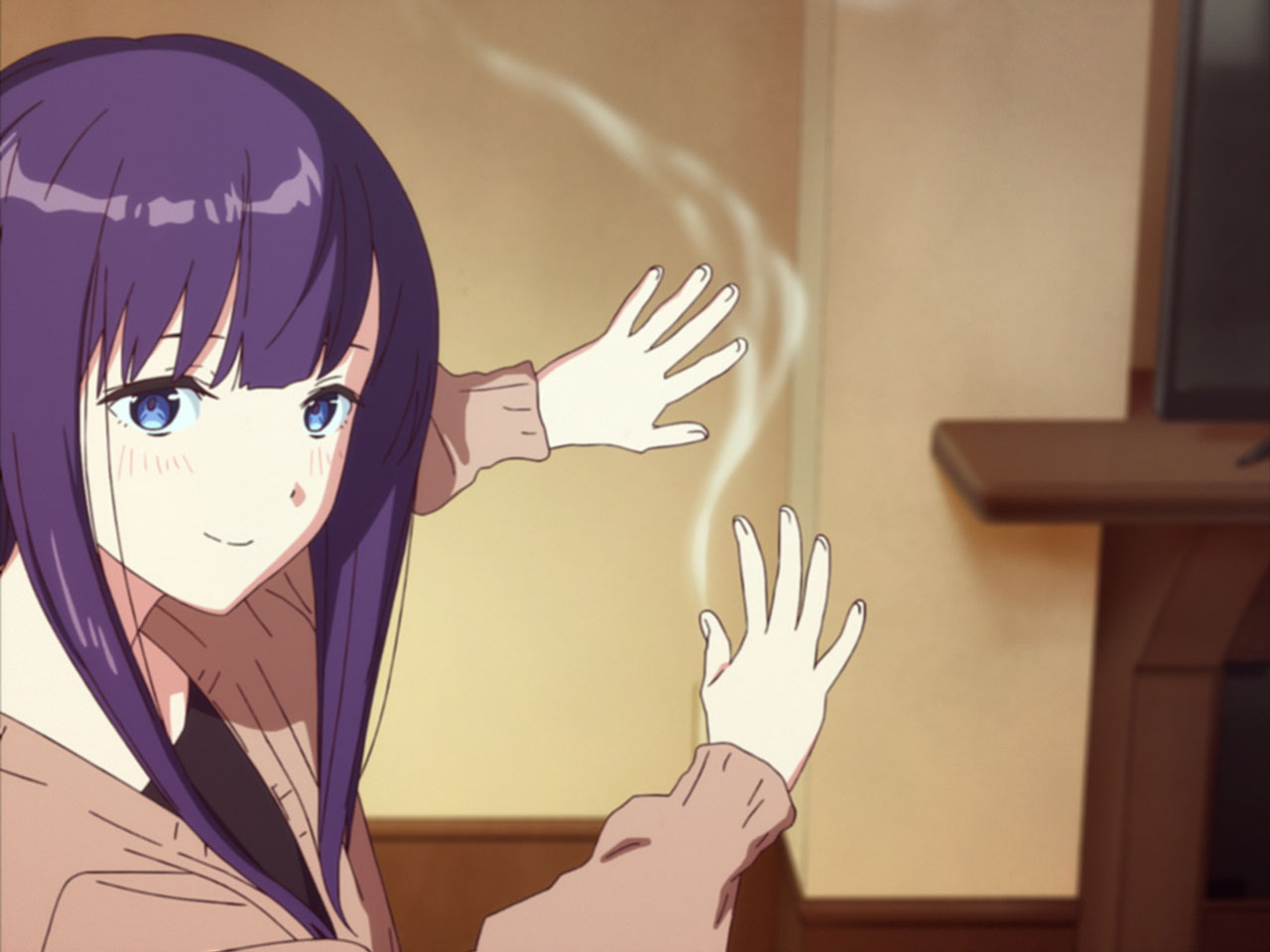
— Now that I look at it again, there certainly are a lot of cuts of Kanade smoking, aren’t there? (Laughs).

I’ve seen so many great cigarette scenes in movies, but since entering the anime industry I’ve rarely had the chance to depict them. So, I’m afraid I got a little carried away this time (laughs). It was a lot of fun being able to try out all sorts of ideas just with the way she exhales the smoke. My smoking deskmate animator once told me that “when you inhale and exhale, the smoke gets filtered by the lungs and comes out thinner”, and I incorporated that into the animation.

— What are your feelings now that the production is complete?

In the past works I directed or did enshutsu for, the “realism of the characters” has always been a central theme for me personally, and I’ve always wanted to achieve its culmination at some point. This time, I’m satisfied I was able to merge the atmosphere of the work Kamiina Botan with my personal taste into a movie everyone can enjoy. Also, I’m really glad I was able to have Watabe-san take on the full scope of animation direction duties. Watabe-san worked as a key animator on the “Kusuriya no Hitorigoto” episode I directed [Season 1 Episode 4, 2023], as well as many others, and I’ve always wanted to work on a proper project with her. I love how her sensibility is a hybrid of Kishida Takahiro’s approach to line selection and Kobayashi Keisuke’s approach to movement. In practice, it’s not even just a matter of sensibility, Watabe-san oversees the animation with extremely meticulous care, right up to the deadline, down to the level of whether to add or remove a single in-between drawing, or add or erase a single shadow line. Without her passion, we never could have reached this level of quality. Beyond that, I was fortunate to have talented people at the core of the production, the animation checkers, colorists, background artists, 3D and photography teams… all of them delivered beyond my imagination, at 120% of what I had envisioned. I’ve mentioned a number of the wonderful staff members involved, starting with the key animators, but almost all of them were brought in by Fujita-san and Production Assistant Hiyama-san. I am simply in awe of the network of connections that Soigne has built up. It was a wonderfully fulfilling production to work on as a director, one where I could be as demanding as I wanted.

— There are also all the differences with the broadcast version to look out for.

Absolutely. The broadcast version is in 16:9, but I put a lot of care in the way the credits show up against the song’s rhythm… It has always been a guiding principle of mine when working on OP movies to create something that will make viewers remember the names of the key staff and the studios involved. So, this time, I had fun with making the credits stand out too. On a finer note, the Soigne logo has actually been adapted into a Kamiina Botan-specific version, and other touches like that in the credits can only be found in the broadcast version. I’d be happy if viewers could enjoy the “broadcast version” as the OP for Kamiina Botan, and the “complete version” as a home movie filmed by Kamiina-san and the others.