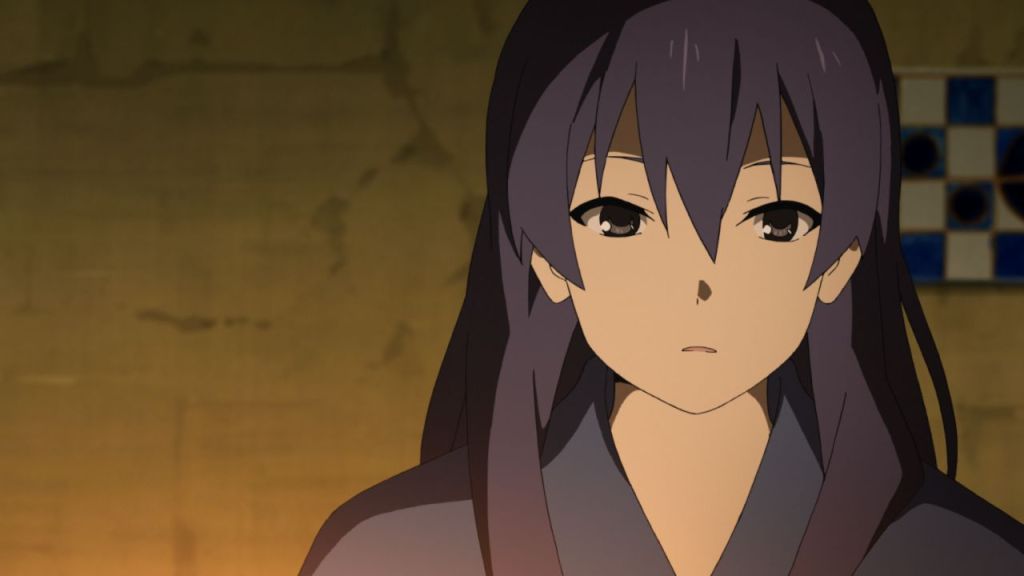
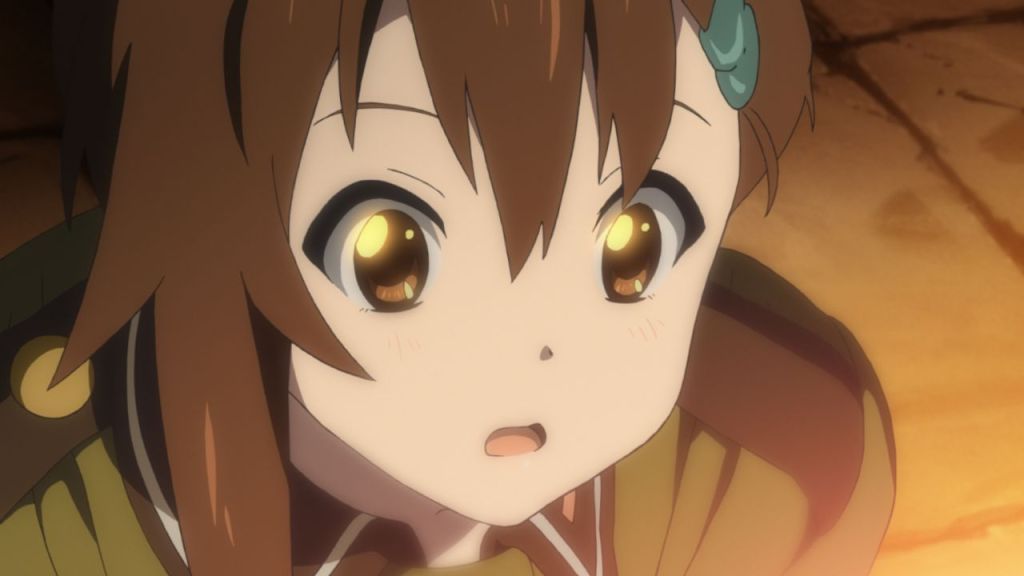
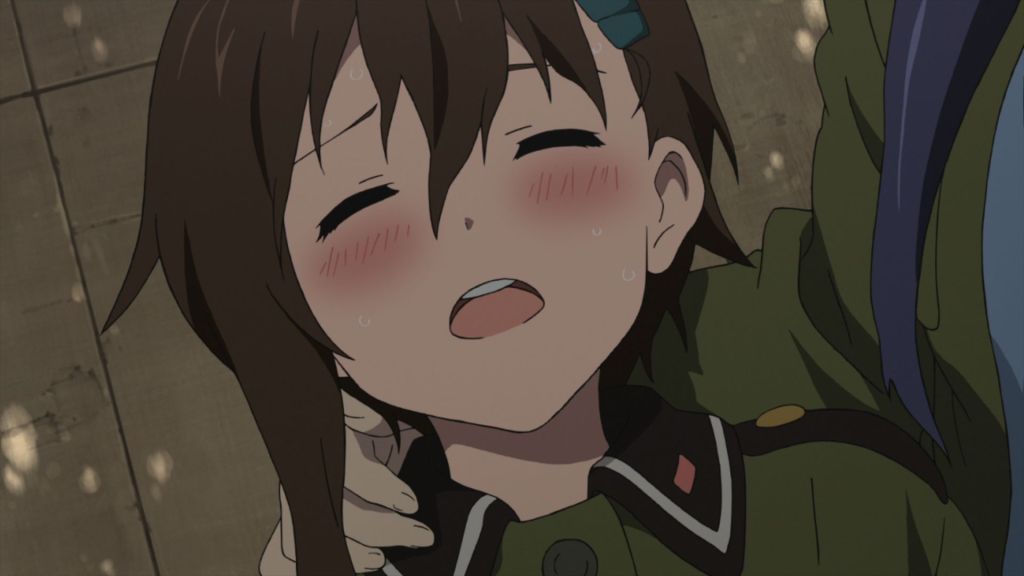
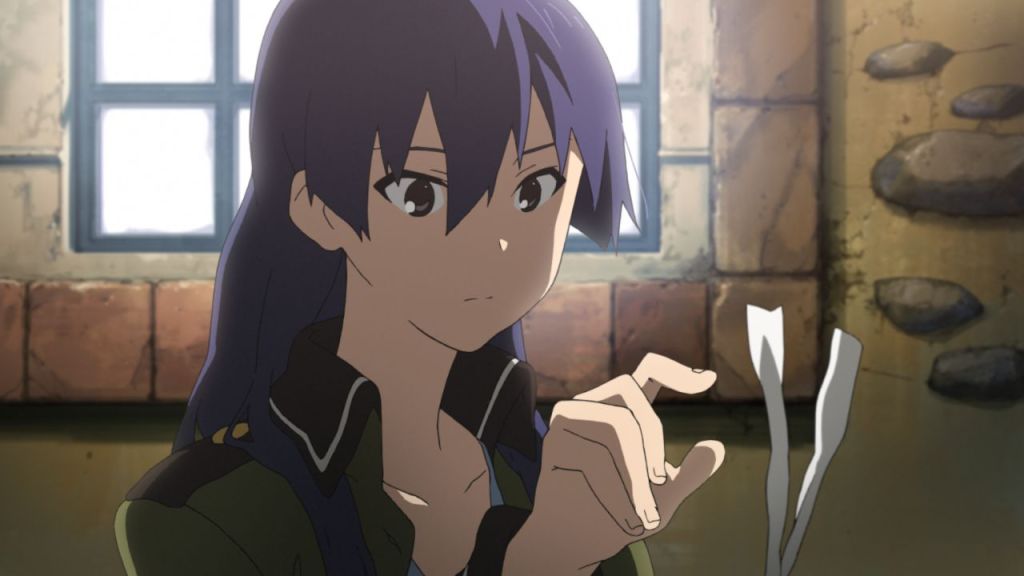
Original interview from ASCII.jp, published in two parts, Part 1 and Part 2, on July 17th 2010 and July 24th 2010, original interviewer: Watanabe Yumiko 渡辺由美子.
Even in anime, I don’t want to create a “miniature garden” [Part 1]
— Kanata and the others live in a world that may soon be coming to an end, and as soldiers, they have been stationed at the fortress. With a premise like that, one might expect the story to carry a much heavier, more tragic tone. Why did you choose to portray the girls’ warm and peaceful everyday lives instead?
Kanbe: That was something we decided from the very first meeting. Since it was set to air in a late-night slot, we wanted it to have a warm and comforting atmosphere, that would let viewers go to sleep feeling relaxed after watching.
Akira Shimizu(A-1 Pictures): So Ra No Wo To was broadcast as part of Anime no Chikara[アニメノチカラ], a late-night programming block that started at 1:30 a.m., so a large portion of the audience consisted of adults. Creating something people could relax and watch quietly at home after coming back from work was a request from our side.
Kanbe: When the idea of creating an original anime first came up, the initial concept I proposed was a reincarnation story centered around a man and a woman traveling along the Silk Road. However, the feeling was that the Silk Road setting wouldn’t attract many viewers, so it didn’t go through in that form.
Though, overall, I think I was able to incorporate just about all of the elements I originally wanted to explore into So Ra No Wo To.
“What viewers of late-night anime tend to enjoy these days are warm, easygoing worlds where girls happily go about their everyday lives”, says Shintarou Komatsu of Aniplex. With those audience preferences in mind, the direction gradually took shape: on the one hand, to create a fun and relaxing series that viewers could watch comfortably, and on the other, to make it a work with enough depth that, if one chose to think about it seriously, there would always be more to consider.
A world with a sense of continuity
— A work that could be enjoyed peacefully, and on top of that, offer deep thoughts about its story. This is the foundation of So Ra No Wo To, but what direction did youin particular want to give it, Director?
Kanbe: During the initial discussions, it was proposed that the story’s world should have a sense of continuity, and I thought that was a really interesting concept.
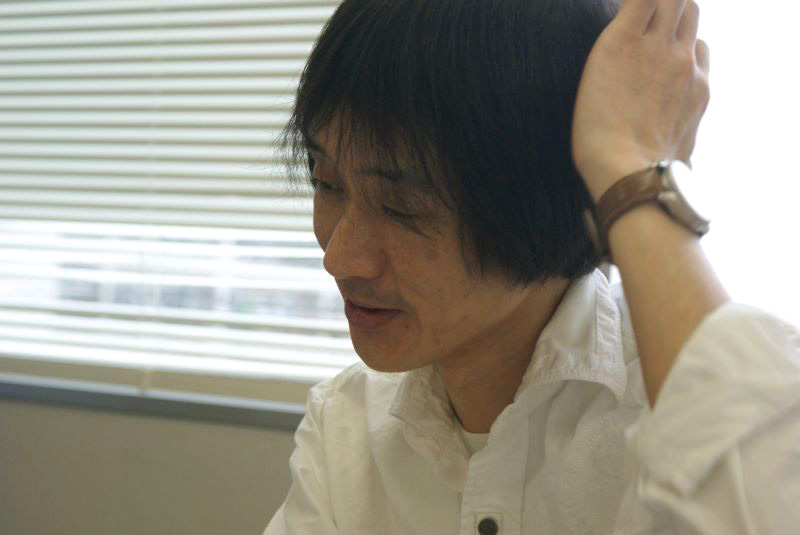
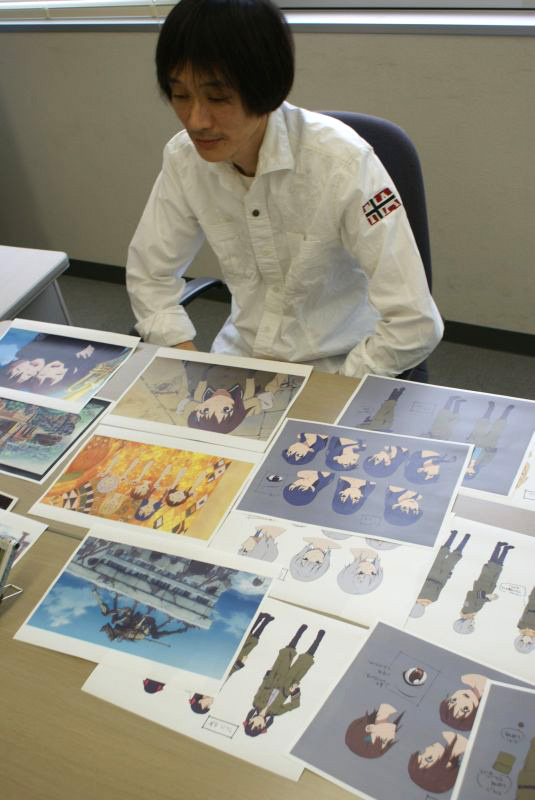
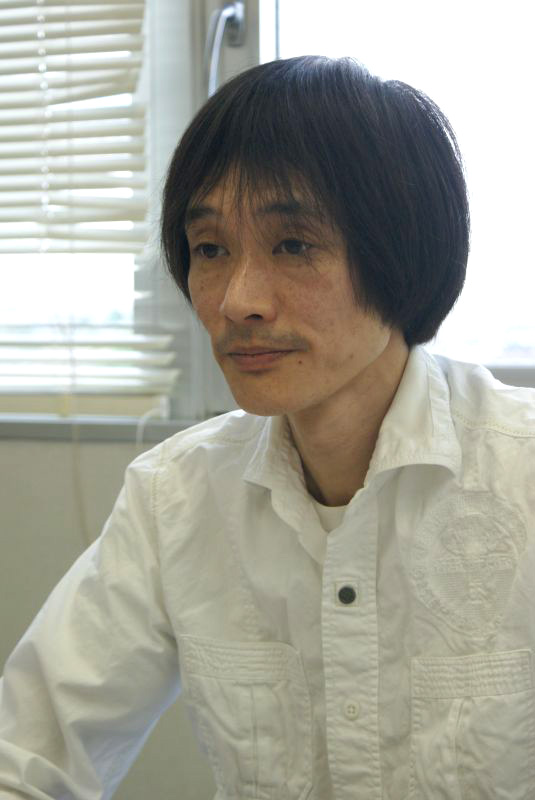
Director Kanbe, as he mentioned having troubles figuring out how to convey the “sense of continuity” in a fantasy world.
— Sense of continuity…?
Kanbe: For example, when people watch So Ra No Wo To, they should be able to imagine what the world Kanata and the others live in was like five years earlier, or what it might become five years later. That way, the story would become much more convincing, and its world would feel more familiar and real to viewers.
When I first heard about this idea of a “world with a sense of continuity”, I immediately thought it was a matter of “realism”. And in that case, I thought setting the story in contemporary Japan would be the best choice. It would be set in a city, a scenery like the one that can be seen from this window right now, with the Chuo Line speeding by, many houses standing in rows, and there would be schools, too. I proposed we set the story in a realistic landscape like that.
But then, someone said such a setting would lack fantasy appeal, and maybe choosing something different from modern-day Japan would attract viewers more decisively. So, we started discussing how to convey realism in a fantasy world.
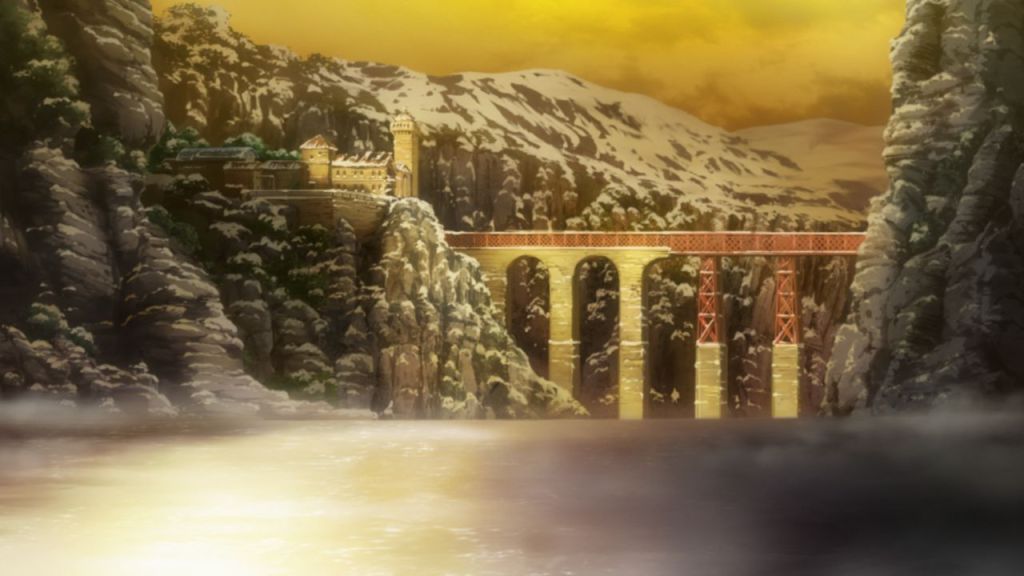
At that point, scriptwriter Yoshino Hiroyuki-san, who had just happened to see a television program about World Heritage Sites, had a flash of inspiration and made a suggestion: the fortified Spanish city of Cuenca and the Alarcón fortress. And everyone immediately thought: “Oh, this is interesting”.
Building a setting based on a real-world region, one that feels continuous with Japan, yet belongs to a country with a different culture. This aspect was what made it work for everyone. After that, we all agreed on the setting and decided right away to go on a location scouting trip.
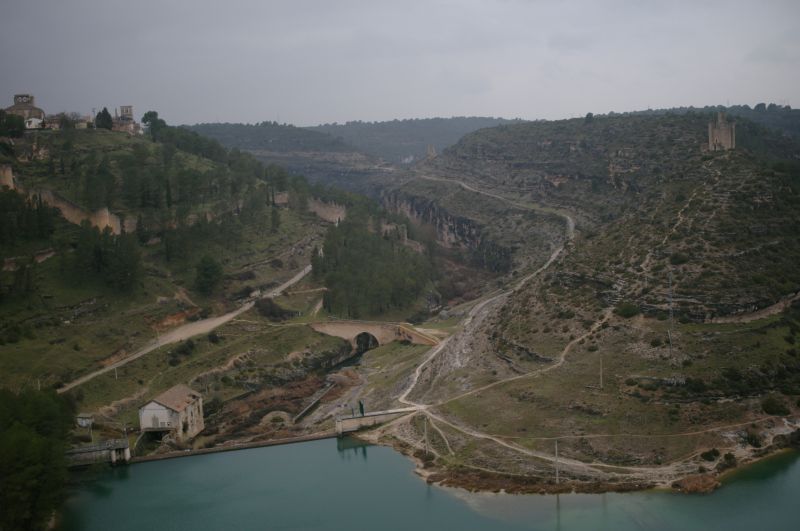
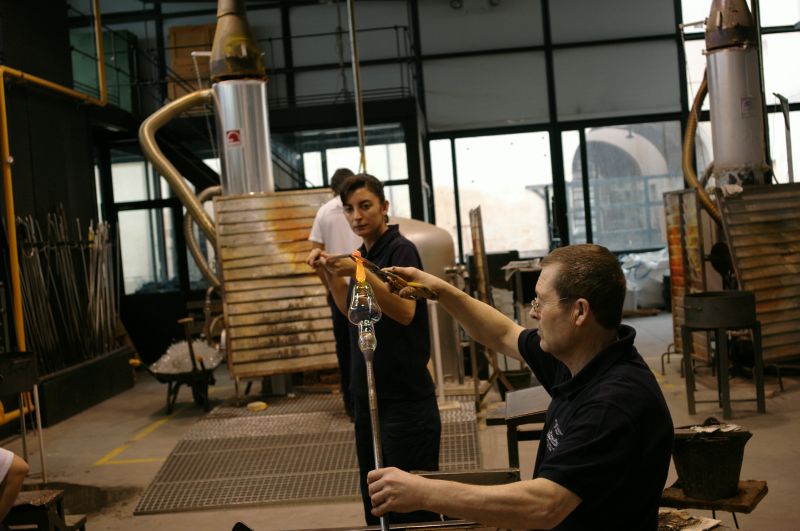
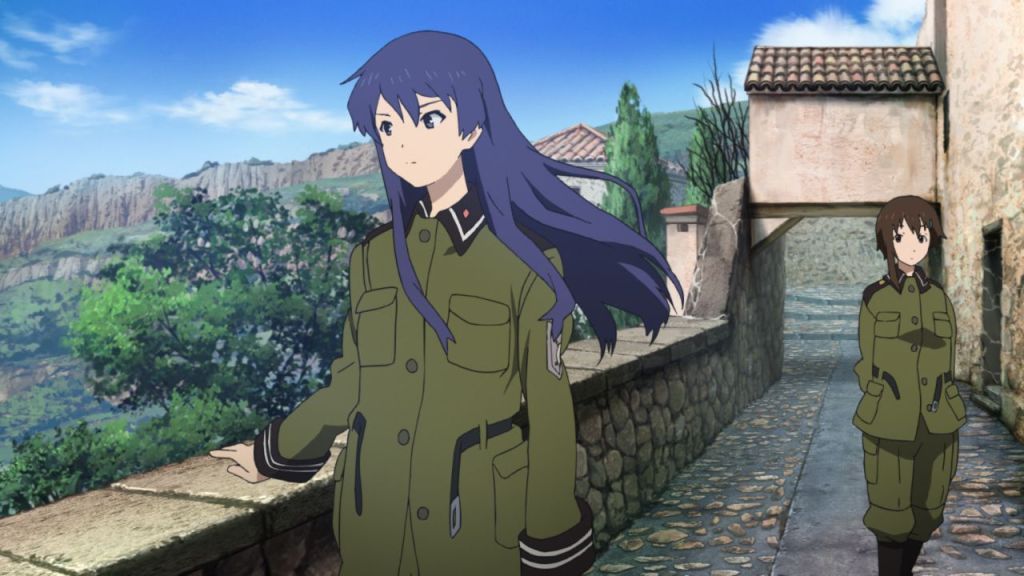
Director Mamoru Kanbe and the rest of the staff carried out location scouting for So Ra No Wo To. They visited the fortified city of Cuenca in Spain’s Castilla-La Mancha region, as well as the Alarcón fortress, a glass factory, and the House of Cervantes. In the end, the fictional town of Seize, which became the setting of the story, was designed as a place with a hybrid culture blending European and Japanese influences. This, too, was done with the goal of creating a “sense of continuity” in mind.
The fortified city of CuencaThe glass factory
— So, by visiting the real place directly, you were able to “convey realism in a fantasy world”?
Kanbe: Yes. Maybe that’s what they call a “first-hand experience”. Cuenca in particular was under Arab occupation for some time, and because of that, its taste is somewhat different from what you’d normally find in the rest of Europe. It also has wooden architecture. And over the years, due to various circumstances, some of those buildings ended up with slanted floors. Standing in them gives you a strange sensation. But the locals just use them as they are. It must be a peaceful, serene place to live in. The slanted floors for example, you really can’t get a feel for them until you’ve actually stood there yourself.
Ultimately, we didn’t replicate the slanted floors directly in the anime, but the people I worked with have all been to that place too, and I believe that‘s what really mattered. Set designer (Tomoyuki) Aoki-san, background artist (Masatoshi) Kai-san and scriptwriter Yoshino-san too, we all went together.
— What would you say is the biggest difference between going to scout the actual location and not going?
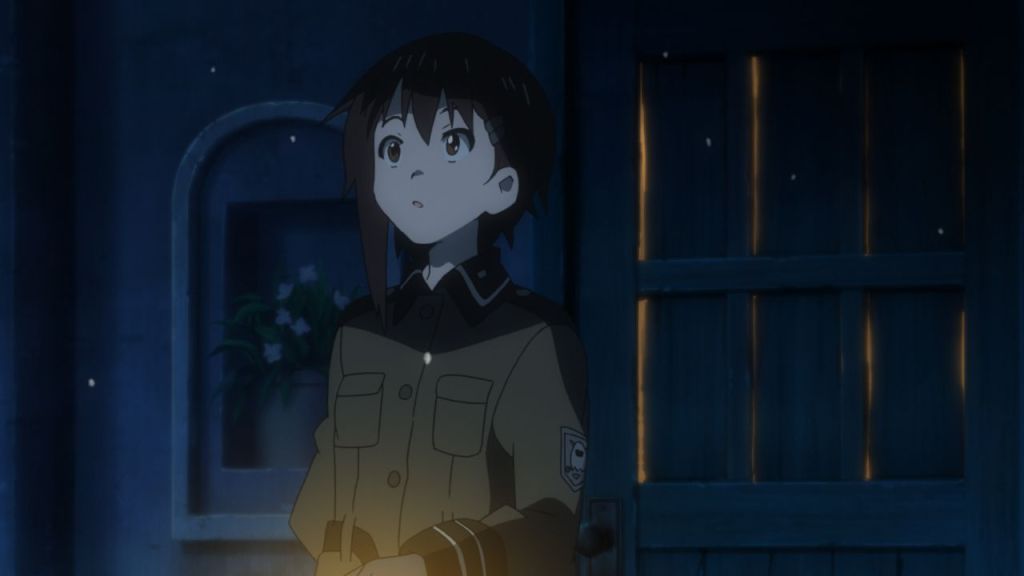
Kanbe: I believe it changes your notion of reality. It was small details, like the shape and placement of doorknobs. In Cuenca, the knobs were mounted right in the center of the doors, and we found ourselves wondering: “How are you even supposed to use this?”.
In Japan, doors like that would be unthinkable, yet the local people used them as if it were perfectly normal. When it came to conveying the sense of realism, I think being able to grasp that feeling of “normality” was the most important aspect. From our perspective, these things seemed strange, but for the people living there, they were completely ordinary. It wasn’t like: “Wow, how unusual!”, they didn’t find it surprising at all.
After the location scouting trip, I started thinking again about what exactly this “sense of continuity” really meant. In the end, I think it comes down to creating a world the audience can perceive as tangible and substantial, even if they had never been there personally. Even in a fictional, fantasy world, if Kanata and the others live their lives treating things like those unusual doorknobs as perfectly normal, portraying that sense of everyday life creates that feeling of continuity with reality.
I wanted to add a sharp sting of “reality”
— What feelings did you want to evoke in the audience by portraying the world of the anime as normal and ordinary?
Kanbe: Simply that “that’s reality”. The world where Kanata and the others live is theirreality, after all.
This ties back to what we said earlier about making the series comforting and relaxing while still giving it depth, but the idea of “adding some sharper, more bitter elements to the story” also came from me. Because in reality, there’s no such thing as a world completely free of those harsher sides.
I didn’t want the series to remain just a sealed-off “miniature garden”, shut away with nothing but pleasant things in it. I may have felt that way to some extent.
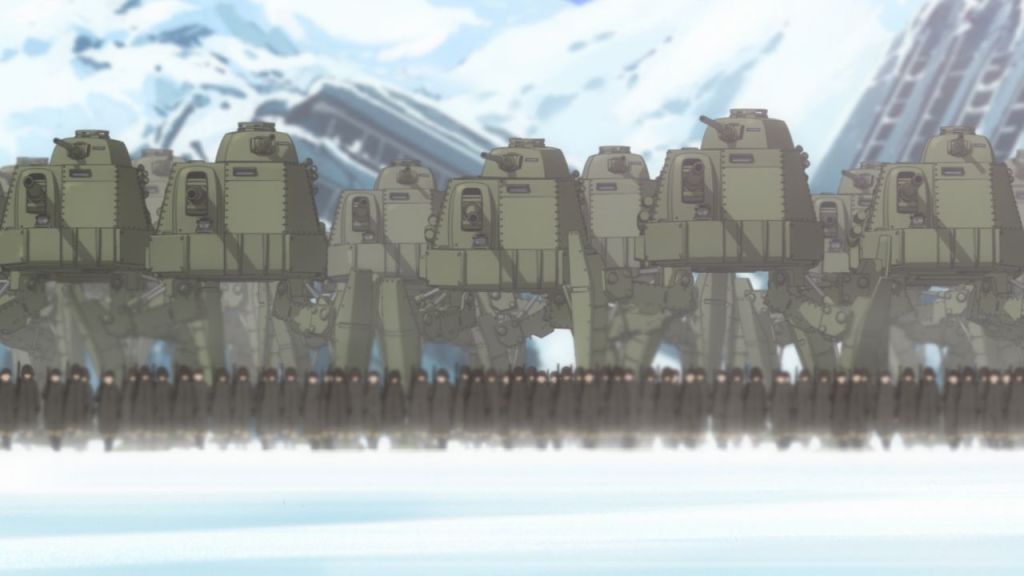
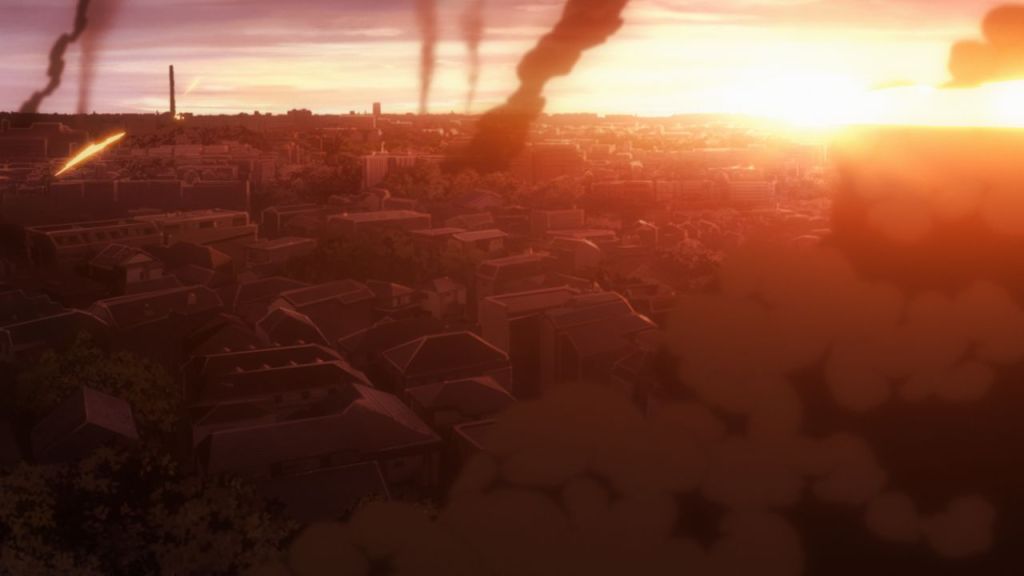
The battle field, conveying the sharper and harsher realism of the anime.
— Like adding something more raw to the easygoing atmosphere.
Kanbe: Exactly. An element of realism I wanted to add in So Ra No Wo To was the presence of parents. I didn’t want to make a story where parents simply never appear at all. After all, these characters must have been born to parents.
In anime, it’s quite difficult to put the spotlight on “adults” in a prominent way, and there’s also the fact that it would drift away from the audience’s interests. I, personally, wouldn’t mind an anime with a 35 year old guy as the protagonist.
“Parents” especially are often viewed by teenagers as intrusive and overbearing presences. Adolescence is an age of rebellion after all. I used to be pretty much like that too, there was definitely a time when I thought: “Parents, who needs them?” (laughs), but as you get older, you start to think: “Wow, parents are amazing!”. Everyone is born because their parents were there, so let’s take care of them, that’s how I feel now.
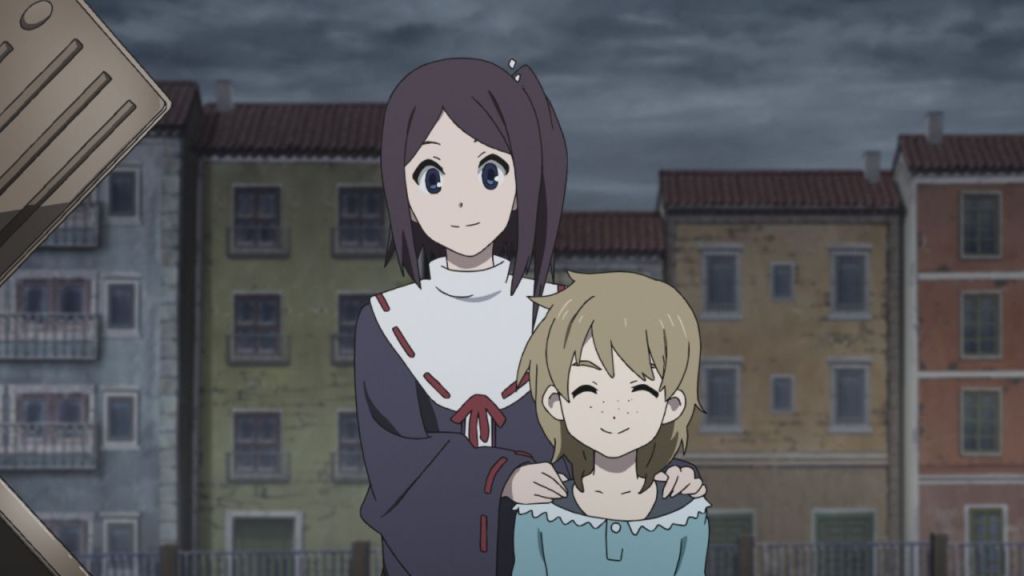
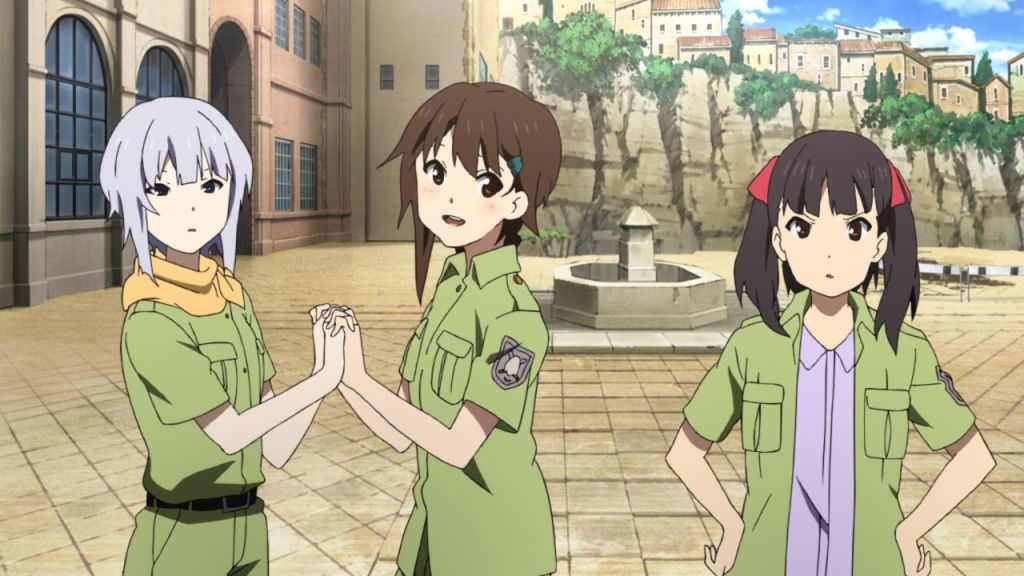
So, that’s why I asked Yoshino-san to make sure the presence of the parents of Kanata and the others was clearly established, even if they never actually appear on screen. With things like Kanata receiving a letter from her parents, and the contrast between that and Kureha revealing hers had died in the war. Even if they never appear directly, I was always mindful about their presence in the story.
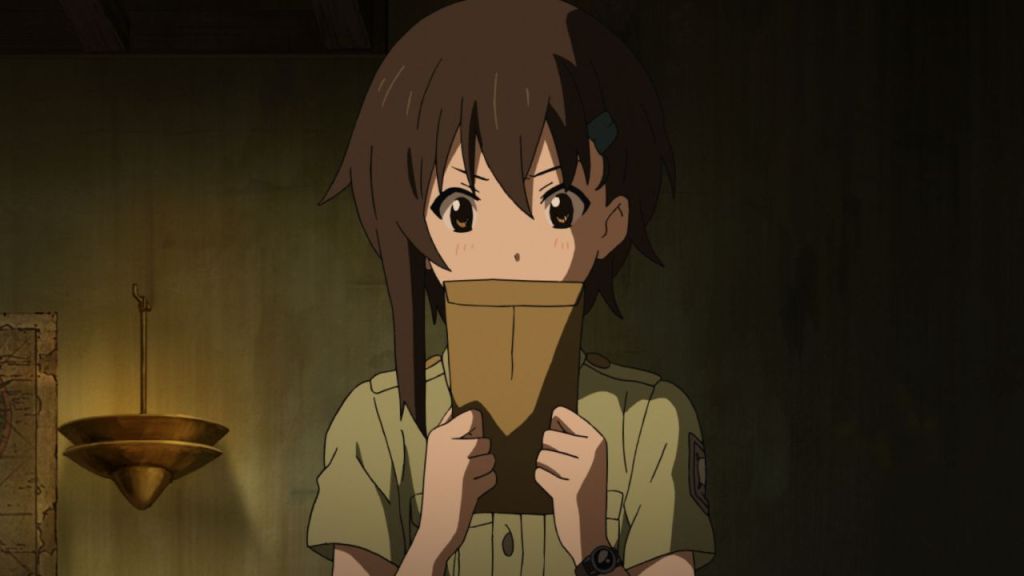
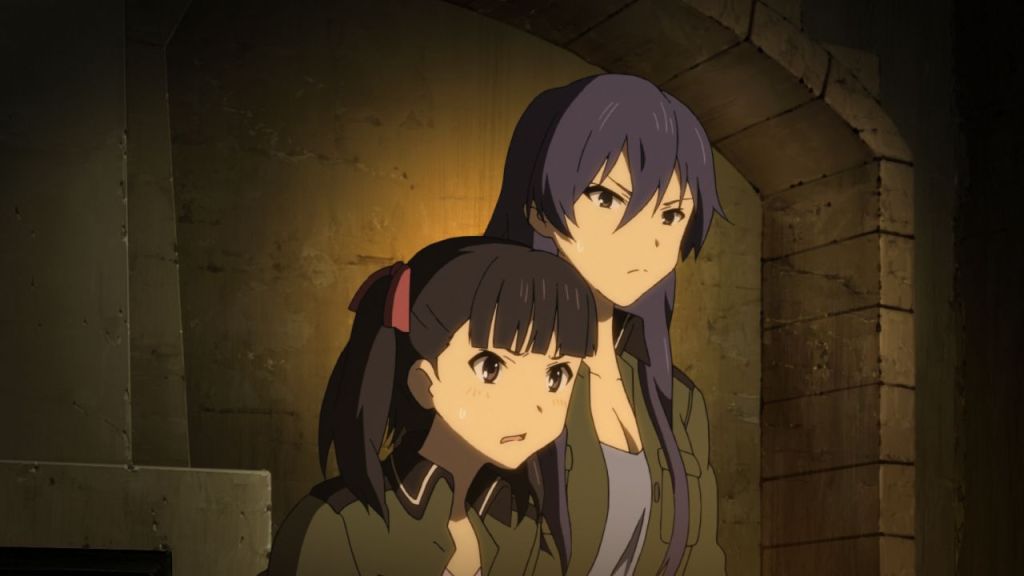
Various scenes from the anime bringing into the story the presence of the characters’ parents.
Bringing out the realism of war within the easygoing atmosphere
— Talking about this inclusion of realism in the story, Kanata and the others live in a world where war exists right alongside their everyday life. How did you approach the depiction of war as normal and ordinary for them?
Kanbe: In the end, that aspect ended up leaning more into the fantasy realm, didn’t it? That’s because none of us has ever experienced war first-hand. However, one thing I believe we managed to depict in a slightly more authentic way is first-hand accounts of war. In my case, generationally speaking, my father, mother, and uncles all lived through the war.
What struck me most about the stories from my father, who was born in Showa 10 [1935], was just how much they struggled to find food. Every single memory he had was tied to eating in some way. What he called “playing”, it seems, was sneakingfood.
There was a strawberry field near where he lived, and he and his friends used to sneak in, crawling on their bellies to pick strawberries and eat them lying right there on the ground. Gritty with dirt and everything. And when the owner of the field spotted them, they’d all scatter in a panic. That was their idea of “play”.
If there’s anything we truly managed to capture in this work, it would be the experiences of people like them.
— As a way of conveying the reality of war, one approach would be through meticulous depictions of battle itself, but in So Ra No Wo To, you chose to convey it through the portrayal of human beings instead, is that right?
Kanbe: Yes. That’s why this show depicts the atmosphere of the “post-war”. In the story, it’s actually a ceasefire, but I hoped to bring out something like the sense of relief that comes with the end of a war. The people of the town still carry raw and vivid memories of the war, but at least it’s over now. “What a relief!”, that sort of feeling.
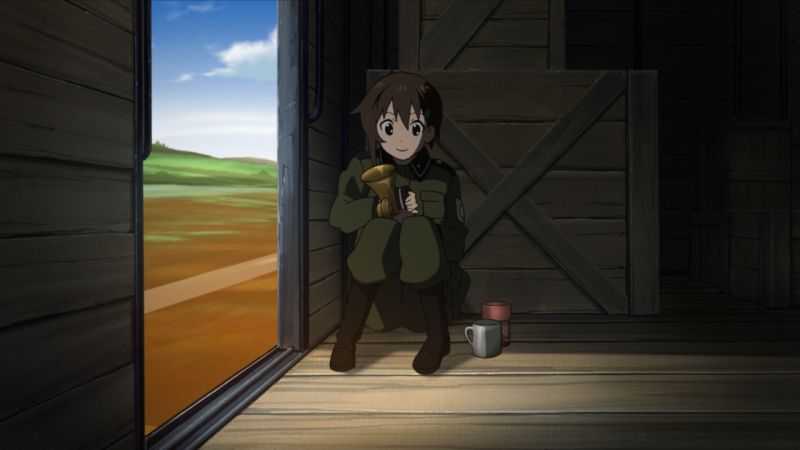
The opening sequence of Episode 1, when Kanata is on the train heading towards her destination, the town of Seize, is a scene that I hope managed to convey that kind of post-war relief. I asked the voice actors to perform as if a long-held sense of tension was finally beginning to lift.
Kanata, moving to the town of Seize on a shaky freight train, with the caramel can she received from a kind soldier (from the opening sequence of Episode 1)
A happiness with a slight sting to it
Kanbe: What I wanted to portray in So Ra No Wo To wasn’t a “miniature garden”-like world where the girls could live happily without obstacles, but rather the warmth and happiness that emerge from never losing hope, no matter how desperate the situation may be seen to be.
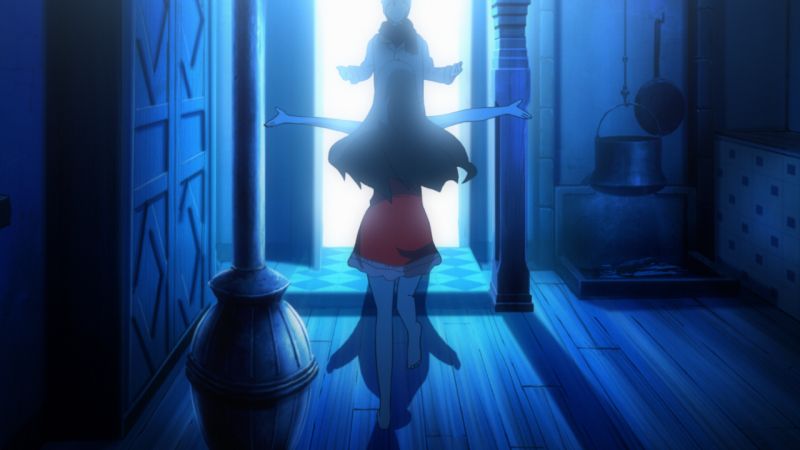
— The “happiness” portrayed in the show feels somewhat hard-earned bittersweet. An episode that left a lasting impression on me was the one featuring the old lady that kept waiting for the man who left her when they were young [Episode 10]. She believed in his promise to come back for her, and then one day, she ran out of her house and vanished into the snow.
The long-awaited lover finally had returned to her, and young again, just as she once was, she flung open the door and ran out to meet him. After that, the “old lady” vanished into the snow.
Kanbe: That’s based on a real story I heard from a friend who was also part of the staff, it’s something that actually happened, or so they say. In a certain countryside town of France, an old lady was building a house and all of a sudden, one day, she left, bare-foot, and disappeared into the woods. I thought it would work well visually, so we tried to add it into the show.
— In that moment, Kanata said: “People can keep on living because they have memories of when they were happy”. Would you say that, to you, that’s one of the shapes happiness can take, Director?
Kanbe: It was Yoshino-san who came up with that line, and essentially it means that if a person believes they’re happy, then they probably really are. The perception of what’s “normal” changes from person to person, I believe. And so does happiness.
My eldest uncle once told me a story about an air-raid. He lived near a large river, and when everyone was burned out of their homes, they’d make their way to the river looking for water. But the river was full of dead bodies. The many corpses strewn along the river were treated as if they were no longer human.
He said that once you reach that point, your senses go numb, and that sight becomes just another “normal” part of the landscape. He told me this at a funeral, and what he said next has stayed with me ever since: “The fact that we can have a proper funeral like this today, it really shows how incredibly peaceful things are now”.
The story conveys the message that what’s “normal” differs depending on what your eyes have witnessed.
— Being able to hold proper funerals really means that we’re living in peace.
Kanbe: It does. Hearing my uncle’s story got me thinking. My father’s tale of sneaking strawberries, if you consider that they were always hungry, it must have been truly a hard time, and yet, the fact that he framed it as “playing” speaks to a sensibility quite different from ours. The fact that he told me the story more than once too means he must have enjoyed it to some extent. He was able to eat, so he was happy, that might be it.
— You’re saying that happiness too differs from people to people?
Kanbe: At least, that’s what I believe. Even if others wouldn’t understand it, if you feel happy in that moment, then that moment really is happiness.
I have some of those myself, moments of “happiness” that, thinking about it now, I’m not sure I could explain to anyone. When I was working as a Production Assistant on Kaze no Tani no Nausicaä[Nausicaä of the Valley of the Wind, 1984], all I looked forward to back then was sleep. I barely got any, you see (laughs). That moment of finally getting to sleep, that was when I was happiest.
In the end, it really comes down to whether you’ve experienced it first-hand or not. For both happiness, and working on a show. Your own, personal experiences are truly the most important.
Portraying a connected world in anime [Part 2]
— In So Ra No Wo To, Kanata, a bugler, goes through many experiences and comes to convey something of her own through “sound”, that’s the kind of story it became, wasn’t it?
Kanbe: The story is set in a world roughly 250 years from now. Our current civilization has collapsed and the world has been rebuilt from the ground up. The survivors are creating new towns, and throughout those towns, there are ruins reminiscent of the past civilization.
A large portion of the Earth’s surface has become a sterile land, impossible for people to inhabit, and it is said that the remnants of humanity scattered around the rest of the world are heading towards their end. However, even in a landscape like that, there are things that have been inherited from the past. And Kanata’s bugle is one of them.
— What’s the reason you chose “sound” as the means to convey this concept?
Kanbe: As they say, music transcends language. Like how songs made in Europe can reach even Japan, crossing all kinds of borders to connect with people all around the world.
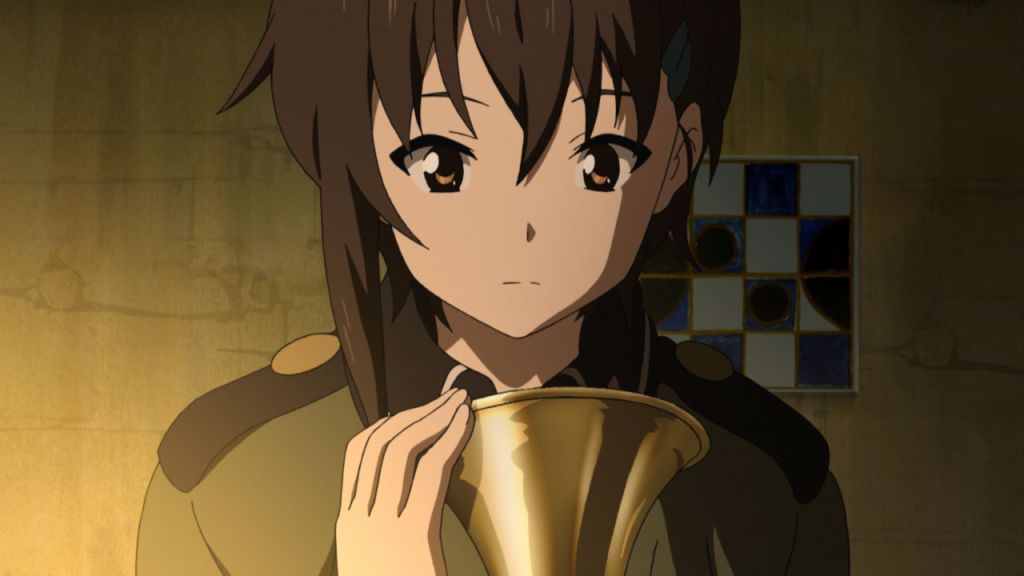
As for the song Amazing Grace, I remember choosing it from all the possible candidates because I felt everyone in the world must have heard it at least once. The original composer is actually unknown, and that carries over into the story too: even in Kanata’s time, it’s a song where no one knows who made it or how. And yet, it still comes through. I thought that was fascinating.
Passing it on, from person to person
— What significance do you personally think “conveying things to others” holds, Director?
Kanbe: This might be a bit of a leap, but I think it means “leaving something for the next generation”. That applies to having descendants, and also to passing on the experiences we’ve lived through to those who come after us.
For example, lived through the war when they were children, and if I were to have children, I would pass those stories on to them. There are many different ways of conveying something to the next generation, and I believe festivals and folklore are among those methods.
In So Ra No Wo To too I tried including the “Water-Splashing Festival”, and apparently festivals that recreate events from the past are found scattered all around the world. And by repeating those festivals every year, the children become parents, then elders, and experience them along the way. And in this repetition, things from the past get conveyed and passed on to the next generations.
On the “Water-Splashing Festival”
The day when Kanata reached the town, in Seize the “Water-Splashing Festival” was taking place. In the distant past, the town of Seize was attacked by a demon, and the 5 Maidens of Fire offered their lives to protect it. The festival is held every year to console the spirits of the Maidens.
Kanbe: The festival depicted in the show is fictional, but there’s actually a very similar tradition in Southeast Asia. The part where a Maidens hold the demon’s head in the flames is almost identical.
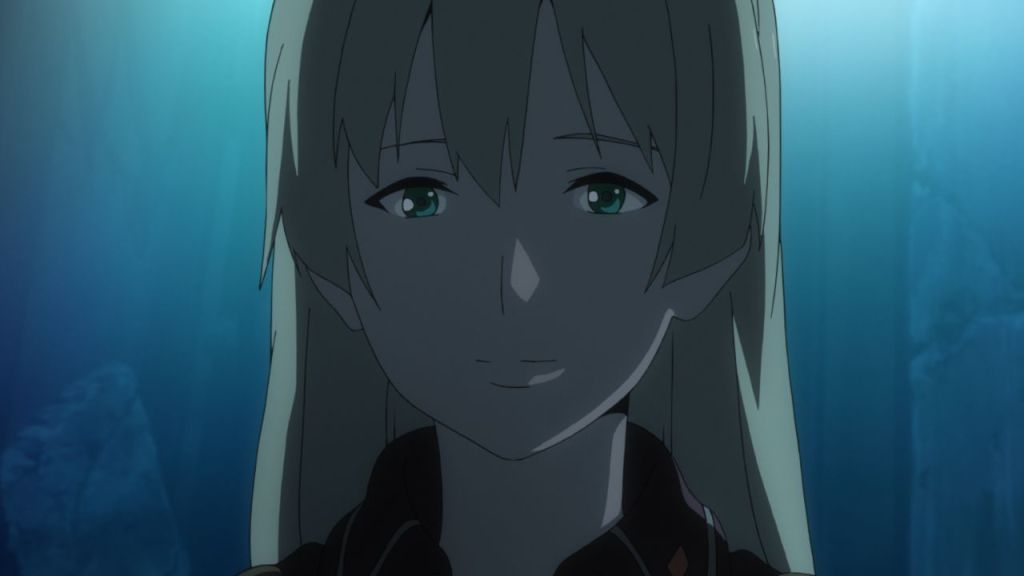
— What I found fascinating was that the legend of the “Fire Maidens” passed down in the town of Seize was conveyed in a different form in the enemy nation [the Roman Empire]. According to their version, it wasn’t a demon who caused the Fire Maidens’ death.
Kanbe: The narrative had been swapped out for a more heroic version. The demon [who is an angel in the Empire’s version] came in a near-death state, and the Maidens, knowing it would soon die, chose to let it pass on peacefully. But the townspeople, who were afraid of the demon, ended up killing the Maidens along with it. It was out of a sense of guilt, feeling they had wronged the Maidens, that they rewrote it as a more noble tale. Those who passed the story on twisted it to suit their own convenience.
— Some aspects always end up getting twisted as things are passed on. I believe that happens all the time in reality as well, not just in fiction.
Kanbe: I’m sure the majority of what gets passed down from the past carries the biases of those who narrated it, with their own interests taking priority. Otherwise, there would be no way to explain why historical interpretations differ from country to country.
Facts not being passed on accurately is something that happens close to home for us too, I think. Even without any deliberate distortion of reality, there’s also the matter of distance from the subject, whether physical distance, or the distance in time, causing details to get lost in the process.
A thing that made me realize this was a story from an acquaintance of mine in Alaska. I meet with him when he comes back to Japan, and one time I lightheartedly asked whether the effects of global warming were visible over there. He said they were in plain sight, in a very tangible way.
Alaska’s land is basically all made out of sand, apparently. The ground is formed by hard and compact lumps of this sand, and that frozen ground is starting to thaw. Depending on where it does, the coastline is getting closer and closer, and the portion of land where people can live is actively in decline. In So Ra No Wo To too, one of my personal themes was the idea that “what is visible to us right now is not all there is to reality“.
— What is visible to us right now is not all there is to reality…?
Kanbe: No matter the context, there always is something that we cannot see from our side. For instance, the situation in Alaska is not something we can see by being here in Japan. Despite it happening on the same Earth.
In the series too, we depicted this by showing how Kanata and the others didn’t know how their nation was perceived from the outside, until a girl from the enemy army told them directly. Passing things on, and the misunderstandings that come with it; I wanted to explore these themes in the work as well.
The role of letting the next generation “imagine”
— In the process of conveying things, misunderstandings arise. What do you think of the facts that get distorted along the way?
Kanbe: I don’t think it’s either a good or a bad thing. After all, when something happens and people talk about it, they do so from the perspective of their own convenience, don’t they? Leaving out the bad parts, or changing the story a bit.
— So, you believe it’s truly inevitable for misunderstandings to occur?
Kanbe: Well, rather than it being “inevitable”, that’s just how it is. I personally am extremely attracted by relics and ruins, after all, relics are the history of mankind itself. The buildings and structures that are left behind aren’t preserved in their entirety, so we have to imagine how the world of the past was based on what’s left.
We’ll never know exactly what it was like, but people of the generations that come next will come up with different interpretations, “I think it was like this”, “No, I think it might have been like this”, and so on. I think this process of imagination is genuinely fascinating and fun.
In the show too, Kanata and the others have discussions about how they believe the building they’re currently using as a fortress was once a school. There are things like textbooks or blackboards that have been left behind, and the characters try to imagine what kind of people used to use them.
— Regardless of how reality actually was, it’s those who inherit it who imagine its form as they please.
Kanbe: Exactly. They imagine it and interpret it as they please. It’s imagination, so there must be some aspect they get wrong. But I believe there’s a significance to the act of imagining by the next generations. In other words, the people who once lived there are passing on traces of their existence to future generations.
The repeating endeavor of mankind, history of mankind
— In Kanata’s world, there really are many places with ruins or relics from the past. It’s a world where humanity over-developed its civilization, and eventually headed towards its ruin. Why did you choose to depict it that way?
Kanbe: The story is very extreme in its portrayal, but I suppose the idea was that even if mankind has made mistakes in the past, the history of those mistakes is passed on along with everything else.
There’s no such thing as a never-ending civilization. Past civilizations too, at some point just faced their ruin, in the sense they aren’t directly connected to us, living in the present. It’s ultimately what humans do, and I feel like it’s something that’s bound to repeat over time. So much so that we have sayings like “history repeats itself”.
In the Aomori Prefecture there’s the Sannai-Maruyama, a huge historical site from the Middle Jōmon Period, from a civilization that lasted for about 4000 years. And that civilization too came to its end by the end of the Jōmon period. The reason why it ended is still under investigation, but on top of a global-scale cooling event, it’s also thought to be linked to the cultivation of chestnut trees in Japan.
Given the excessive presence of chestnut trees around the site, the theory goes that the uncontrolled increase in chestnut cultivation led to environmental destruction. In other words, what happened there was that humans reshaped nature to suit their own needs.
The very things that drive humanity forward can, at the same time, be seen as mistakes. Technological advancement is a good thing, and we reshape the environment and advance technology to suit the way humans live, but then, even if we say: “Let’s stop global warming, let’s stop emitting CO2”, getting rid of all cars would surely cut emissions significantly, but our current way of life would become impossible to sustain.
Humanity keeps on living, even as it repeats its mistakes
— You could say that humanity keeps repeating its “mistakes” throughout the course of history.
Kanbe: I believe that’s what history is. Our actions might be viewed as “mistakes” by future generations. And yet, people do the best they can with what they have in each moment, and as long as human endeavor continues, the same things will keep repeating.
— And you’re saying that even so, there’s still meaning in inheriting them, right?
Kanbe: Yes. That’s something I tried to be mindful of in So Ra No Wo To as well. In that world, humanity made mistakes, and it’s heading towards its ruin. Nevertheless, in the story there still are things inherited from that past, like technology, music or decaying buildings. At some point in the show there’s the line: “That’s what history is”, and I believe that sums it up.
Even in a world said to be on the verge of collapse, Kanata and the others take in what they receive from the people around them and from what past generations have left behind, and think about what they themselves should do going forward. They too are part of history, and in that way they carry it forward. That’s the kind of connection I hoped to convey.
— To convey her feelings to everyone else, Kanata plays Amazing Grace. And through its repetition, it passes from person to person, like a relay.
Kanbe: The lyrics in Amazing Grace are really good. It means something like “God would forgive even someone like myself”. Tying back to the idea that there will always be mistakes in people’s actions, and that’s part of what gets passed on.
Everyone is born from their parents, we experience many things throughout the course of our life, and eventually meet our death. And in this process, we leave something behind for the next generation. I believe every single one of us is a “bearer of history”, Kanata and her friends, myself, and you too.