Author Archives: haruki

Pokémon: Houkago no Breath – The Importance of Bonds

When it comes to “Pokémon” and “animation“, I bet everyone agrees that the most interesting combinations of the two in recent years have been the various web series promoting the release of the new main-line games, starting with Shingo Yamashita‘s Hakumei no Tsubasa (Twilight Wings) for Sword and Shield, then Yuki Hodokishi Futaai (Hisuian Snow) for Legends Arceus, and lastly, Houkago no Breath (Paldean Winds) for Scarlet and Violet.

I’m a bit late to the party here since Houkago no Breath, the one short series I’m going to cover in this post (as you might already have inferred from the title), came out quite some time ago, but having watched it just recently gave me the perfect excuse to write about it (and hopefully I’ll find the time to come back to the other two aforementioned series and put together some thoughts to share here as I’m really fond of them too).

As usual, I’ll try to break down the series episode by episode, by highlighting and commenting on the aspects that caught my eye the most, and in spite of its short running time, being, well, a short web series consisting of 4 episodes, each around 10 minutes in length, there’s a lot of neat details and visual choices to appreciate here, perhaps also thanks to the completely different production circumstances this kind of projects have, as opposed to the much tighter environments of the average TV anime production.

Episode 1

The series director for Houkago no Breath is Ryouhei Tekeshita, who unsurprisingly also storyboarded the first episode. And I said “unsurprisingly” because the episode starts off with some intricate POV cuts from the perspective of a small Gimmighoul and a sequence of dynamic camera work showcasing the lively region of Paldea and its inhabitants, human and not. One thing this immersive perspectives and camera movements definitely succeed in, is making the world feel alive and engaged, suggesting the cohesion and balance between people and Pokémons, and the integration of the formers in the latter’s every-day lives.

The story follows three original characters, appointed by the principal to make a video to promote and “showcase the splendor of the Academy“. The group, consisting of Ohara, Aliquis, and Houma, is presented in way that even visually hardly leaves any space for interpretations: unlike the world they live it, they lack cohesion.

From left to right: Aliquis, Ohara and Houma

Being positioned at opposite sides and depths in the frame, their lack of involvement with one another is pretty apparent, and thus the use of physical position and strategic framing is established as a major visual theme of this series from its very beginning stages. It’s in fact just a few cuts after this one that another instance of expressive framing foreshadows the contents of the next episode, and also ties back to the idea of our main characters lacking connections, not only between themselves, but also with others as well, as the group of students (which Nemo is part of) who are having fun in the background is isolated from everything else by the frame of the window (and furthermore, in contrast with the previous shot of our main trio, those three are all physically very close, facing directly towards one other).

It’s within this hopeless-seeming context that we’re introduced to the main theme of this episode: the burden of expectations. Ohara, through whose perspective we’re experiencing the current events, is a flute player in the school orchestra, whose conductor is none other than her own father. It’s not hard to imagine what this is leading up to. The expectations on her shoulders (being also appointed to perform a flute solo at the next concert), are crushing her and her passion for music; the only light able to bring her out of this pressing situation being her companion Pokémon Fuecoco (Hogator). And it’s exactly thanks to the little creature’s efforts recovering her scratch-covered flute, that in an attempt to run away from the unpleasantness she feels, she had tossed off a cliff at Mt. Nappé, where she ventured with the excuse of the Paldean traditional “treasure hunt”, that she indeed finds her true treasure right in her bond with Fuecoco; a bond that’s able to reignite her passion for music and playing the flute.

The bonds with others are what made Ohara grow and eventually reconnect with what really matters to her. This newly found resolve and strength, portrayed as little plants sprouting from the very snow where she was about to suppress her passion in, are what’s going to propel her forward, approaching her next challenge.

Episode 2

Moving on to Episode 2, the continuity in core themes carries on, as after a flashy and dynamic battle scene, we’re now following Aliquis in his journey discovering what bonds really mean to him. Having lost his battle against Nemo, his ambitions of becoming the strongest trainer are cornering and oppressing him (as effectively conveyed in this suffocating shot). Ultimately, he’s so unable to find a solution to his lack of strength that his insecurities push him so far as to conveniently lay all the blame on his companion Pokémon Meowscarada (Masquernya), lashing out on her in the most harsh of fashions (accompanied with some great use of negative space, as in the shot above).

It’s finally time for his return game against Nemo, and now that he’s cornered not only by his own ambition but by his opponent on the field as well, it’s once again through a physical medium that we see the realization of how important bonds truly are; Aliquis tries to reach for the Pokéball containing Meowscarada, but in its stead he finds one of the spherical, stuffed sweets that he and his companion are so fond of, an important symbol of their relationship and growth (as previously shown in a flashback). Filled with guilt for what he’d said not long before, and also overflowing in a newly discovered resilience, he desperately calls out to Meowscarada who makes her appearance in a rather flashy way; in the beautifully, actually dark environment, the shining and flamboyant Terastallization looks even more bright an mighty (also worth of note is how the the synchronization between the two is conveyed by the layout of the close-up shot, with each of them occupying a parallel and equal amount of space in the frame), and the final stretch of the battle between the two trainers begins, while the episode, instead, ends, leaving us with a cliffhanger.

Episode 3

Aliquis has actually lost to Nemo again, but that’s hardly of any importance, since this recent experience made him realize that his bonds are what his strength finds its very roots in, and much like Ohara after the events of the first episode, he’s now ready to dedicate himself to the new challenge that awaits our three main characters.

It’s the third one, Houma, however, who still needs to understand where to find the resolve he lacks, or more specifically, what his role is in this word where everyone else seems to have already found their own and proved themselves in some capacity. That much is true even in the smaller scope of this team working on the promotional video for the academy, where Houma is the only one of the three being left out (as conveniently reminded by the clever framing in the above shot).

His own little adventure is much more direct in its approach compared to the other two’s, as Houma decides to join the supposedly dangerous and nefarious Team Star in order to get some scoop on them and gain the position and respect he craves for within the academy. All the energy and zeal he poured into this daring endeavor of his though, didn’t seem to have paid off at first, since the people at Team Star revealed to be a kind and compassionate group, quite the opposite of the wicked image people have of them. It’s again thanks to the companion Pokémon, Quaxly (Kuwassu), who evolved into Quaxwell (Welkamo) during the time they spent together with Team Star‘s Caph Squad, that the adventure actually bears its fruits, as Houma realizes that what he was truly striving for was already there by his side the whole time, a true bond of mutual care and understanding. Through the self-confidence arising from the strength of his now fully realized bond, he’s finally able to fit into the same frame (both metaphorically and physically) with the two other main characters, as the next day there’s no distance between the three of them, in direct contrast to how this episode, and the show in general, had started. Purposeful and deliberate use of position in the frame doesn’t get more expressive than this.

Episode 4

The last episode, Episode 4, also being the last in terms of length clocking in at just below 8 minutes, starts off in an unusual way compared to what we got used to with the other three. Instead of following a specific member of the cast (or any of the three for that matter), we’re presented with a generic student sitting at his desk, picking up his Rotom Phone to watch what seems to be a newly published video on the academy’s website; that’s right, that’s exactly the promotional video our three main characters have been working on the past three episodes.

A beautiful montage of footage depicting Paldea‘s wilderness, showcasing, of course, Pokémons in their natural habitats (including some really cool cuts with great photography at play) brings us back to the very first sequence in this series (albeit without Takeshita‘s signature camera work this time) portraying all the harmony and appeal of this highly involved world, alternating with footage of trainers intent on battling with each other, all accompanied by a harmonious orchestral soundtrack. In short, it’s the result of Ohara, Aliquis and Houma‘s combined efforts to showcase the true splendor of their region Paldea, of their academy, and alsoof the world of Pokémon in general.

The video goes on until around the half-way mark of the episode, first with Ryme‘s live performance on stage, and then with Nanjamo (Iono)’s intervention, giving a brief introduction to the region’s Gym-leaders.

Nanjamo from Episode 4

When it comes to the technical side of things, it’s impossible not to mention the absurd quality and consistency of this character acting sequence animator Kaito Tomioka crafted for his beloved Nanjamo. The insane amount of drawings makes it so that there’s always something moving in every frame and truly captures her energetic and electric personality. The way the movements’ inertia is taken into account really gives volume to the whole animation. And beyond that, I even had to cut the clip to around a third of its length since it was so long the file size was surpassing the upload limits; this goes to say that with this (relatively) short cut, which by itself is already outstanding enough, you’re just getting a taste of how incredible (and incredibly fun to watch) the whole sequence is. Truly a remarkable work.

Final sequence of Episode 4

To close off this episode (and thus the whole series as well), the main trio is once again reunited in that same classroom (this time again, they’re all close to one another), enthusiastically yakking about how well received the video they put together was, highlighting how everyone poured something about them in the making of it, also resulting in their own personal growth. Not only the bonds with their Pokémons were strengthened thanks to this ensemble work, but a new bond within the three has also been born, with Ohara, Aliquis and Houma seeing each other off until their next quest together, and then moving forward, each to their new adventures.


It’s always super fun to check out these web series and appreciate their quirkiness and particular attention to details, and all the passion you can feel the people who worked on them poured into every single sequence. They’re also relatively short, which is a huge advantage both as a consumer who likes to rewatch stuff many times, and as a writer, since my thoughts on them can be fully covered within a single article like this one. I really hope to come back to other content in this format (whether related to Pokémon or not) and spend some time writing about it again sometime.


Support Shinseiki on Ko-fi

Keiichiro Saito & Shoji Hata – Interview on Sousou no Frieren (Frieren: Beyond Journey’s End)

Original interview from Animage (April 2024 issue), genga by Yoshihiko Matsumura.


~ We crafted it together while figuring it out. ~

— I’ve heard from the members of the cast that they tried to feel more natural in their acting, how did you decide on this direction for their performance? 

Saito: I didn’t specifically request for them to act in a more natural way; personally, I listened to what they proposed, and we crafted it while figuring it out. It wasn’t necessarily a direction I gave, but I remember saying something along the lines of “I don’t know who these words are gonna resonate with, so I want you to do it conscientiously”. Rather than having direct and powerful lines, I felt it was a work whose words could smoothly move you. 

Hata: That’s right, the original work itself has a superb choice of words, so there was no need to exaggerate the acting to convey the message. I think that’s what the cast interpreted as “to act naturally”.  

Saito: All the cast members were people with great sensitivity, so I was the one to learn a lot from them. 

— I would like to ask you about what you particularly paid attention to when directing the main characters. Let’s start with Frieren.

Saito: Frieren isn’t a very expressive character, and her lines too are rather abrupt most of the times; I think that’s because she doesn’t want to give off a bad impression and just wants to be liked. So I told (Atsumi) Tanezaki-san that Frieren conveys more human warmth through her mild voice than her facial expressions. 

Hata: Because of Frieren’s personality, and the fact that, being an elf, she lives much longer than humans, I thought she would end up sounding detached and cold. But she was well conscious of the balance in her output, despite her expression being a poker face all the time she does have emotions, she wants to express them but she’s certainly not a character that puts lots of effort in talking. 

— How about Fern? I think she’s a character who carries human potential and possibilities on her shoulders.

Hata: Stark is like that too, but Fern lives with the human perception of time and is present in the show since she was little, so, while casting, we looked for someone who could express her growth in a realistic way. I had the impression that (Kana) Ichinose-san’s cool and determined voice was really in sync with Fern. 

Saito: I’ve worked with Ichinose-san several times, and I believed she could really fit into Fern’s character. To Ichinose-san and (Chiaki) Kobayashi-san, who plays the role of Stark, I didn’t give any direction on how to craft their characters. 

Hata: During the recording, Kobayashi-kun payed attention to Tanezaki-san and Ichinose-san’s performances as he acted, and thanks to that, I feel that the balance between the three of them was really good. 

Saito: He himself said that as they started recording he could feel that the right atmosphere between Frieren and Fern was already present in the recording room. I think Stark too has a caring side, or rather, he’s good at reading the room, so they too were a good match. 

— What did you pay particular attention to when directing Himmel, who appears in almost every flashback scene? 

Saito: Himmel is not only cool, but also an interesting and approachable person, and that’s how I wanted to depict him, representing these characteristics of him. 

Hata: To Frieren, her journey with Himmel’s party is the basis of her current journey understanding humans. In a sense, Himmel is the representation of humanity. Most of the times when he appears in Frieren’s memories, he doesn’t look like a hero or a savior, but rather, he feels human. If one’s heroism can been switched “on” and “off”, she remembers only the times when Himmel’s was “off”. That’s why we asked (Nobuhiko) Okamoto-san to soften his acting a little.

— It is true that when Frieren recalls Himmel, it’s often in mundane and everyday contexts. 

Hata: There are some scene where he’s actually actively working, like fighting demons (laughs). However, Frieren is currently becoming aware and realizing the meaning of all her interactions with Himmel when he was “off”; I think this is a key aspect of this work.

Saito: Also, I think Himmel’s vanity for his handsomeness is a complex feeling, on one hand, it’s something that he lets out because he’s aware of his position as a hero, and on the other, he’s also saving himself by doing do. 

— You mean that he’s saving his actual self?

Saito: Himmel himself said something similar to this, living an honest life and helping others is something that will return back to you and connect you with the future; I think this is what he really feels and holds on to. Then there’s also the part of him that just wants to look cool in Frieren’s eyes (laughs). But I believe that’s just his way of showing himself in public, and not some mere narcissism. He clearly understands that his and Frieren’s perceptions of time are different, and there’s a hint of sadness in him as well; I think he’s a character that can’t be taken too naively. 

— In the currently airing “First-Class Mage Exam Arc” a lot of new characters have made their appearance.

Hata: I think that in the Exam Arc there are a lot of characters that stand out for their symbolic meaning, but as the story progresses, it becomes clear how every one of them is carrying their own life on their shoulders. I wanted to carefully portray these characters in a way they won’t just end up standing out for being flashy or funny. 

Saito: They appeared all at once, so at first I had a hard time grasping all the characters; there are also some of them who play an active role in episodes beyond what this anime will cover, and the more you dig into it, the more flavors you get out of them. It was fun thinking of how to depict the way they act now, taking into account their future developments.

Hata: All the cast members actively looked deeply into their roles, and I feel they really got into their characters. 

Saito: There weren’t many characters we had trouble casting for, it went quite smoothly. Kanne is the type of character (Azumi) Waki-san is known to be good at, so I didn’t have to give her that many directions for her dubbing. (Sayumi) Suzushiro-san usually acts the roles of lively characters, but on the contrary, I thought she was a good fit for Lawine. Lawine’s cynicism is kind of defiant, or rather, she gives off the impression she’s like a child being a little too hard on herself. I thought Suzushiro-san might be able to bring out Lawine’s bold front. 

Hata: When it comes to casting, I believe Serie was the most difficult one.

Saito: It was rather troublesome.

Hata: Serie is a character full of mysteries even in the original work, you know. It’s that type of character you even wonder whether it’s male or female, or neither of the two. We couldn’t quite figure out who Serie was, so it was a difficult character.

— What was the deciding factor in casting Mariya Ise-san?

Saito: While we were looking for candidates for the role of Serie, Hata-san proposed the name of Ise-san

Hata: Among the staff members everyone had their own ideas, we couldn’t agree even on the type of voice. We didn’t know what kind of person Serie was, but on the contrary, that meant she could have become any kind of person from that point on; that’s why I thought Ise-san might be a good fit. 

Saito: It’s the same for Frieren, elves as characters have an aloof side to them, but also are a bit inattentive, it feels like they do have a weak spot somewhere. Serie too is by no means flawless, there’s a cute side to her too. I believe Ise-san’s acting is the perfect for that compromise. 

~ It’s a show with some not-so-realistic breaks in it. ~

— I think the comedy in this work is also impressive, it makes you giggle, and the more lively gags are exquisite too. Are there any aspects in this regard you particularly focused on when directing? 

Saito: Hmm, I wonder… (laughs). It’s hard to put into words, but it’s not like I consciously tried to make it funny, it’s intrinsically amusing and that’s what I tried to do. Also, when I’m directing comedic scenes, I always think of my sister, or rather, I always feel that “if it makes my family laugh, then it is funny”.

Hata: Generally speaking, I believe the behaviors of characters in this work are very conscientiously thought, and they feel real. The comical scenes too are not symbolical, and don’t disrupt the natural flow of the play. It’s not like we intentionally hold back with the direction to make it funny in the little details, but it feels like that’s what happened as a result. 

Saito: There are scene where we made Stark raise his voice to make the gag stick out, but fundamentally it’s funny because everyone is so worked up. I think what makes the gags funny is that the earnest feeling behind them usually results in unexpected outcomes. 

— But that time in Episode 3 when Fern says “Gulp” out loud was a direction you gave on set, wasn’t it.

Hata: Yeah (laughs). 

Saito: Well, it was sort of a gamble. I didn’t know whether it was fun or not, but I wanted to do it. Frieren [the show t.n.] could have been made in a more realistic way perhaps, but I wanted to make it a work with some breaks in it. I wanted to show the audience a work where you could hear “Gulp” said out loud. 

— I heard that the soundtrack for the first four episodes that aired as the 2 hours special and for some of the other episodes as well, was composed in film scoring [composed while watching the footage t.n.] to match the images on screen.

Hata: That’s right. For the whole first special episode, I had the soundtrack composed in film scoring, and after that, as an extra, I had it done that same way for some other crucial scenes too. As a result, the soundtracks for the final stages of Episode 8, the scene of Himmel’s ring in Episode 14 and the dance scene in Episode 15 were all composed that way (laughs).

Saito: (Laughs). In Episode 8, Frieren, Fern and Stark take action separately, so, in order to reach the climax, I had them composing a pretty long track.

Hata: I asked to arrange it in a way that, when it changes tracks adapting to the scenes and dialogue lines, it would feel like one big flow.

Saito: For Episode 14, we were thinking of making it play along the flashback between Frieren and Himmel, but then I decided to build up the climax from the moment Frieren goes up into the sky, so that’s where the soundtrack starts playing. 

Hata: For the dance scene in Episode 15, I didn’t want a usual ball-like track; I wanted to depict the sense of distance between Fern and Stark. Considering all these subtle and complex adjustments we requested for, (Call) Evan-san was the right person for the job. Even for the initial film scoring, he did a great job of depicting Frieren’s slight change in mood and Fern’s body temperature changing.

— Is there any track composed in film scoring for the “First-Class Mage Exam Arc” as well?

Saito: No. In the second cour the drama has more continuity to it, so instead of using film scoring to make a single episode memorable, I chose to use single tracks in order to convey the flow of the story. 

Hata: In the Exam Arc, a lot of mages make their appearance and battles are more frequent, but that’s not what I wanted to emphasize, in fact, I thought of it in a way not to make it too catchy. Even in the first cour there were some bloody episodes and battles with demons. What I wanted to focus on was the story of Frieren, Fern and Stark’s journey, or that of Frieren becoming more caring of humans. 

— I see. Then, what aspects did you consider when selecting the tracks? 

Hata: The emphasis on following the scenes’ mood and feel might have been a little different from what you see in other works. I think Evan-san’s speciality is writing songs that are able to touch people’s heartstrings, so this time too I asked him to write tracks to fit not what was happening, but rather the emotions and feelings of the scenes. Even from Episode 5 on, I chose the tracks that were in sync with the emotions I felt. and used the same track for the other scenes that made me feel the same way. 

~ Direction techniques not to depict emotions in a tasteless way. ~

— Anime original scenes, like the cut in Episode 1 when Frieren looks at her ring during Himmel’s funeral, or in Episode 14’s when Frieren makes a surprised expression when Himmel kneels, have become hot topics. 

Saito: There are a lot of elements scattered throughout the original work, and all these points are often connected in a line. And in the anime adaptation as well, I wanted to convey the feeling of these points being connected, I wanted to make it so that not only were the episodes enjoyable one by one, but the series as a whole formed one single story. Adding the ring cut in Episode 1 was also meant to hint at the development in Episode 14. 

— This was already brought up in the cast interview, but by paralleling the key visual for the first cour to the cover of the first volume of the original work, I had the impression that making Himmel look towards Frieren in the KV depicted his feelings for her in an even more powerful way.  

Saito: Rather than making it feel more powerful, the idea was to make it more “noticeable”. Personally, I think that anime, unlike manga, is fundamentally more fleeting, it’s a one-shot deal. Unlike manga, that you can read at your own pace and re-read over and over, I believe that with anime, that cannot be watched at one’s own pace, the opportunities to go back and watch it again aren’t that many. That’s why, while making it, I wanted to include things that would catch people’s attention and stick out to them when they watch it. The design of the KV too is one of these things. 

— The sound of the bells when Himmel puts the ring on Frieren in Episode 14 was impactful as well. 

Saito: That was an idea of Episode 14’s episode director and storyboard artist (Shinya) Iino-san

— What was the intention behind it?

Saito: It’s just the chime of the city’s time signal, so I think the interpretation is up to the viewer. This is something that Hata-san has mentioned but, there aren’t many words that hint at romantic elements in this work to begin with.

Hata: I noticed this while reading the original work, but the kanji for “love” is never used even once. The same goes for expressions like “I love…” [in a romantic way t.n.]

Saito: Just the time they explain that the meaning of the mirrored lotus in the flower language is “eternal love”, and that’s about it. 

Hata: That’s right. Personally, I hope it’s because there’s something planned for the future in relation to that. 

Saito: Therfore, whether or not Himmel has romantic feelings for Frieren is, after all, up to interpretation. For the scene where he gives her the ring, I focused on what was happening rather than the emotional side of it. To expose those feelings in the anime adaptation seemed tasteless.

Hata: The original work isn’t concluded yet, it’s still in the process of building things up. Considering Frieren is the main character, the story may go on many hundreds of years in the future. I believe the contrast between the different perceptions of time of elves and humans too is an interesting aspect of the original work, so, as I was getting involved in this work, I internalized an elf-like perception of time and might have slowed down the tempo a bit in some parts.  

— In a scene in Episode 17, whereas in the original work Stark carries Fern on his shoulders, he carries her in his arms instead, why was it changed that way?

Saito: That was because Stark carries his axe on his back, so… (laughs). 

Hata: (Laughs).

— So, it wasn’t a depiction of Stark’s growth or something like that (laughs). 

Saito: I just thought Stark would do it that way, I didn’t mean to add any particular meaning to it. Well, it’s more gentlemanlike of him to carry her that way, isn’t it (laughs). 

— Also, it’s a minor detail, but I think in the anime, the farewells convey more a feeling of gratitude.

Saito: Like at the end of Episodes 11 and 17, right? I made those scenes focusing on the flow of the emotions, not for the sake of drama. Besides, in Frieren, encounters and farewells with people are something that’s constantly being depicted. I think that in a sense, it’s right, or rather natural, to end things with a farewell. 

— Lastly, a massage to all the readers that are supporting the anime? 

Hata: This work has a lot of static and dynamic parts, and it feels like the words and lines are chosen very carefully. I think that lines that become cues to notice something, or subtle changes in facial expressions, or the drama where, at first glance, nothing seems to be happening, but underneath, the emotions are moving greatly, are the fascinating and appealing aspects of this work. I believe we were able to gain this much support thanks to the viewers carefully paying attention and not overlooking all this.  

Saito: In the original work, you can understand and notice new things as you re-read it, so as the creator of the anime, there are several things I’m really glad I haven’t failed to notice. I was quite nervous that if I was missing something, it would have been some serious trouble (laughs). 

Hata: (Laughs). There are some scenes where the lines can be conveyed properly without necessarily playing a track in the background. Also, another feature of this work is its loose and relaxed portrayal of the passage of time, and I think that too is an aspect people will enjoy. 

Saito: Earlier I mentioned the connections between past and present in this series, and Fern’s growth being one instance of these. Up until now, Frieren has passed many things on to Fern, but the climax shows Fern achieving something by herself. I put effort into it, and hope it will be an emotional ending for those who have watched over Fern since her childhood. I’d be really happy if you payed attention to what Fern has gained as she grew. 

Sousou no Frieren #28 – Direction Notes

It’s nothing new how incredibly polished and consistent Sousou no Frieren has been all the way since its first few episodes, so it’s to no one’s surprise that the last episode of this ambitious two consecutive cours project was remarkably good as well, to the point it might seem redundant or even effortless to write about it. And that might really be the case, actually, but I think that encapsulating the core values and themes of this entire adaptation (and story) in 24 minutes of animation to conclude a majestic 28 episodes long journey was no simple feat, and yet it was surely achieved in the best possible fashion, so much so that it does, indeed, deserve to be written about.

That being said, I’m in no way qualified to write a full-fledged review of Frieren‘s 28th episode, and any attempt to do so will most likely result in a pretentious mess of an article. So, instead of doing that, in this article I’ll be focusing on what caught my attention the most while watching the episode for the first time: Keiichirou Saitou‘s storyboard.

While I’m yet too unexperienced to write about one’s “style”, I can definitely provide some of my insights on certain scenes and shots and what tools they use to convey specific feelings or ideas in a visual way.

One of the aspect where Frieren shines the most, especially when it comes to this anime adaptation, is certainly the characterization of the space around the characters, with special attention to how and where they’re are placed and framed.
Frieren‘s world needs to be perceived as alive and dynamic, even outside of the character’s perspective; time passes and leaves its marks even if we’re not there to see it. In short, the space where the characters move in is not just a static, background entity, rather, it has an actual presence and a distinctive role which needs to be portrayed visually as well.
And it’s these almost contemplative shots, where the characters are immersed and engulfed in what’s around them instead of being the bigger presence in the frame themselves, that convey this idea so subtly. Suddenly they’re not the focus anymore, and are instead just one of the tiny elements of this grater, larger world, simply acting inside of it as many others are.

There are many other shots that rely on this kind of subtle and clever framing throughout the episode, highlighting, and more importantly embedding in it, this core theme of space.

Balancing the presence of the characters and the background in a frame is not the only interesting aspect of it, the (visual) relation between the characters and the background elements around them has a lot to tell for itself as well.

For example, just a quick glance at this frame will immediately make clear whose vision on magic has been more flourishing over the years; which great mage has put the most effort in understanding humanity, between Frieren and Serie. Framing the two of them at such an angle that the flowerbed appears bigger and thicker on Frieren‘s side and thinner on Serie‘s.

Before moving on to the next section, let’s stick with “space” for a bit and talk about another scene that caught my attention: Frieren‘s and Lenren‘s confrontation. Or rather, the moments before their actual confrontation.

Space is not only about the physical distance or placement of characters and elements in the background, but can as well be used to describe and portray the figurative distance between characters’s minds and feelings. This scene does a particularly good job at that, with some very clever storyboard at play.
The feeling of uneasiness (or that at least something not good is about to happen) is already present from the moment Lenren appears (aided by the dialogue he had with Serie in the previous episode), but the almost jarring close-up shots on the eyes of the two characters certainly help escalating the ominous tone of the scene.
Midway through their dialogue, the entire space in the frame is suddenly filled up with the eyes of Frieren first and Lenren second, cutting out everything else that was previously present in the frame; an intimate shot that abruptly nullifies the distance between us and the character’s true feelings and emotion in that moment, and in doing so also cuts Stark out of the scene (there’s no close-up eye shot of his), since he cannot see nor feel what the two mages are really seeing.

Space is a recurring theme in the whole series, but it’s definitely not the only one, and even more definitely, not the main one. The one topic that has been extensively present throughout Frieren as a whole, being the major thematic element of the story, is of course, time. The passage of time and its outcomes, to be precise.

Saitou has already proven his ability to impactfully portray this concept in the previous episodes he storyboarded (look no further than the very first episode of the series), so it’s only natural for it to shine in this last episode as well.
What I particularly liked about episode 28 though, is how seamless and dynamic the transitions between present and past were.

Although it was really well done, featuring an especially great art direction (which already is a major strength of Frieren‘s production as a whole), I’m leaving Wirbel‘s backstory aside to focus the attention on two specific scenes, one of which has got to be one of the best and most creative transitions I’ve seen in recent memory.

Using a simple physical movement to transition between both space and time sounds like a really clever and compelling idea, and it really is clever and compelling even in practice. Initiating the transition to a flashback, so a “movement in time”, with an actual “movement in space” with Frieren jumping down the wall she landed on, transferring her momentum to a snappy cut to the actual flashback as her boot touches the ground, is one of those little touches that prove how deeply refined this show is even in small details; the effort to design such an interesting way to transition to a flashback instead of relying on more conventional methods (let’s say, for example, a simple fade-in) conveys nothing but a heartfelt passion towards both the source material and the medium of animation.

Comparison between the two frames where the transition happens


Moving on to a more proper representation of the passage of time, the last scene before the credits start rolling is the perfect example.
We’ve certainly seen something like this many times before throughout the previous episodes (especially in the first cour), but a parallel between the present and the past for Frieren is the utmost perfect way to end this series, both thematically (or course) and as its “visual identity”.

When I said “seamless transition” before, this is exactly what I was talking about; the immersion of Frieren as she recalls her memories is beautifully portrayed as the background transitions to the one where the flashback takes place, while Frieren herself is the only element on the screen that does not change. This is made even more clear with the shot of the hero’s party directly paralleling the one of Frieren, Fern and Stark of a few cuts prior. The connection between past and present is strongly present in Frieren‘s narrative as much as it is visually, showing how much (and yet, at times, how little) things have changed; these kind of parallel shots have been a recurring visual element throughout the series and are indeed very effective at depicting that.

Hearing Himmel sharing his words of wisdom for one last time feels somewhat nostalgic already, but after a quick overview on how some of the other characters are going on with their lives as the ending theme plays, we’re back to the present, where our main party sets off for a new journey.


It’s gonna be hard to fill the gap Sousou no Frieren left in my weekly anime consumption, but at least its final episode was truly remarkable as much as the whole series was, encapsulating all its core elements on both a thematic and visual perspective. Really a delightful journey, packed with soul and passion, like we haven’t experienced in a while, but let’s keep this goodbye quick, since as Himmel said, it would be embarrassing when we (if ever) get to meet again.

Kusuriya no Hitorigoto #17 #18 #19 – Direction Notes

We’re back in the Imperial Court, following yet again another day in Maomao‘s daily life as Jinshi‘s maidservant, and a new task awaits our quirky main character: putting her make-up knowledge on the line to make her master look unrecognizable.

Such a direct focus on the character’s looks for this episode surely requires special attention to the quality of the drawings, in order to make the most out of the character models to serve the story’s needs to make Jinshi look like a totally different person. That’s reflected in the very good corrections and animation direction work (especially in the A Part) that’s caught my eye while first watching Kusuriya no Hitorigoto‘s Episode #17.

Episode #17 – Jinshi & Maomao

As Miss Maomao and servant Jishi walk out of the Imperial Court together, the episodes goes on with some amusing dialogues and character interactions (it was pretty funny to see Jinshi all excited to play a role opposite to his usual one) until we ultimately reach the Red Light District. This is where things start to regain their intensity, as Jinshi starts to ask his highly unpleasant questions for someone who’s lived most of her life in a renowned brothel, Maomao‘s demeanor changes completely (followed by a close up shot of her sharp eyes, for the first time throughout this episode), and so does the lightning of the scene, since we’re now almost past twilight.

A very cleverly storyboarded sequence follows, with Maomao ably building up her answer, describing what it is that gives value to a courtesan.

As the desired answer finally comes out of her mouth, the feeling that pieces are slowly falling into place exactly how he didn’t want them to is beautifully portrayed by the absence of sound (and, for that matter, of people in the background, as both Maomao and Jinshi are now completely alone, detached from the blurred-out background) and the last, unsettling shot with its very expressive use of negative space to end the episode.

Episode #17 – Last shot

Following the return to the Red Light District, Episode #18 starts off exactly where we left last episode, and after separating two character’s path for the day, it shifts into a beautifully eerie dream sequence, abruptly closed off, to set the mood for today’s story.

We then follow Maomao dealing with the daily chores of someone who just got back home after a while, and as the welcoming mood of the Verdigris House starts to fade, we’re greeted with what perhaps is, in terms of creativity and expressiveness, one of the best sequences in the entire show so far.
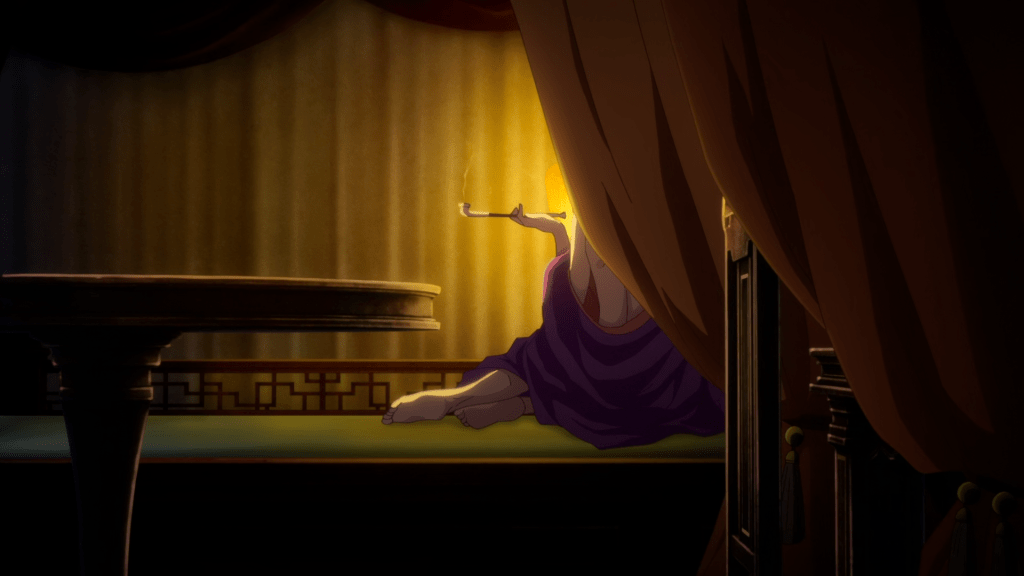
The color design is certainly the highlight of this flashback sequence on the mysterious woman in the annex, who Maomao is taking care of; dim blue tones are used to set the main motive of the scene, conveying the idea of a cold, sad memory (together with the heavy rain outside as Luomen enters the building) and red is once again used as the sole accent color, to highlight the courtesan’s make-up as well as the marks of her illness – the Red Light District being the cause of both.

For Maomao, immersed in this memory of the past, the Verdigris House is also a familiar and warm place, and it’s indeed thanks to her big sisters inviting her in for a hot bath (where she is now actually immersed, this time in water) that she’s able to come to terms with it (at least for the time being), and the mood enlightens once again.

Episode #18 – Maomao in the annex

We’re now back in the Outer Palace, where the plot starts moving again, in the form of our main characters’s thinking about each other, Maomao with her inner monologue – truly the “Kusuriya no Hitorigoto” – and Jinshi, with his exchange with Gaoshun, all connected by nothing other than the mysteries surrounding the maidservant’s (adoptive) father.

It’s in this moment that Lakan makes his (unpleasant) appearance once again in Jinshi‘s office, and the sense of oppression and uneasiness that his presence brings along is, once again, visually conveyed via low-angled shots.
The episode is then brought to an end with Jinshi notifying Maomao that a certain someone is interested in seeing her, and the delivery of her reaction to this irksome news is unsettling to say the least: a great and well-thought use of time, paired with the striking contrast between a very open and two very close-up shots of Maomao makes us jolt as much as Jinshi. There’s no need for words at all for him to understand her answer to that invitation.

Moving on to last week’s episode, Episode #19, after an intro that focuses on Jinshi‘s feelings on what happened the day before, we’re back following Maomao in her mystery-solving journey inside the Outer Palace; the mood seems to be back to an overall lighter state, even though it’s not gonna last long as Maomao‘s ruminations seem to indicate, but her worrisome exchange with Lihaku is abruptly interrupted by a jealous Jinshi and, right afterwards, by another gag that sees our apothecary totally losing her composure at the offer of receiving some prestigious Ox Bezoar as a reward for further investigating the concerning matters she was talking about earlier. Her excitement is so overwhelming and overflowing that she gets gradually closer to the camera until a close-up shot on her face takes up the entire frame.

Back to a more serious tone, the location also changes and Maomao‘s now consulting official reports about incidents that have occurred in the Court.
I really enjoyed the visual presentation of her thoughts being put together while she’s gazing at the technical drawings on the paper; at first, it’s a simple shot of the scroll spread out on the table, but as we dive deeper into Maomao‘s thinking, the camera closes up more and more on the drawings, until eventually it almost physically enters the dimension of the paper, and the scenario in her mind starts to blend with the drawing themselves. A very creative and effective way of showing her immersion in her thoughts, and making us involved in it as well.

After putting together some of the pieces of the puzzle we’ve been looking at from the start of this second cour, just one more obstacle stands in Maomao‘s way: her social status as a servant in the Imperial Court. The disparity between her and the guard before the ceremonial building is patently showcased visually through some quite clever framing, not only there’s a stone pillar separating the two of them right in the middle of the frame, but her position is also lower than his, as she’s standing some steps below on the stairs.

Episode #19 – Maomao & the guard

After the guard hits her making her nose bleed and her face swallow, to make things worse (or better?) Lakan makes his appearance, and he does so in the most menacing way possible.
There’s no eye contact whatsoever between him and Maomao, his voice is enough for her to recognize him without doubt. He walks up the stairs slowly covering up Maomao‘s entire screen presence, almost like she’s being engulfed in his oppressing presence.

It’s unpleasant, but it’s thanks to him that our maidservant can finally procede into the building and successfully save the person who’s performing the ceremony, that to no one’s surprise is revealed to be none other than Jinshi.

The last cuts of him taking her unconscious body to a safe place, walking the opposite direction of where Lakan is facing, with, again, a great use of negative space and powerful visual storytelling, are a great and dramatic way to close the episode.

Episode #19 – Jinshi & Lakan

I’ve been loving this show and its clever ideas an awful lot so far, aided by the fact that I’m already a great fan of its source material to begin with. It’s been really a long time since I felt so passionate about something to the point I felt like writing about it as I’m doing right now; hopefully in the next few episodes too there will be something worth writing about.

Episode #18

Kusuriya no Hitorigoto #14 #15 #16 – Direction Notes

As one of the leftovers from the previous fall season, Kusuriya no Hitorigoto‘s second consecutive cour is now airing, adapting the second volume of the source Light Novel.

As a big fan of the series, both through Nekokurage‘s manga adaptation and the LN itself, I’m very pleased with how Lakan was subtly introduced in the past few episodes. The aura of mystery and uneasiness that surrounds his character has been portrayed in the best possible way in the B Part of Episode #15, last week’s episode.

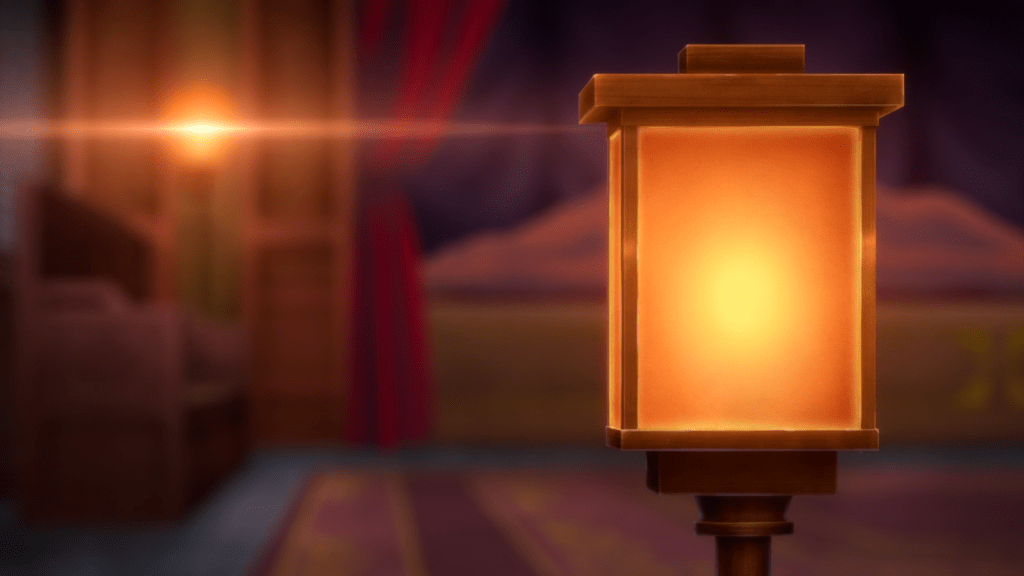
Low camera angles, gloomy lighting and well designed and expressive framing (Maomao being figuratively “caged” in the Palace, between the lamp on the left and the pillars on the right, and Jinshi, being oppressed by Lakan‘s presence as he’s positioned at the edge of the frame, drawn at such an angle that Lakan purposefully covers Gaoshun in the background leaving just the two of them in the shot) really helped driving the point home, making this one of my favorite sequences this season so far.

Talking about visually interesting sequences, alongside with this one from Episode #15, the one at the beginning of Episode #14 definitely stands out, solemnly showcasing the entrance of the new consort in the Inner Palace, highlighting just the red color on (and around) her figure, and desaturating the other tones to accentuate her pretentious attitude. A brilliant way to achieve visually-expressive storytelling with rather simple means.

Moving on to this week’s Episode #16, much like its predecessors, it covered another self-contained story. The solution to this week’s mystery revolved, above all, around “light”. This show has been really effective in meticulously depicting lighting and shadows since its very first few episodes, showing great care and attention to detail; this time as well, when such detail had actually played a role in solving the mystery, the lighting of the room was indeed a major visual element throughout the whole episode, in the form of thoroughly drawn shadows and digital effects.

Another key element of this week’s episode was the relationship between father and son (or daughter), a theme this story has been carefully building up to throughout its run.


So far, a modest yet surprising and creative production, crafting week by week a solid and valuable adaptation with (a rather methodical but surely effective) vision and soul. Arguably, one of the most interesting currently airing shows, and possibly one I’m going to cover more on this blog over the next few weeks.

Mobile Suit Gundam Char's Counterattack - Genga (Amuro)

Yoshiyuki Tomino – Interview on Mobile Suit Gundam: Char’s Counterattack

Original interview from the 1988 MOVIC Cinemabook, transcribed from “Char’s Counterattack Complete Collection of Official Records —BEYOND THE TIME—” (2022).


This translation is pretty outdated and may contain some inconsistencies or inaccuracies! It might get a revision sometime in the future…


~ It became a story where I didn’t like Beltorchika to appear in any way, so I chose to leave her out. ~

— “Mobile Suit Gundam” is, as of now, composed of three series; where is this new movie “Mobile Suit Gundam: Char’s Counterattack” placed in relation to the aforementioned shows? 

Of course it’s not unrelated to them. It’s the successor to “Mobile Suit Gundam” and “Mobile Suit Z Gundam”. However, it does not inherit “everything” from them, “Char’s Counterattack” is a story that was constructed step by step. “Not everything” means things like why Beltorchika Irma, a character introduced in Mobile Suit Z Gundam, is not present in Char’s Counterattack. Basically, I can’t say it inherits everything in terms of how the characters were arranged. 

Why doesn’t it? Originally, it should have inherited everything, but when I initially wrote the script that way, it was rejected. If I had more freedom with that, and Beltorchika would have appeared as Amuro’s significant other, the two of them would have ended being married. Basically, if they were married, perhaps they also had lived together for a long while, and at that point the sponsoring company was doubtful that a protagonist like that could have worked in a robot movie. I thought it was a very reasonable doubt. But while I was actually working on the plan and writing the script for “Char’s Counterattack”, I couldn’t think of that much myself. Basically, because I imaged “Char’s Counterattack” to be the sequel to “Z Gundam” which was the sequel to the first “Gundam”, I was sure Beltorichika had to be there. However, when I realized it wasn’t appropriate to make her appear in this movie due to the aforementioned developments, I removed her from the story, and I also made sure not to mention any information about her character. If I still included things like that in the movie, it would have quickly exceeded the 2 hours limit. 

However, that wasn’t the only reason I stopped her from appearing in this movie. 

When I finished writing the first script, I realized there was another major problem: it ended up becoming a story where the human power was so strong that Mobile Suits weren’t needed anymore. This too would have been a critical issue for the affiliated company that kindly sponsored “Char’s Counterattack”. And for me as well, it was something I didn’t like. After all, it is “Gundam” because it has mobile suits, like the Gundam itself. 

Eventually, it became a story where I didn’t like Beltorchika to appear in any way, so I chose to leave her out. 

— It sounds like the result of really hard work.

Nevertheless, on the other hand, it’s also natural to wonder why I had to leave her out of the story for a reason like that. However, to me, a movie should fundamentally be a one-episode self-contained story. You might ask what the previous “Mobile Suit Gundam (I, II, III)” movies are then, but the difference is that they’re the remaking of the tv series. So, if you ask me if it’s ok for movies like that to exist, since I too make them, I’d say it is (laughs). But it’d be a problem if every movie was like that. Also, for me personally, I wouldn’t like people to think that even if, for example, I divided “Char’s Counterattack” in “Part 1” and “Part 2”, it would have still been profitable, and since I was making a movie to be the conclusion to the first “Gundam”, I wanted it to be a one-shot episode no matter what. 

In other words, if I had those claims on my part, and the affiliated company that invested in the project acknowledged them, I instead think that the story I proposed, in which Amuro may be married and the Mobile Suits are not needed, must have been suppressed. This isn’t a give-and-take situation, rather a requirement that must be met in order for the movie to succeed. 

I fully accepted all these things as I was realizing them myself, and I’m glad it turned out to be a lighter movie this way. If Beltorchika made her appearance in order to have more natural-feeling dialogues throughout the movie, it would have been a little different from the kind of movies you simply watch and enjoy, it would have been something more true-to-life. However, there are two editors currently publishing the novel versions of “Char’s Counterattack”, and I know that there already are a lot of opinions that the version of the story in the novels, where Beltorchika is present, is better. I think it’s a good thing. Now you might ask why I didn’t forcedly do it then, and that is because if I did, “Gundam” as a product wouldn’t have been able to go on. It’s not just for practical reasons like investors not putting their money in it; if I possessed the power to do that myself, and actually made that happen, I would have become unable to write anything about Mobile Suits at all after that. If you’re wondering whether a story that denies the role of Mobile Suits would still be good or not, after all, the answer is no. Basically, what needed to be included in the novel adaptation was the first version of the script I wrote. 

After all, a movie should not be made solely based on the ideas from a single staff member. For a movie, first you have to think of the audience, then come the investors and the director. Then many more people need to be involved, like animators, art directors, voice actors, and the people who took the recordings. If it was to be based on the preferences of only one person, then creating a movie wouldn’t need to involve that many people. But even so, ultimately, a movie is still influenced by its director’s intentions, so it can be said that it does belong to the director. The work of balancing these aspects is what makes a move so interesting. 

— You’re saying it’s the result of the intentions of many people, but it must also be the result of one single person’s will. 

There’s often debate about whether it’s right for directors to convey their egos into their movies or not, but the answer is no. If you look at successful movies, they’re made with the collective effort not to let individual egos shine. Those movies feel like actual movies because they’re made oppressing the director’s ego and accepting many different opinions. It’s when movies are made that way that I think they’re successful, and I believe “Char’s Counterattack” is like that too. At least, I believe it didn’t turn out to be that kind of heavy and painful works that just conveyed their director’s ideas. 

That’s why, in my case, I can only say that I couldn’t think of “Char’s Counterattack” as something to watch after the previous tv series, but I could only create it as a one-shot story that just inherited something from them. It’s not something to compare to the tv series, and at the same time it does not have incongruences with everything that has happened until now. It’s the only result of all these things. 

— New characters, like Quess Paraya, made their appearance in “Char’s Counterattack”, can you say something about them?

After deciding Beltorchika wouldn’t have appeared in the movie, I thought it was necessary to add something to spice up the film, and after all, a female character to shoulder the protagonist was what was needed, that’s why I made Chan Agi to be Amuro’s partner. 

Also, since “Char’s Counterattack” is the story between Amuro and Char, the characters are arranged in a very particular way so that they’re not simply divided into enemies and allies. In order to achieve that, when I was thinking of Char and the antagonist-side, I thought a character to form a connection between the two sides was necessary. When I was thinking of that character’s disposition, I couldn’t think of anything different than someone like Quess Paraya. So I made her a supporting character, so that even though the parties are divided into allies and enemies, there’s a connection between them. For that reason, if Beltorchika was to appear in the movie, she would have ended up covering the roles of both Chan and Quess by herself. Under such circumstances, a new character had to be introduced. And what I came up with after that was “Char’s Counterattack”.

— Besides Beltorchika, what about the other characters from the previous “Gundam” and “Z Gundam” that didn’t make an appearance?

While making “Char’s Counterattack” I didn’t think at all of the other characters. As for why I didn’t consider other parts, this is also my personal opinion but, movies should have a good pacing, and if I had to expand on other parts as well, the pacing would have gotten worse, and on top of that, considering I knew for certain that drawings and animation wouldn’t have been completed in time, I removed most if not all of the parts that felt superfluous.  

Well, the running time of the movie was exactly as I planned. The cuts that got removed were about 300, all originally prepared because they were necessary to explain things like the human relationships between characters in the movie, there was no element [that got removed] other than that.

~ I believe that if they work hard and get their job done, and gain experience from that, truly amazing animation can be produced. ~

— What do you think about the production staff? 

The fact that there are seven animation directors who worked together is clear to anyone who watches the movie. As for why there were seven of them, it’s simply because no animation director alone was able to do as good as Yoshikazu Yasuhiko did with “Gundam”. At the same time, creating something like “Gundam” after Yasuhiko, would require a tremendous amount of strength. The reason for this is that “Gundam” has a certain volume to it. Expecting people who are barely 25 years old to be able to handle that kind of work would be a pretty cruel thing. As the production process continued, what made an impression on me was that especially in the first four months, to put it bluntly, not a single cut was completed. Supposing things were going smoothly, over these four months I believe even the after recording and dubbing processes would have been completed to a good extent. 

As for why it ended up like this, there are many other reasons. Anyways, regarding only the “Gundam” part, it had a “certain volume” to it, meaning it was pretty demanding work, and because of that the staff must have been nervous and even if they tried their best, they couldn’t make it. That one cut took a lot of time and even when it was finished, the end result wasn’t really great. 

In short, the desire to work harder made them waste more time. It’s the same thing I said earlier, when I wrote a version of the story in which Beltorchika appeared as the first script. I wanted to do my best and I had to, so I ended up writing a story in which Amuro had become like an old man, all to be told in the end that that kind of thing couldn’t have worked in the movie; in this exact same way, everyone was burdened with that cut and couldn’t move on at all. In other words, this proves that wanting to do your best only by yourself will never bring good results.

If that wasn’t the case then, someone experienced like me should have seen this situation coming and prevented it, and I deeply regret I didn’t. As a result, I felt that young people were put under undue pressure. I am sorry for what happened. When I saw all those young staff members of today being stuck trying to do their best, I thought they must have been all very nervous. However, feeling this nervousness when doing business is extremely troublesome. It becomes a negative factor. All this nervousness creates is a loss in terms of time and money, and these inconveniences end up affecting even other aspects like the post-recording and dubbing, creating even more inconveniences to other people. My message to all staff members is to try to maintain a good balance in this regard. 

And also, when it comes to work, it is also a problem to take things too seriously. In other words, I think that all the staff needs to be trained in order to become able to skillfully handle this middle-of-the-road aspects, and if they got trained like that, most of the staff members that worked on “Char’s Counterattack” would become able to effectively utilize their skills in the field to complete their works. There are some exceptional individuals, but most people already possess really good skills and understanding of the fundamentals of animation. I believe that if they work on two or three more projects like this one, and gain more experience, truly amazing animation can be produced here in Tokyo. This isn’t just cheap flattery. That’s why I want them to take real care of the power they have right now. 

— Moving on to another topic, did you as the Director draw designs or rough sketches for this project? 

No, I don’t do that kind of work anymore. That’s because it’s no longer at a level an amateur can handle, so I don’t get my hands on it anymore. However, as I said earlier when we were talking about the staff, the main trouble was that, although the skill level of each individual has improved greatly, unfortunately, they neglected the more fundamental issues and focused only on the less relevant and smaller details. That’s no good. Because of that, they had hard times especially with the mechanical design. To the point they felt genuinely angry. 

I recognize that the animation, or rather, the drawings that form the animation are really good. But the essential thing is that this is animation, you don’t have to draw with an illustration-level finish. That’s not animation, that’s illustration. You can’t make drawings like that move. That’s why they’d come to a point where almost no one could think of the action lines for the animation. Moreover, even if you know how to depict the movements that have been popular in tv animation for the past two to three years now, that’s not animation. There are a lot of people who, in order to learn just that technique, have forgotten how to do ordinary animation. 

Even when it comes to mechanical design, I know they’re supposed to draw mobile suits and mechs with a new and fresh feel to them, but when I look at the designs, I feel I’ve already seen them somewhere before. The details on the exterior are drawn in a cool and meticulous way, but in the end if you remove everything on the surface, it’s just the copy of another character. That’s why I want people to understand not to let details fool them, and that a design detailed like an illustration can’t be made to move around in animation. 

The end result is that the animation of the last few years, especially the one that comes out of the world of video editing software, all looks the same. It’s not an independent work. 

However, I’m not doing any design work myself. It’s all done by the individual designers. Anyways, because we had to spend so much time just to get to that point, the finish ended up being a bit sluggish, and the fact that it wasn’t really an independent work was painful.

— Going back once more to the work itself, it looks like “Char’s Counterattack” brings a breakpoint in “Gundam”, did you feel something in this regard?

Unfortunately, after finishing editing this film, I realized I didn’t really hit a breakpoint with it, so I don’t have that kind of feelings about it. To be honest, now that the prologue is finally over, I’m just looking forward for “Gundam” to start all over again. 

I’ve come to the realization that I myself have been living inside of “Gundam”. 

— What do you want people to see in “Char’s Counterattack”?

The reason I made this movie is that I wanted the audience to see it and I had something to tell them through it, so all I can say is please watch it. And whether they like it or not, it’s not just the audience’s business. As the creator, I can only ask “I made the work this way, what do you think?”. If it was just to say “I made the work this way, so please understand it”, I wouldn’t have gone out of my way to make a whole movie, I would have just written a publication or a novel, and a pamphlet with dozens of pages explaining what I meant to write in the movie. But if I did that, there would have been no reason to make the movie at all, and if there’s no movie, there’s no pamphlet either, so that would have been a contradiction (laughs). 

Also, those who have already watched “Char’s Counterattack” will understand, but I really don’t know whether the things I did in the movie, like withdrawing Beltorchika or the last scene with Amuro and Char, are good or bad. I’m not saying I just summed it up and made it that way. The screening time was limited to at most two hours. If I wanted to add more details, it would have exceeded that time limit. It might have been possible to create a great work even exceeding the time limit, but I didn’t have the self confidence to do so. 

Anyways, it’s not related to the main body of the work, but there’s something on a technical extent I would like people to notice. My approach in direction for this movie was to make it look like a regular animation movie. I can say with total certainty that there’s no basis to say this is a just regular movie, however, I thought this kind of baseline would have worked, so I made “Char’s Counterattack” this way. This type of technical attention, like how the drawings are connected to each other, should be reflected on the screen. 

If possible, it would really be educational if, instead of thinking “why does it look like this?”, you thought “what did the director do to make it look like this?” and tried to figure out the answer. However, this is something highly technical that cannot be really put into words. Even if I explained it, it would be really hard to understand, instead I would really like you to learn it by looking with your own eyes. If, while watching “Char’s Counterattack”, you felt something was strange, like how it looked or didn’t look like a regular movie, that’s what I’m talking about. Also, if you wondered how the story of the movie seemed to fly by so quickly, if you pay special attention to it, you will understand how to connect the moving drawings together [to make it feel so quick T.N.]. When you’ll have the chance to make a movie in the future, that will become some very remarkable knowledge to have. 

~ If I were offered to make a live action robot movie, I would want to create a work that doesn’t let the animation say anything. ~

— Except for your own works, what kind of other works do you like?

Speaking of movies, I don’t like them to a point I can actually say “I like it”. However, if it’s just a matter of preference, I would say I like the black-and-white version of “King Kong” that was produced in the United States in 1933.

— Did “King Kong” have any influence on you as a movie creator?

I wouldn’t say so. And that’s because it’s a movie with a low degree of perfection. However, I like it because it conveys something that makes me feel like saying “I love King Kong”. I guess that’s what movies are all about, that feeling of having fun. Also it’s because I think the stupidity of the people who created such movies, still in black and white, at the time when talkies (vocal films) began to spread before World War II, might be the true spirit that animates filmmakers at their core. 

Accordingly, that’s why I really hate the color version of “King Kong” that was shot on 70mm film. As for why that is, [in the b&w 1933’s version] their true intentions were unusually apparent and the unhinged nature was on full display, if it were me I would think that was great, and their attitude towards their work was totally positive. In other words, now that color film has become commonplace and anyone with the right financial backing can set up such a large location, arrange a 70m camera and do it, I can’t stand hearing the staff from that movie saying that was the real “King Kong”. 

— Is there a recent movie that caught your attention?

I told you, I don’t really like movies, so I think that last year (1987) I haven’t watched a single one…

Oh, I forgot to mention, when it comes to movies, horrors are absolutely a no go for me.

— Is that because they don’t personally suit your personality? 

Rather than not suiting my likings, I just can’t bear them. So when I accidentally went to watch “Alien”, I was so scared that I closed my eyes for about an hour (laughs). I’m just that kind of person (laughs).

— There’s quite the difference in genre between “Alien” and “Alien 2”, the latter being more of an action movie. What’s your opinion on “Alien 2”? 

“Alien 2” is kind of a stupid movie (laughs). At least I’m glad it wasn’t that scary. The first one was really scary… I want to whack whoever makes it air on tv. Don’t you think? But when it’s broadcast on TV, it’s not that scary. Isn’t that callous approach the same as the callousness of the color version of “King Kong”? 

Anyways, I really don’t watch many movies. Of course I do have interest in the ones I work on and I’m glad if they do well, but generally I hate even my own films. That’s because if I end up liking my own movie and get absorbed into it, I always have the fear somewhere in my heart that I won’t be able to come up with the next one. 

And yet, when I watched “Mobile Suit Gundam III: Encounters in Space” about four or five years after its release, I was moved (laughs). “There really are people who can make such great movies out here, that’s remarkable”, I thought (laughs). Basically it’s because I hate them for a while, that somehow I don’t see them as my own work. In that sense, I am a relentlessly forgetful person (laughs). 

— Lately, “RoboCop” has been a hot topic when it comes to movies, it’s a shame that robots, a speciality of animation, has been stolen by live action movies, don’t you think? 

I knew this was going to happen three or four years ago already. I’m angry at myself for not making “Live Gundam”. Perhaps if the talks for “Live Gundam” had been concluded well, it could have been released around fall of last year.

— Do you think animated robots can break out of the current difficult situation?

No, they cannot. There’s no clear reason why. But it’s definitely the case. For example, if I were offered to do a live action robot movie, I would want to do it. If that happens, I would like to create a work that doesn’t let the animation say anything. I think I’ll have that kind of opportunity sometime before I die (laughs). 

There’s a part of me that foolishly believes that. It’s also true that I would like to believe that even right now, from a practical standpoint. I would like to think about what the mechs would be like in such situations. Maybe not right now that “Char’s Counterattack” just got released, but when summer comes I would love to forget about my current job and think more about that. Maybe this joke will turn out to be true in the future (laughs). Even though I don’t know how far in the future it may be, since I believe it, I’m already starting to make plans. 

In that sense, if the staff who helped with “Char’s Counterattack” works on several other animation products over the course of, say, three years from now, and doing so also learns the skills to create real animation, and becomes able to make a real movie, then, when that time comes, it’d may be possible to create an [animated] movie that can silence the live action robots produced by Hollywood. 

Actually, I do believe that’s possible. In fact, I would love to make an animated movie that even makes people want to see a live action adaptation of such a movie instead. And this means that if you don’t believe in this like the joke I talked about earlier, you have to seriously plan a route to this end. If you just have a vague idea to do something, you’ll get nowhere. I believe it can be done. 

— After all, if you don’t start thinking about it, it’s not fun. 

It’s not that it’s not fun, it’s that you won’t be able to take it seriously unless you think about it. It is because we believe in this that we are able to create things.

~ If Char was really a lolicon, he would have teased Mineva and it would have been a rotten story. So, let’s assume he forgot about her. ~

— Let me change the topic back to “Char’s Counterattack”; I would like to hear something about the voice actors.

Well, I had no freedom in that regard anyway. I mean, some of the voice actors were already an obligatory choice, right? A lot of them, actually. As a filmmaker, when creating a new movie I want to refresh things a bit. And first of all, there were a lot of characters that appealed to me in that sense. On top of that, to select the voices for the new characters, I had to listen to about 80 audition tapes, but I had the impression that the new aspiring voice actors sound all the same, they all act the same way. But for this movie, we had no choice but to use this kind of cast. It really bothers me from the bottom of my heart. 

However, this does not mean there is something wrong with the people who performed in “Char’s Counterattack”. On the contrary, there isn’t anything wrong at all with the people who played the roles. What I’m trying to say is that new options have become so narrow. Also, I would have loved to work with a young, fit-looking girl (laughs). However, I couldn’t abuse my authority to that extent (laughs). In other words, the pool of voice actors has become narrower. It’s the same thing I talked about before regarding the animators. Well, it made me realize that the nature of various things has become narrower nowadays, and also that we need to create a world where we can work with people with different tastes and characteristics. Compared to about 4 years ago, it seems like there are fewer options, and it really came in as a surprise to me. 

After all, the cause of this are the new tendencies like to have a predetermined image of what animation is, or for production companies to bring in cute girls, and I would want this to stop immediately. I would like to say that animation is not a place as narrow as this. Anyways, this is not a problem for the individual voice actors to solve, but for the animation industry as a whole.

— It’s similar to the idol singers being all the same type of cute girls, isn’t it? 

Yes, it’s exactly the same. Whether they’re good singers or not is a problem that comes after. This kind of thing depend on the horizons and personal fondness of the people at the top who select these girls.

— For this movie, the dubbing process lasted for three whole days, right? 

If you ask me, three days were not enough. But there are many practical issues regarding budgets and guarantees in the Japanese television and animation industry, so we could not ask for any more than that. That’s the current state of things, and I hate it. However, I also think I understand that everyone else too isn’t working under ideal conditions.

— Not to ask about the parts of the story that weren’t depicted this time, but I’m really curious as to why Mineva Lao Zabi wasn’t there alongside Char. She would be already 14 years old, so she should be old enough to express her thoughts on her own now, right? 

Well, about that. I didn’t make her appear because of my personal preference, so I didn’t mention anything about her. If I did that, it would have ended up becoming the story of Char and Mineva. And that’s an entirely different story. If Amuro were to interfere in such a story, it would have only become more complicated. It would have ended up in a similar fashion as that feeling of intricacy and confusion when Haman Karn appeared in “Z Gundam”. So I instinctively avoided writing a story like that. 

So then, in response to the question of what kind of relationship is there between Char and Mineva in “Char’s Counterattack”, ultimately, Char solved his issues with the Zabi family, so even making him kill Mineva wouldn’t have made sense as any kind of vengeance story at all, so think that he just let her be or forgot about her. Otherwise, the story would have easily focused on how tragic of a character Mineva is, and I didn’t want to dive into that kind of thing. 

It’s briefly mentioned in the movie, but if Char really is a lolicon, for better or worse, he would teased Mineva. She would have been harassed and tormented, or even molested. But either way, it would have been a torture for her. I personally don’t like stories like that. This kind of desire to portray the inherently sadistic side of humans doesn’t really suit robot stories. So, let’s assume that Char forgot about her. Otherwise, it would be a rotten story…

Obviously, I completely understand your interest to know about the story of the two of them. Maybe it’s because “Char’s Counterattack” has finally left my mind, but the truth is that I could create another story about both Mineva and Char. 

— Mineva too is a character with a considerable weight in the story, isn’t she?

For this very reason, isn’t it okay for at least one little girl to be forgotten for once? In Beltorchika’s case, I had plans for her but then withdrew them, so it’s fine. I guess it’s because this aspect of choosing which character to pick up is an inherent trait of “Gundam” as a work. That’s why I think I shouldn’t always use every single character. I feel like if I did everything too methodically, it would become an unhealthy practice. I think I’ll definitely include Mineva in the extra edition and deal with her… no, I won’t (laughs). 

Anyways, if I were to deal with her, I would probably do it with an adult Mineva. Otherwise it’ll end up naughty and I’ll feel bad, so I’d wait for her to come of age and not be a child anymore. Once you become an adult, it’s okay for you to decide things by yourself. Now that I have this idea in my mind, I’ll use it for the next “Gundam”… (laughs).

~ Even if Amuro and Char died in “Char’s Counterattack”, their existence will never disappear. ~

— Well then, lastly, I wanted to ask about Amuro and Char in “Char’s Counterattack”, which of these two characters do you personally prefer?

Well… as their creator, I shouldn’t answer that; I know them both very well. Anyways, Amuro is an ordinary character, while Char is more like a recipient for the desires and ambitions of many people. However, everyone knows that to become something like Char is highly dangerous, so I have the feeling that if I have to choose which one I prefer, Amuro would be my choice. Also, Char as a person is what I tried to become myself, and since I couldn’t, sometimes I feel like I can’t stand that bastard. This is just a comparison between the two, but I really cannot say which one of them I like the most in my heart. 

However, as a deep emotion I feel towards both of them, I do feel both Amuro and Char did a great job until now. I also think there is some problem with the meaning of “Counterattack” in this movie. 

— I believe that at their core, their personality is the same for both of them. Did you make them with this in mind? 

If that’s what you feel, there’s nothing I, as the creator, can say. But it’s not like I made them with that intent in mind.

— There have been moments when I figured it wouldn’t be strange if the two of them were swapped. 

I see, I too totally understand that. That’s why Amuro and Char should be able to become good friends. Yet, people with the same “character” can never become one. Especially in a community, whether it’s a nation or a company, only one person can stand at the top. The remaining people have no choice but to become their assistants or subordinates. But Amuro and Char are both men who stand at the top. And that’s exactly why they can’t exist simultaneously. To make that possible, it would take the world to change. 

Ultimately, “Gundam” is a war story because mobile suits are there; if I were to depict only Amuro and Char in a different way than the others, it would no longer need to be a war drama. That’s right, “Gundam” has created a world that led to characters like those two to appear, in other words, it gave life to characters whose personality even I cannot change. In that sense too, it was impossible for me to deliberately mess with them.

— It often happens that characters become independent from their creator. 

Yeah, it’s like that. It’s not as easy as it sounds on the surface, but it’s definitely as you said. They exist as humans with actual personalities. That’s why even if Amuro and Char died in “Char’s Counterattack”, their existence will never disappear.

— Thank you for your time. 

Masakazu Ishiguro & Akiyuki Shinbo – Interview on Soredemo Machi wa Mawatteiru (And Yet the Town Moves)

Original interview from Shinbogatari (2012), check it out on the SoreMachi fansite too!


This translation is pretty outdated and may contain some inconsistencies or inaccuracies! It might get a revision sometime in the future…


~ While I was watching the anime, I was reminded of the feelings I had during the original serialization ~

— First of all, congratulations for concluding the anime series “Soredemo Machi ha Mawatte Iru”.

Ishiguro: I watched the anime every week, not by recording of the episodes, but in real time right when they were airing. Though, the airing time for SoreMachi got changed and it broadcasted too late in my opinion (laughs). Due to sports programs, it slowly got delayed further and further and at times it even aired after 3 AM… It was tough…

Everyone laughs.

— I’ve already asked this before, but what’s the most dear thing to Director Shinbo about SoreMachi? 

Shinbo: Getting involved with it. This time I did a lot of unusual things, I wanted to create a film filled with the ideas and feelings of the whole staff, one that would have made everyone delighted once it was completed. That’s the basic idea behind SoreMachi.

Ishiguro: Watching the SoreMachi anime, I was reminded of what I thought I wanted to do in the beginning. In fact, as the series goes on, different elements like school-life and SF are presented, and the story explores various directions. But, the anime mainly focuses on the initial chapters, so while I was watching it, I was reminded of my feelings at the beginning of the manga. At first, in SoreMachi I drew a lot of the Made Cafè in the Shopping District. At the very beginning, before the serialization even started, I planned of having Hotori not wearing maid clothes that often, I wanted her to wear them only in the most critical moments. Like the Battle Protector in Future Police Urashiman. The Battle Protector gets used only once in the 10th episode, right? (laughs). That’s about what I felt I wanted to do. But well, due to the editor’s demands, that ended up not being the case.  

Shinbo: I heard that Naoyuki Tatsuwa-san, the series director, worked so excessively hard that he almost got some bald spots in his hair.

Ishiguro: Tatsuwa-san also put on some weight, didn’t he. He was so thin when I first met him. As far as I know, his whole body got bigger. 

Shinbo: Also, Yasutoshi Iwasaki-kun, the chief animation director, did his absolute best. He actively participated and made great efforts with the parts we struggled to picture. For example, he helped out with dubbing synchronization and other small and fine details. He was like an all-rounder. I’m really grateful. 

Ishiguro: The animators’ drawings thrilled me a lot. They animated characters walking around while wearing a purse, or singing while playing the bass, I think it’s impressive how they were able to pull that off. I too, when I was still in school studying under Toshiyuki Sato-san, have drawn some animation, but I couldn’t really make such sakuga. 

Shinbo: Ishiguro-san, are you still interested in working as an animator?

Ishiguro: It’s not like I’m not interested, but I’m a mangaka, so… I think it’s better to leave anime to the people who are competent in the field. Hotori and the others are more cute in the anime (laughs). I think my contribution would be superfluous. 

Shinbo: Which parts do you think were cuter?

Ishiguro: I thought “oh, I lost” in Part A of the first episode, when Tattsun turns this way while puffing out her nose. It was so cute I hurried up and took a screen capture and saved it.

Shinbo: Up until now, I used to make products that relied on the right tempo and ratio between cuts to create animation, without actually using movement. But with SoreMachi, I tried a different approach focusing on the character acting, with more dynamic facial expressions and gestures. Also, I thought it would be a good thing to convey a somewhat detective-like ambience so, in order to convey a slightly mysterious feeling, I used reflections on door knobs or glass and lower camera angles. For the DVD/BD version, I wanted to redo the photography all over again, and applied new filters to the compositing. Back in the days, there was an actual gap between the cels and the lens of photography machine, so the ambience was naturally put into it. But now, unless you put on filter during compositing, you can’t quite convey the right atmosphere.  

Ishiguro: Since when anime became digital, drawings are made with clicks and some aspects of it have lost their appeal, haven’t they. Personally I like anime from the hand-made cel times better. 

Shinbo: Now it’s more difficult to understand how good the film sensitivity is. Now, watching TV programs, I too am unfortunately getting used to see digital drawings, to the extent some times I even do want to watch those made-with-clicks drawings. It’s really sad. 

~ It might have become the most mysterious story of SoreMachi ~

— Well, then. Today I would like to hear about the point of contact between the anime SoreMachi and the original manga. One example is the 9th episode in the anime and manga chapter 71. 

Shinbo: The “Bechiko Yaki” from episode 9, right? 

Ishiguro: That was an idea that Director Shinbo told me about a long ago. Eventually, other people were about to use that same idea, so I wanted to do it first. 

Shinbo: It was about having the manga version by Ishiguro-san being published in the Young King OURs magazine, and the anime version broadcasting immediately the next day. I’ve always sat on the idea of releasing the anime and manga in the same season while working on an anime adaptation. But I didn’t think there would have been a busy mangaka down to help me realize it. It was a really difficult thing, but Ishiguro-san said he definitely wanted to do it. I believe people who were up to date with the Young King OURs manga magazine and then watched the anime version right after were surprised. Because we wanted to see those astonished expressions (laughs) we both worked hard. 

Ishiguro: I came up with the “Bechiko Yaki” story after this whole thing was planned. I wrote it already knowing it was going to be adapted into anime, so it took me quite some time to finish writing the draft. I dragged it for so long it was almost too late when I presented the work to the anime staff. 

Shinbo: Based off the draft Ishiguro-san gave us, Takayama Katsukiho-san (the series’ scriptwriter) wrote the actual script and from that we completed the storyboards. It was an original episode, so later while Ishiguro-san was checking the manuscript, adjusting things to make it more coherent and consistent.

Ishiguro: Half a year before I finished with the draft, then I wrote the manga manuscript in October 2010. I wanted to make a self-contained story completely detached from everything else. And I also wanted the characters not to have a proper introduction. That’s why I chose Kameidou, who has very few appearances, as the main character. 

Shinbo: This episode was an original, so new characters models were necessary. The character design drafts Ishiguro-san gave us were already colored in anime-style. 

Ishiguro: I thought it would have had a certain appeal to the anime industry (laughs), I put lots of effort drawing them.

Shinbo: That story might have become the most mysterious story of SoreMachi.

Ishiguro: You’re right. It might also have surpassed “Hole” (episode 10 Part A) (laughs).

Shinbo: The anime staff was bewildered, wondering what Bechiko Yaki were (laughs). 

Ishiguro: They’re mythical sweets (laughs).

Shinbo: During production, we were lost about what color they actually were, physically speaking.

Ishiguro: After completing the draft, I worked at the manga as usual but… I thought of them with the assumption that they would be colored, so Bechiko Yaki’s real color was truly a big trouble (laughs). After all, manga is in the black and white world. 

Shinbo: I would definitely like to compare the manga and anime versions. 

Ishiguro: Personally I’m curious about the anime staff’s reactions. Takayama-san’s reaction was merely just “It’s white, it’s white”, I want to know about other people’s reactions as well. 

— Anyways, the subtitles for the SoreMachi anime are a bit odd, aren’t they? Like “The Most Popular Sexual Harassment Trial” or “The Cat Boy”.

Ishiguro: Those are Director Shinbo’s conspiracies (laughs). For the anime subtitles, there was a rule that the original subtitle for Part A and the original subtitle for Part B must be combined into one.

Shinbo: When I was thinking about what to do with the subtitles, accidentally I realized how good combining the two subtitles “Hole” and “Grandpa Tsukkomi” into “Grandpa Tsukkomi Hole” sounded.

Ishiguro: And so, to follow the scheme of this “Grandpa Tsukkomi Hole” subtitle, Director Shinbo stick with the rule of combining the two of them into one (laughs). For example, episode 7 “Lovers Night Escape” comes from “Romantic Runaway” and “Night Walker”, and episode 8 “Automatic Orchestra” is the combination of “Automatic World” and “Labyrinth Orchestra”. The audience too began to realize the patter, but for episode 9 they couldn’t put it together (laughs). 

Shinbo: Episode 9 “Duel! Adults Buying Plan” was the latest chapter in the manga that wasn’t yet included in the tankobon (laughs). 

Ishiguro: Episode 11 “Kon’s Summer Crying” come from “Summer of Josephine” and “Kon-Senpai’s Silent Rage” but at first the original subtitle idea was “Josephine’s Summer Crying”. That one was pretty fun.

Shinbo: The last episode’s subtitle “SoreMachi” was nicely put together as well! Ideas like this always come while eating dinner together after reading a book.  

~ I believe Omigawa-san’s voice was a stroke of luck ~

— Speaking of dinners, Ishiguro-san and Director Shinbo, I heard you meet often and had dinner together.

Shinbo: We do meet a lot. We used to met with the excuse of gathering material, and after that we went out for dinner. 

Ishiguro: Even when Director Shinbo was collecting materials on his own, I rushed over (laughs). When we meet, we discuss our impressions upon watching the SoreMachi anime and chat a lot. At times I want to send him emails, but then I think Director Shinbo is a very busy man and end up not sending it. 

Shinbo: It’s fine at anytime. Please, send me emails. 

Ishiguro: Well then, I’ll send very brief, concise and simple mails.

Shinbo: No no, long texts are fine too (laughs). Recently though, when me and Ishiguro-san go out to eat together, the rest of the staff won’t come with us. However, it’s not like just anyone is fine, after all it’s better to be with someone who can praise you (laughs). If you don’t get to be praised, then it’s fine even if no one comes at all (laughs). 

Everyone: Uh?? (laughs)

Shinbo: When I was young, when someone praised me I used to think it might have been a lie, but lately I grown to accept compliments more honestly (laughs).

Ishiguro: I too am concerned about the reception of my work. At first, I looked up for opinions on the internet and read them. But my master Shinji Ohara-san says that if you worry about your recognition too much, the gap between what your fans want you to draw and what you want to draw gets bigger, and you end up not being able to draw manga anymore. So I haven’t looked for opinions on the web for 5 years now. But since the anime adaptation., I’m reading a lot of impressions and comments about it online (laughs).

Shinbo: Why is that?

Ishiguro: Well, when it comes to anime, a lot more people are involved and your personal responsibility is lower; I think that’s the reason. Probably, because of that I feel more at ease (laughs).

Shinbo: I read opinions on the internet from time to time, but not so many about SoreMachi. I stealthily look for them too some times, but it’s not really a good thing for your mental health. 

Ishiguro: SoreMachi’s reception is pretty good. I believe its reputation got better with time. From the second half of the show, the appreciation for the voice actors got incredibly high. 
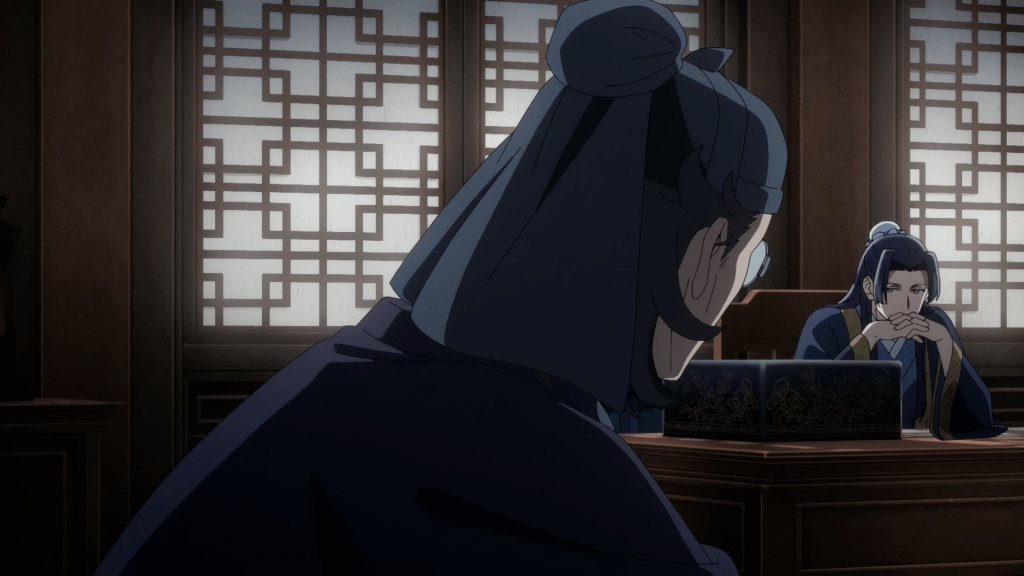
Shinbo: I personally agree with the characters and characters being popular. 

Ishiguro: Speaking of voice actors, I recently listened to the character song album from “Natsu no Arashi!” the Director gave me. A song I thought was super cute was sung by Chiaki Omigawa-san (Hatori’s VA). Then I listened to another song and I found that one super cute as well, and it too was by Chiaki Omigawa-san… Perhaps I really like Chiaki Omigawa-san’s voice (laughs). 

—  In Ishiguro-san’s mind, Hatori’s voice was a strong one, right?

Ishiguro: That’s right. Years ago, when I was watching Variety Bangumi at midnight, I noticed the narrator had the perfect voice for Hotori. So, I hurriedly made a recording and said to the editor in charge at the time that was about my idea for Hatori’s voice. Then, when I was attending the voice actors auditions for this anime adaptation, there was a person whose voce was identical to the one I heard. That person was Chiaki Omigawa-san. I believe it was a stroke of luck.

Shinbo: I think Chiaki Omigawa-san fits Hotori perfectly. Speaking of V.A. from the “Natsu no Arashi!”’s character song album, Ryoko Shiraishi-san was a good fit too. 

— In SoreMachi, Ryoko Shiraishi-san has voiced Harue Haribara, right? 

Ishiguro: My wife got mad at me because of that, she said “What role are you making Ryoko Shiraishi-san play?!”.

Shinbo: Harue Haribara has a great personality, you know. 

Ishoguro: At the first recording session, Shiraishi-san played Harue’s role being aware of her bucktooth (laughs). Like, she talked al the time exposing her teeth. 

Shinbo: She didn’t need to be that worried about the teeth (laughs).

Ishiguro: To you, Harue Haribara is just a normal high-school girl, so you said there was no need to act her role in a different way, didn’t you. I went to attend every recording session I could, Tattsun’s voice actress Aoi Yuki-san’s butt was really impressive. 

Shinbo: Her butt?

Ishiguro: At the recording session, we were in the booth with the sound mixing console, separate from the recording room. From there, you could see the voice actresses only from behind, or am I wrong? Yuki-san’s stature is pretty small, so when she stood tall facing the mike, she looked like she sticked her butt out in front of us, that’s why. 

Shinbo: Voice actors for the characters in the shopping district were good too. The one for the guy at the laundry had the same eyes as the character (laughs).

Ishiguro: At the recording sessions, Tatsuka-san told me that the guy from the laundry was there in the studio, and he really was, the voice actor I mean (laughs). 

Shinbo: There aren’t many products that can use such harsh male voices, so it sounds really fresh. Nowadays, voice actors  like that are almost only used to dub foreign movies. 

Ishiguro: Yeah, you’re probably right.

Shinbo: Uki’s voice actor, Takahiro Sakurai-san was great too. So much so that from now on I would like to think that old ladies should always be played by men. Yukio Aoshima-san played a role in “Ijiwaru Baasan” didn’t he? Ken Shimura-san played a lot of old lady roles too. Instead of having actual women playing that kind of role, I think male actors can play it in a more “vigorous” way. However, Sakurai-san’s got so hooked and absorbed acting towards Uki’s husband Zenji it became a strange situation. I totally couldn’t tell Sakurai-san was acting in that moment.

Ishiguro: It wasn’t Sakurai-san, I got the impression it was Uki herself. 

Shinbo: Sakura-san’s physique looks like Uki’s. That may be the reason why. 

Ishiguro: His hair was gray as well, and his boy is thin too. Their body shape is really identical.

Shinbo: After all, the voice comes out of one’s body and skull, right? That’s why if the physique is similar, the voice is as well. It was a satisfying discovery. 

Ishiguro: For people like me who always look at voice actors from behind and aren’t really knowledgeable about them, it was pretty confusing. When I attended the auditions, a lot of famous voice actors were present there, but ultimately I didn’t understand at all who played which role. Why at the recording studio you can watch only from behind? 

Shinbo: There are so studios where you can look from the side too. But I don’t think there’s one where you can see the voice actors from the front. After all, if the actors and the studio staff look at each other in the eyes, it may be an awkward situation. Also, voice actors must look at the images while they’re performing. At times, narrators happen to look forward. 

Ishiguro: When I was in the recording studio, I was there basically just to watch. When DoA Toshiki Kameyama spotted someone misreading a kanji he boastfully reported the mistake (laughs).

Shinbo: Members of the cast said that Ishiguro-san in person is different from the photo in the tankobons.

Ishiguro: That’s Jeremy Brett, not me! My face doesn’t look like that! 

~ There still are episodes I want to adapt into anime ~

Shinbo: After the recordings, we used to go to launch or inner meetings a lot. After the recordings for the last episode, many members of the cast and staff joined as well. Productions like this one that brought so many people together are rare nowadays. This too must have been because we were working on SoreMachi. 

Ishiguro: Thank you so much. 

Shinbo: I would love to make a second season for SoreMachi. The more into the second half I were, the more I wanted a season two. 

Ishiguro: That’s true (laughs). Lately, I already start to feel lonely. It’s more desolate everyday. Now that the script meeting are over, I won’t see Takayama-san and the other scriptwriters anymore… The recording sessions are over too and I won’t see the voice actors and Director Toshiki Kameyama either… There a lot of people I won’t meet anymore. Normally, when I work on manga, I’m alone, and getting used to work with so many people around makes me feel even lonelier. Well, that’s why I still meet with Director Shinbo so often (laughs). 

Shinbo: Working on the same project like this certainly builds up a sense of solidarity. Like a particular atmosphere that creates only in that occasion.  Especially with SoreMachi the atmosphere was great, the mood with the whole staff was good. I would love to have fun for some more time. 
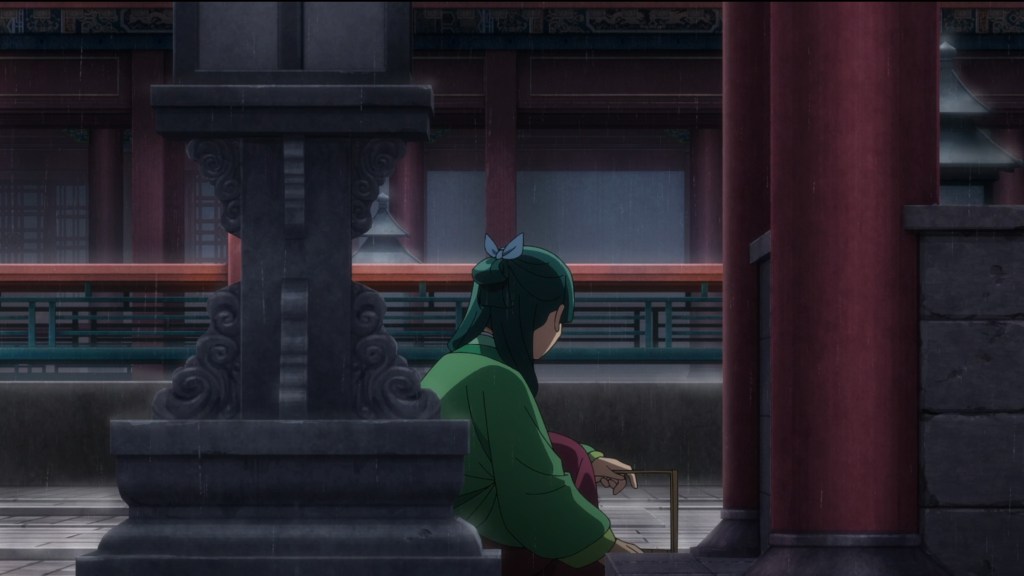
Ishiguro: Precisely, I feel the same way. 
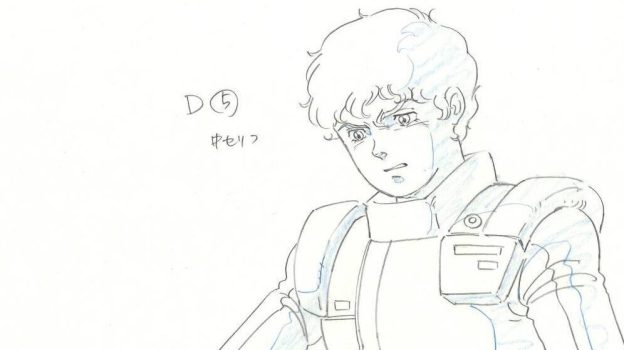
Shinbo: When I was still a student, the professor’s house was a temple, and one year during summer break I stayed there overnight with classmates. The next day, when everyone had to go back home, it was so sad I still remember it to this day. When I finish working on a project, I always feel somewhat the same way as that day. 

Ishiguro: That feeling, I totally understand it. I get reminded of my third year of high school. Since the instant I became a third year student at high school, I felt sad and lonely (laughs). I kept feeling lonely day after day and everyone was taken aback by it. But after we graduated, I received calls from friends telling me they finally understood how I felt, and that they wanted to meet up. 

Shinbo: I too want to have more fun. There still are episodes from SoreMachi I want to adapt into anime, and there are things left undone in these 12 episodes too. I definitely would like to complete it. I surely hope there will be a second season.

Ishiguro: Thank you!