It’s been quite some time since I last wrote at length about anime on this blog, my last post being the one on Cardcaptor Sakura from last November —a staggering 5 months ago— and to be honest, calling that post “writing at length” seems a bit like cheating, considering all it was is ultimately just a refined and remastered version of a bunch of jumbled Twitter threads. This brings us back even further to August 2024, when I published the last, to date, episode of the Episode Notes series (seriously, I should consider doing some radical rebranding here), talking about Shoushimin‘s direction.
But with the current Spring Season having shaped up pretty nicely by now, my writing power seems to be back in shape as well, as one show in particular has been piquing my interest ever since before it even started airing. No, I’m not talking about the second cour of Shoushimin —which by the way, contrary to no one’s expectations it’s been just as incredible as the first one— nor am I talking about the second season of another anime that’s been featured on this blog before, Kusuriya no Hitorigoto.
The show that I’m currently finding myself to be attracted to the most this season is a seemingly unknown and overlooked (here in the West, at least) project by Geno Studio, Your Forma.

Directed by Takaharu Ozaki (who’s been recently interviewed about this very series), Your Forma is an anime adaptation of a currently releasing Sci-Fi Drama light novel, but you’re not here for formalities, so let me get straight to the point: why do I find this show interesting?
Answering this question requires at least a little flashback, so bear with me for a little more.
As you may or may not know, I’ve been in Japan for three months starting last January, so I left just in time to see the blooming of the cherry blossoms, and more importantly an insane amount of marketing and advertising all around Tokyo for the shows that were going to air this season, like, you guessed it, Your Forma.
The first time I saw the PV was, I believe, in Shinjuku, and despite having never heard of it before, I got immediately hooked by its visuals and style, to me very reminiscent of the imagery from Ghost in the Shell.
Flash-forward to today, four episodes have come out and while it’s by no means a “sakuga show” nor something as directionally idiosyncratic as Shoushimin might be, the visual identity it managed to build up since its premiere is nothing short of impressive.
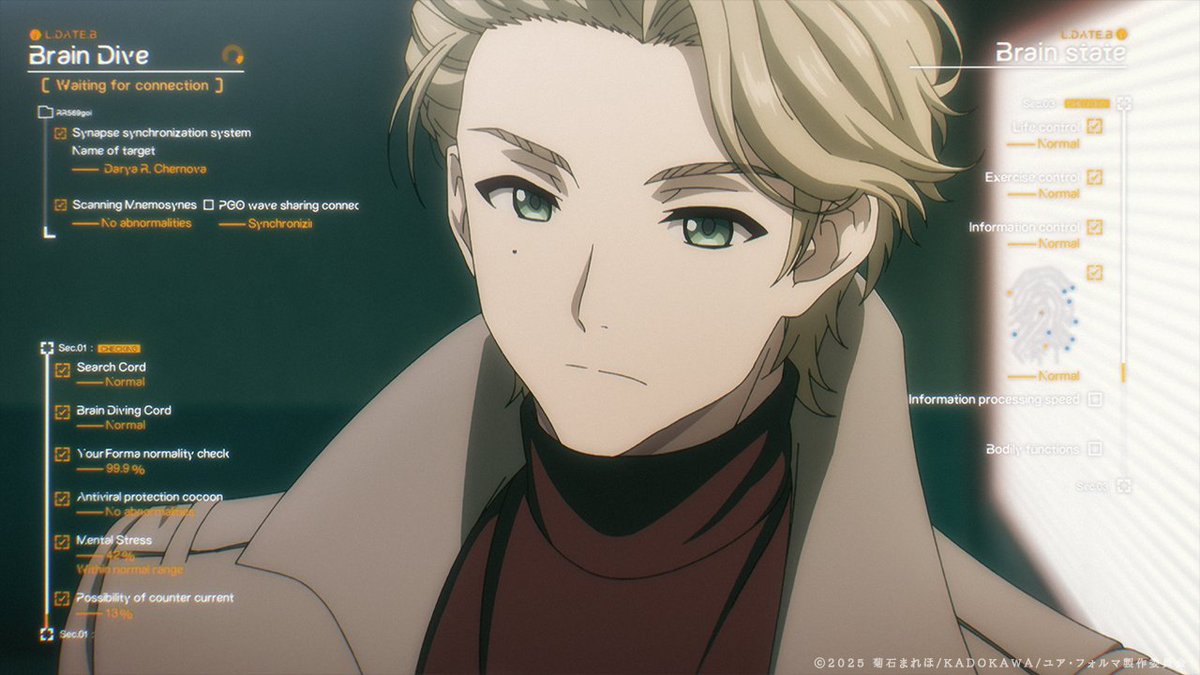
Starting with the holographic user interface the character view directly through their eyes, it’s clear that much work went into its design, both statically and dynamically as the many windows and pop-ups feature personalized animations and styles for each character. Enhanced by a spot-on sound design, that places the digital assistant’s voice uncomfortably too far back in the head, the way these interfaces are portrayed feels realistically invasive and obnoxious, with the POV cuts strengthening our compassion and bond with the characters right off the bat. As it’ll become more relevant later on, emphasizing the human aspect of this story, rather than the Sci-Fi one, is indeed a deliberate choice by Director Ozaki, as he himself has stated multiple times in the interview mentioned earlier.
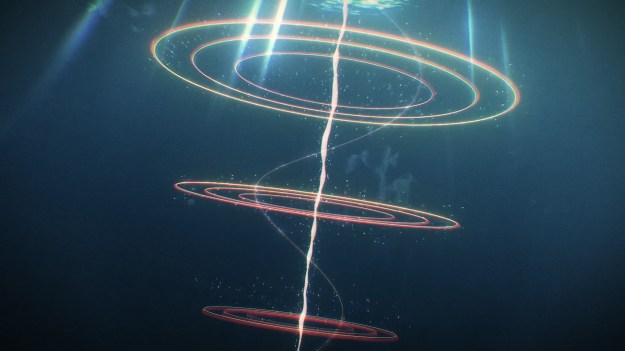

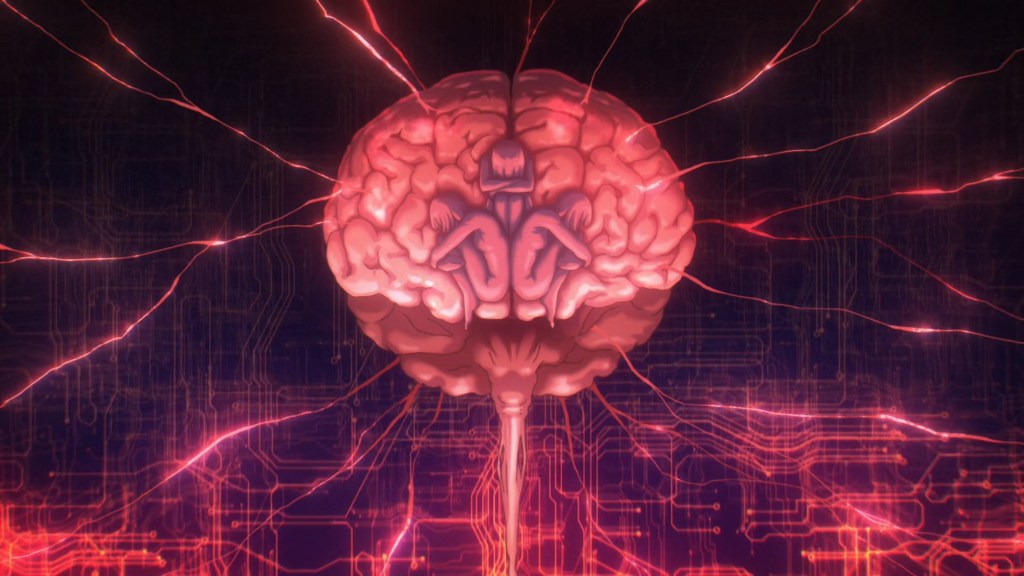
Before shifting the focus over to that however, I want to at least mention the Brain Diving sequence.
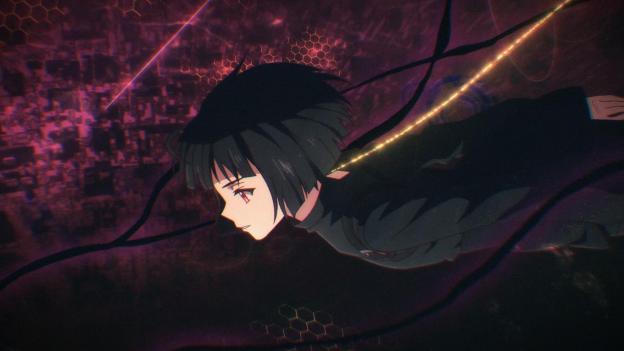
Akin to the transformation scene of a magical girl, it’s shown every time our female lead electronic investigator Echika Hieda performs the so-called “Brain Dive”, a procedure that, through the use of special cable, lets her connect and dive into the brain of the victims, in order to find clues about the crimes she and her robotic partner Harold are in charge of investigating.
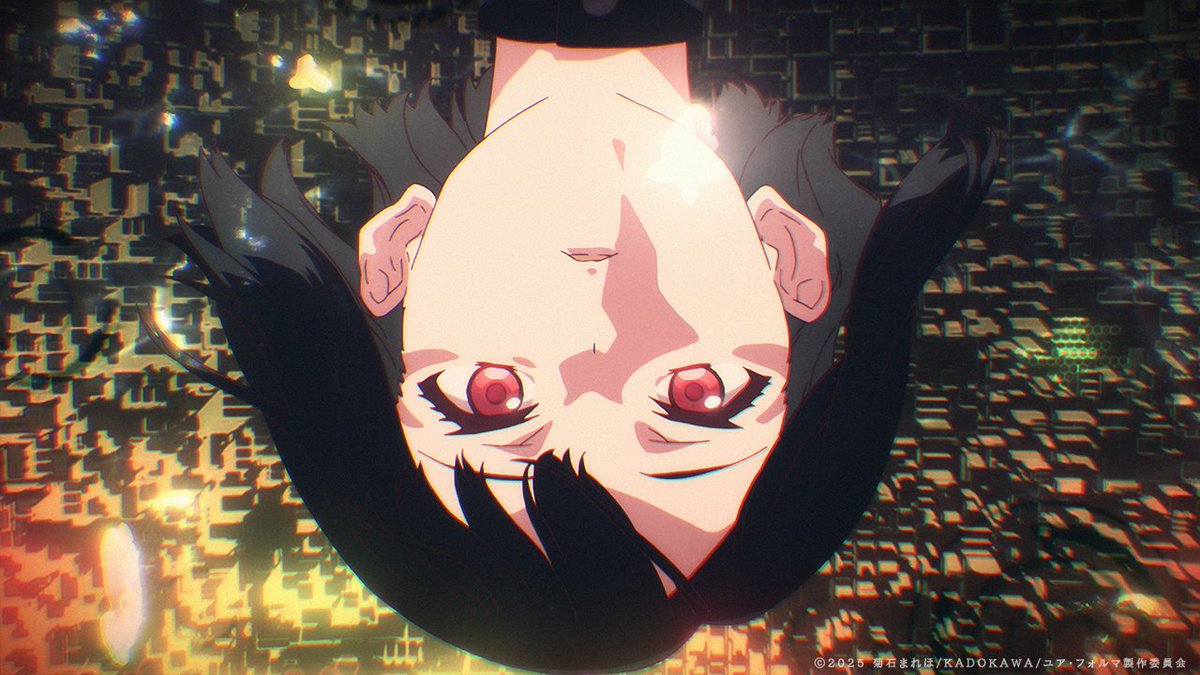
The imagery showcased throughout this sequence (again, accompanied by a perfectly matching sound design) evokes dissonant and eerie feelings —slightly stepping into body horror territory, with that weirdly uncomfortable depiction of three Echikas engraved into the surface of a brain— and the mixing of different techniques, palettes, and compositing filters really drives the point home that brain diving isn’t exactly for everyone, and more importantly, contributes greatly in defining the visual language of the show as a whole.

Another seemingly small but actually very significant detail, that plays a big role in shaping up the visual identity of an anime, is definitely its typography. Take Eva‘s title cards for example, no matter what context you see that font it in, it’s become iconic to a point you’ll always instinctively be reminded of the series. Nowadays, it’s not that uncommon for TV anime to have stylized and dedicated title cards, but it isn’t exactly common either, at least not in the same fashion as in Your Forma.
When the first episode’s title card popped up on the screen, it left me completely stunned; the fonts, colors, layout, compositing, background animations and sound effects are all perfectly designed and perfectly executed, working in seamless sync with one another to make the handful of seconds that the title card is shown on the screen absolutely memorable. It’s like a declaration of intent, concise yet comprehensive, condensing all of the show’s visual identity in a brief, fleeting image. For a moment, I thought I clicked on the wrong episode and somehow ended up watching something from the 2000s era.
Deep down, as soon as I saw that title card, I knew this show would be the catalyst that would get me back into writing after so many months of break.
I have to admit that one of the reasons this show has me so hooked lies in its writing; more than one perhaps, as I’m very interested, academically and professionally so, in the topics of AI and its interpersonal and ethical impact on society. Focusing on the writing is not what this blog is inherently for, but nonetheless I’d like to briefly talk about it for this show.
As Director Takaharu Ozaki explained, while it’s still undeniably science fiction, the world of Your Forma feels very familiar and contemporary. I strongly agree with this sentiment, since the “fiction” aspect of Your Forma‘s science lies mostly in its shape rather than its technology. This is to say, with the continuous release of better and better (on the surface, at least) large language models, an AI assistant capable of manipulating language in a way it seriously gives off the impression of thinking like a real human being has already become a reality in our very world.
Your Forma is clearly not the first show to tackle these thematics, far from it, but “gives off the impression” are the keywords here. Since the very first episode, I’ve found Your Forma‘s take on the “will AI ever become human?” dilemma to be very grounded and nuanced, especially in comparison with the general superficiality this topic is usually treated with in Sci-Fi-like settings. If anything, the characters’ stances on (in-universe) AI developments feel very informed, repeatedly remarking how Amicus (the AI-powered humanoid assistants like Harold) are just “making it look like they’re thinking” but deep down really aren’t, or how “it’s not that easy to replicate a human” since “things that resemble humans don’t necessarily become similar to them on a fundamental level”.
This kind of concepts being at the very core of the drama Your Forma aims to depict, makes its narrative feel grounded and relevant, because it finally tackles the same issues we’re dealing with with today’s AI models, in a way that doesn’t neglect their currently well-known and researched technical limitations. It builds its foundations on top of a more informed outlook on today’s technology, resulting in an even more engaging discussion on an already hot topic. This gives further, non-trivial relevance to the characters’ dialogues and internal struggles in relation to the societal issue they’re facing, making the human drama side of the story stand out significantly more.

And it’s exactly this focus on the human aspect that narratively shined the brightest throughout the first four episodes. Again, it’s not surprising at all, given the Director’s own words on it:
What I really wanted to portray through this work is ultimately the “connection between people”.
This focus on the characters is not just related to the writing though, as the direction cleverly indulges on shots that aim specifically at conveying the thoughts and emotions the characters are feeling before they even get the chance to state them themselves.
This attention to the layouts is especially clear in the first episode, when Echika is shown to be conflicted about her own perception of her partner Harold, after learning another Amicus of the same model as his was found guilty of assaulting a human. The very spacious yet asphyxiating layouts, isolating the investigator from the people around her, yet completely surrounding her with elements smacked onto the foreground, give a very clear outlook on her reflective and introverted personality, voluntarily trapping herself in the maze of her own intricate thoughts.
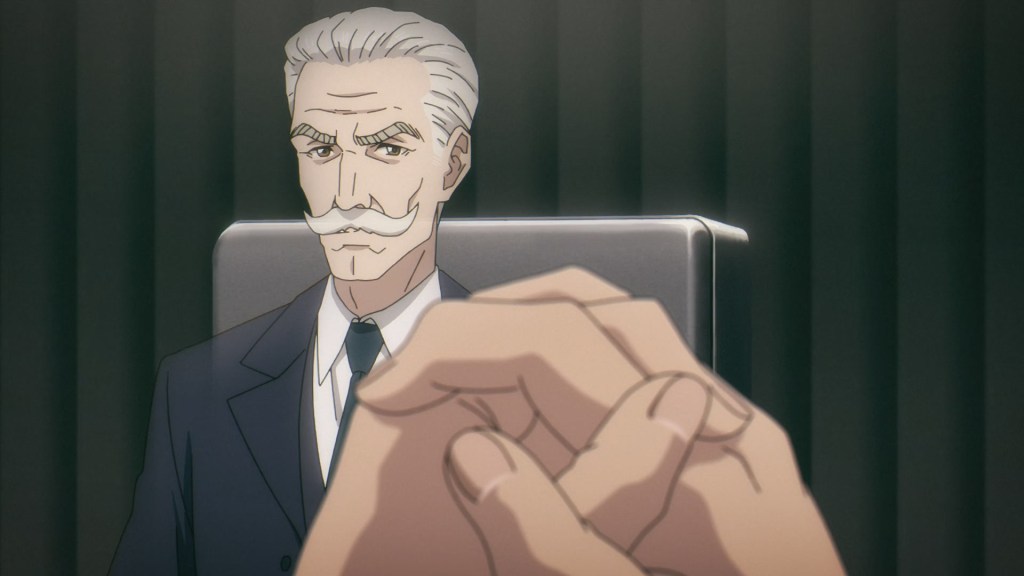

Another clever use of framing and space can be found again in episode 1, when Echika‘s taking part in an augmented-reality meeting with the International AI Ethics Committee. As expected, the discussion forces her to face her doubts again, and the clear difference between the narrow and confined layouts when the other participants’s holograms are “visible” to the camera, and the wide-open shots of her sitting alone in the physically empty meeting room, precisely convey what’s going on in Echika‘s mind without the need for any additional word.
The positioning of the camera is also pretty functional; while the committee members are actively discussing the matters, the camera stays low and neutral, shooting them directly from the front. But as the focus moves on Echika‘s thoughts, the camera is suddenly watching from above, making the already dense atmosphere inside the dimly lit room feel even more oppressive and suffocating.
Purposeful layouts aren’t the only approach to visual storytelling though, and a very clever (yet straightforward) scene in episode 4 makes instead use of the character’s movement to spice up the nuance of Echika‘s actions.
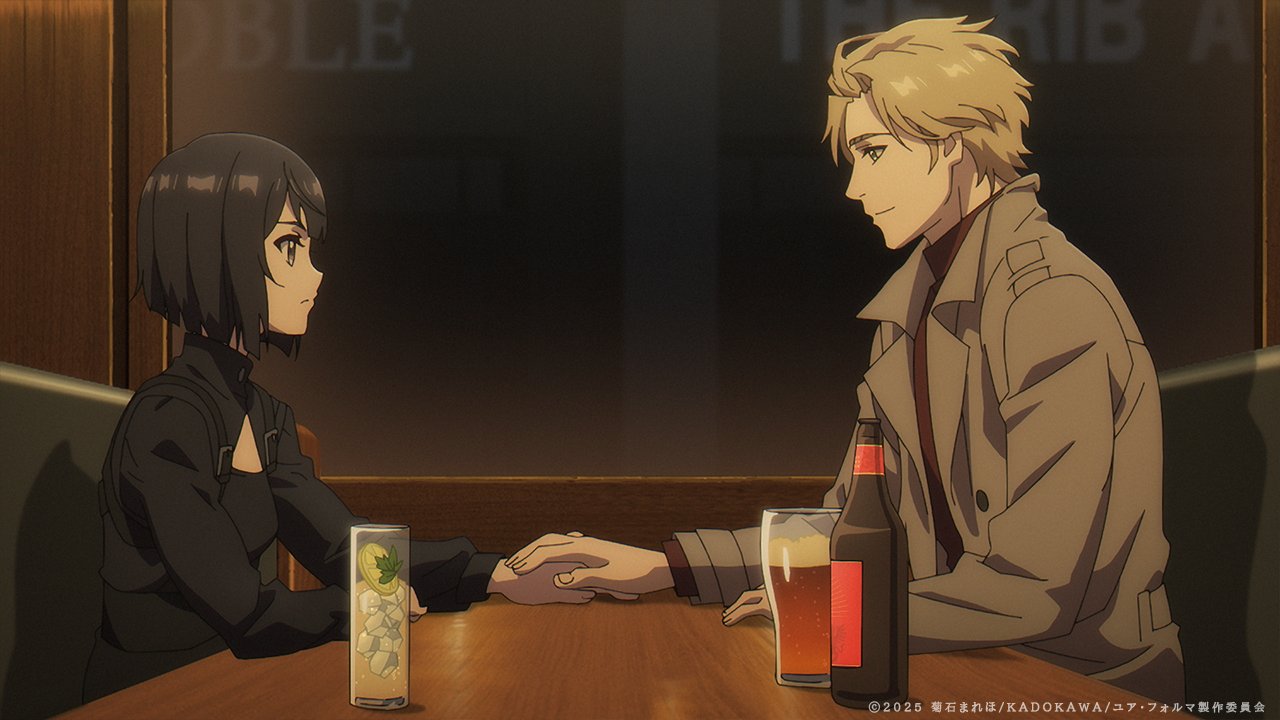
The repetition of misunderstandings and reunification between the core cast, Echika and Harold, is an established theme of the show. Closing the first arc of the story, there’s a scene where the investigator decides to forgive her assistant after a fundamental mismatch in approach they had early on, and in the act of doing so, she physically steps out of the darkness engulfing her, to reach out to the light shining all around her partner.
This contrast of lights and shadows is a very rudimental visual tool, as effective as it is straightforward, and combined with Echika‘s act of stepping out of the shadow of her own volition, it strengthens the idea that she’s actively making an effort to understand Harold‘s mind, and willingly work on her relationship with him.
The palpable sense of rhythm throughout the sequence, slowing down with the final pan-up, makes the viewer not only more invested in the scene per se, but also aware of the positive tension between the two characters, resulting in a satisfying and well-earned conclusion to this first chapter of their relationship.
Another highlight of the fourth episode was certainly the very voluminous and warm character acting. Even if it’s not consistent throughout the 23-minute runtime, I found these cuts by animator Takaya Sunagawa to be a really nice finishing touch, the cherry on top of an already very convincing and engaging sequence.
The last cut of the episode too, again animated by Sunagawa (whose involvement in the project isn’t all that surprising given the presence of his close friend Shunji Akasaka as the sub-character designer) takes on a more abstract note, reinforcing once again the unanimous direction Echika and Harold‘s relationship is going to take from this moment onwards.

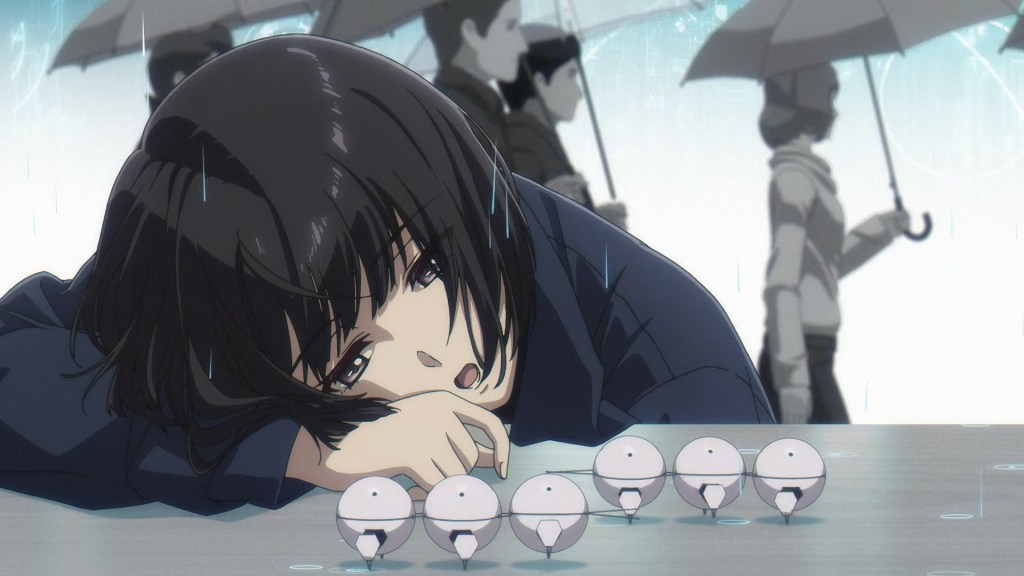
Talking about engaging character acting, nothing beats an ending sequence featuring the characters singing along with the singer, and Your Forma‘s ending does exactly that. A choice that, if it wasn’t clear enough already, seems to further reaffirm the human aspect of the story as central, giving its characters a familiar human dimension even outside of the narrative itself.
It’s this attention to details that can make an overall average production like Your Forma stand out between many others, and if it also happens to be backed up by a strong and firm vision like Ozaki‘s, the stage is set to create something truly valuable and well worth spending a few words about.

In a season filled with so many high-profile titles like this spring, I certainly didn’t expect a relatively under-the-radar production to be the one I’d end up rambling about on here, let alone it being the main focus of my first post in months. That being said, I’m glad I managed to find the time to write this piece all in one go, and I’m also really glad I was able to address all the points I planned on tackling, even though my writing skills have gotten pretty rusty to say the least.
I’m not sure whether I’ll come back to this show in the future, or when the next Episode Notes post will come out, but nevertheless, I hope this somewhat organized stream of consciousness was able to pique your interest even just a tiny bit, and as always, I’m really grateful for your time. Until next time…