Tag Archives: Takahiro Omori

Miyuki Oshiro – Interview on Ikoku Nikki (Journal with Witch)

Original interview from the Animate Times series of interviews on Ikoku Nikki, published on March 29th 2026, original interviewer: M.TOKU; genga from the official studio Shuka Twitter account.


I believe there doesn’t exist another work that depicts negative emotions quite as plainly as this one.

— I heard that you already liked the original manga. What do you think the main appeal of this work is?

This is something I’ve only recently found the words for. This work depicts human emotions while telling simple stories of daily life; those emotions aren’t always beautiful or positive, they can also have negative parts, and in this work, the negatives are portrayed in a way that is intentionally not exaggerated. I believe this is the reason why I find it so compelling.

— I think this delicate and not overstated presentation makes it feel more real and relatable.

Exactly. There are so many human dramas out there, but I believe there doesn’t exist another work that depicts negative emotions quite as plainly as this one. I feel like there are more works that exaggerate the unpleasant aspects as unpleasant, and even go so far as to depict them as excessively negative, sometimes to the point of creating outright antagonistic relationships. This work however, isn’t like that, and that’s why it feels more realistic. I remember that Yamashita-sensei mentioned in some interview that she’s not “trying to create bad people”, and I believe that’s the main reason why I like Ikoku Nikki so much.
— Why did you think to adapt this work into an anime?

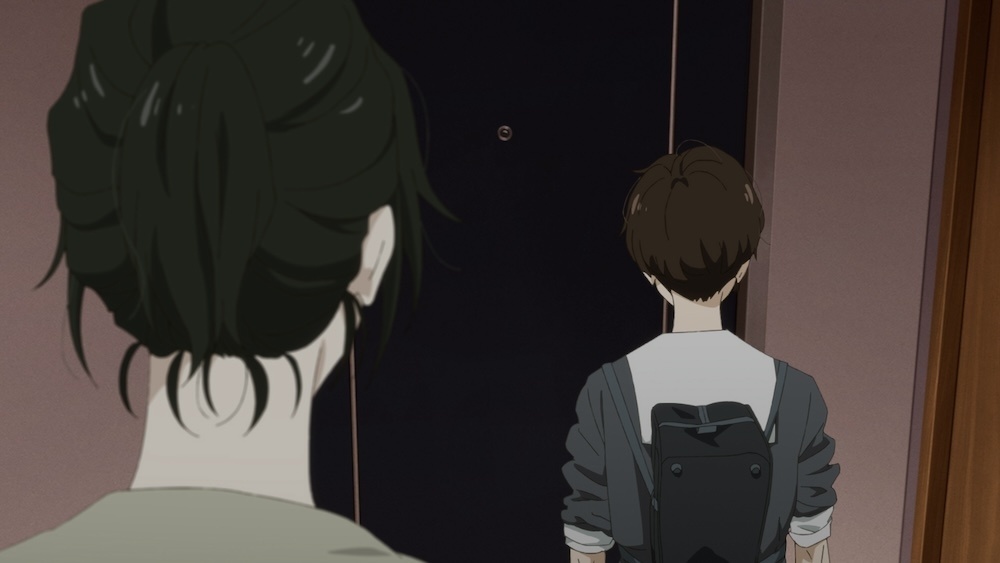
In part because I’ve been asked: “Is there any work you like?”, and also because, since I don’t think there are many anime adaptations of works with this sort of expressions, it felt a bit challenging. I wanted to test out if it was possible to translate it into moving pictures while also maintaining its atmosphere intact.

— I’ve always thought it would be quite a challenging work to adapt.

That’s right. I didn’t intend to direct it in a too unconventional way, but judging from the viewers’ reactions, I feel like it ended up being the kind of anime you don’t see often these days.


Don’t make the presentation excessively tear-jerking.

— When working on an anime adaptation, I believe that carefully choosing the members of the staff is especially important. For this project, Kiyasu Kohei-san was in charge of the script and series composition. Why did you ask him?

When I had the chance to read a bit of the scripts Kiyasu-san wrote for other works, I got the impression that he’s a writer who does some pretty interesting things. I also felt he was a stoic person, and potentially a good fit for this project, so I invited him. I’m glad he took an interest in the original work.

— What kind of conversations did you have with Kiyasu-san when discussing the script?

At the time, the original hadn’t concluded yet, so at first I told him I wanted to start with adapting Volumes 1 to 7 into a 1 cour anime. Then, I remember talking about how I wanted the anime to feel as close as possible to the sensations that reading the original leaves you with. We didn’t really discuss many practical things. After that, Kiyasu-san turned in the initial draft of the script, and it was already amazingly perfect, so I didn’t have to worry about anything.

When it came to writing the script, did you get any specific requests from the original work-side?

In particular, they requested that we “didn’t make the presentation excessively tear-jerking”. I payed attention to this during the script-writing and story-boarding stages, but when you add the voice and music, the flavor changes substantially… Of course, I didn’t try to overdo it, but after episode 1 aired, I read a lot of comments saying: “That made me cry so much”. Maybe I really did exaggerate it…? That made me a little worried. I’d rather it be more subtle, like you start shedding tears before you realize it. That’s the ideal way for me (laughs).
Let’s also talk about the visuals. Hayama Kenji-san was in charge of character design and the animation direction. What were your requests for him?

From the beginning, I had the impression that Hayama-san was very close to this work as a person. Additionally, he’s just overwhelmingly good at drawing, so I didn’t provide him with any specific instructions. There has never been anything I worried about in that regard.

When we interviewed Hayama-san for this series, he said that he was “Very worried about his work and might have caused troubles to the staff”.

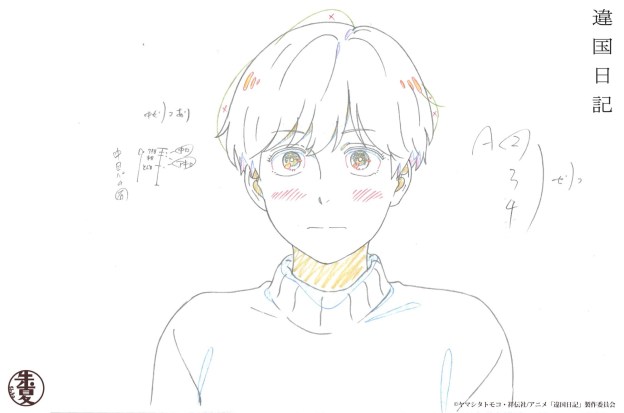
It’s true, he does have a reputation of drawing rather muscular and brawny male characters. But in a previous work titled “Kuragehime” [“Princess Jellyfish”, 2010] he also depicted more comedic-styled art, and the delicate linework you might associate with a female creator. So, personally, I wasn’t too worried. And watching his work as an animation director, I really realized how amazing he is. Especially when it comes to acting and expressions. He adjusted the facial expressions with his corrections in ways I didn’t expect, which resulted in the final drawings being even more compelling.


The higher the quality the better, but too much movement tends to pull your focus in that direction.

— Including the designs, please tell us about the things you particularly focused on and kept in mind when creating the visuals.

Now that I think of it, I didn’t want the animation to get in the way. If the animation is too intrusive, it distracts the audience from the story. So, I tried not to overdo it, while also handling it with care. It’s not like it’s a work that needs to be flashy about movement anyways.

— I feel like what you’re talking about now is something on a different level of what’s usually referred to as “quality”.

Of course, the higher the quality the better, but when there’s too much movement, it tends to pull your focus in that direction. In a scene where I want the main focus to be on the voice acting and the music, if the drawings move excessively, they end up pulling the viewer’s attention away. That might be what people call “incredible sakuga”, but there are times when that’s not what I want to convey. What to move and what not to move is something I’ve been payed special attention to since the story-boarding phase.

— It’s about the balance of what you show.

Yes, exactly that! I think there are all kinds of anime out there, but personally, I’m the type who gets tired watching something that’s constantly moving. I believe everything should have a good sense of rhythm and variation in pace.

— Thank you so much for this valuable discussion. I also felt that this work put a lot of care into its cooking scenes.

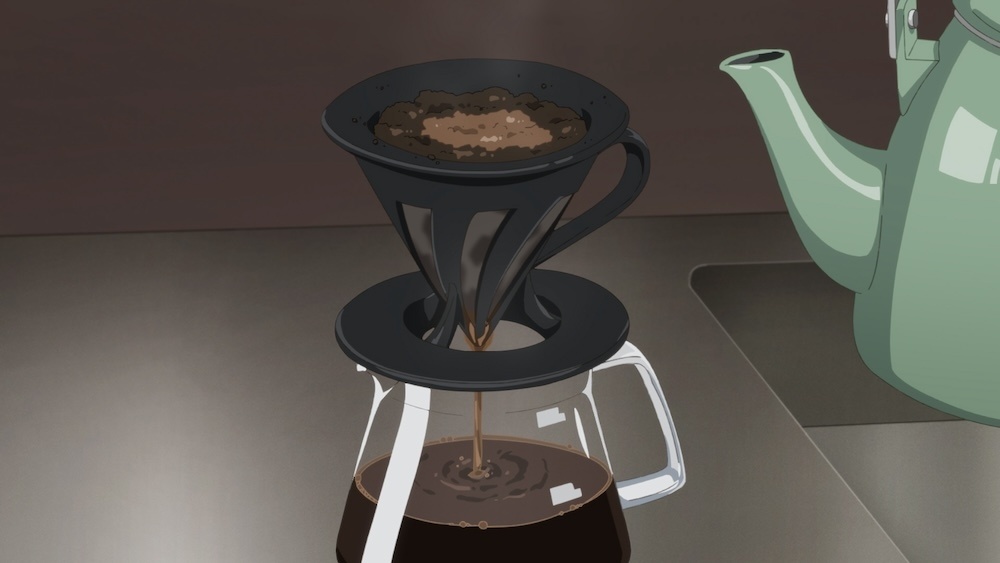
It’s a drama about everyday life, so cooking scenes require a certain degree of realism to them. When I wanted the cooking to look tasty, I specifically asked for tasty-looking drawings, and when in turn I wanted the food to not look good, like the sushi in episode 1 for example, I adjusted the colors to be less vibrant.
— A direction technique to make the food look not tasty!

It was pretty difficult, you know. You also need technique to make it look not good. To figure out what “un-tasty food” would look like, we actually went and bought some sushi, and left it sitting in the fridge for a while. From there, we studied things like how the highlights fell on that dried-out sushi. Looking back now, eating that sad, dried-out sushi together with the staff is a fond memory I have of this project (laughs).

— Experimenting and seeing things first-hand is very important when you don’t understand them fully.

There really are many things you can’t understand unless you see them. Not just the animators, I think that we were able to bring upon that level or realism because we all observed and examined the real thing. I heard that the sound effects team actually went and made some deep-fried food to record the sound it makes. That’s amazing, isn’t it?


Makio was saying “I see”, not “I understand”.

— Ushio Kensuke-san was in charge of the music for this work. What kind of requests did you make to him at first?

I told him I’d love the piano to be the main instrument, and that’s about it. The music composition began around the time we had finished recording up through episode 2, and it was actually Ushio-san who suggested: “I’ll look at the materials and footage available at this point and try composing a few tracks based on the impression I get from them”. The tracks he created after that were already amazing, so we decided on that direction. Then, I lightheartedly requested for more tracks that could be played during everyday scenes, as well as a more bright and a more sad track, which he proceeded to compose right after.

— Personally, I had the impression that many of the tracks were quiet and gentle.

That’s likely what Ushio-san perceived from the work itself. Actually, separately from my meetings with Ushio-san, sound director Omori Takahiro-san and I had been talking about not wanting to score the music too densely. Omori-san already had the same interpretation, and he shared the same vision as mine. The music Ushio-san composed was already exactly in line with that intention as well. I had a lot of fun listening to his tracks.

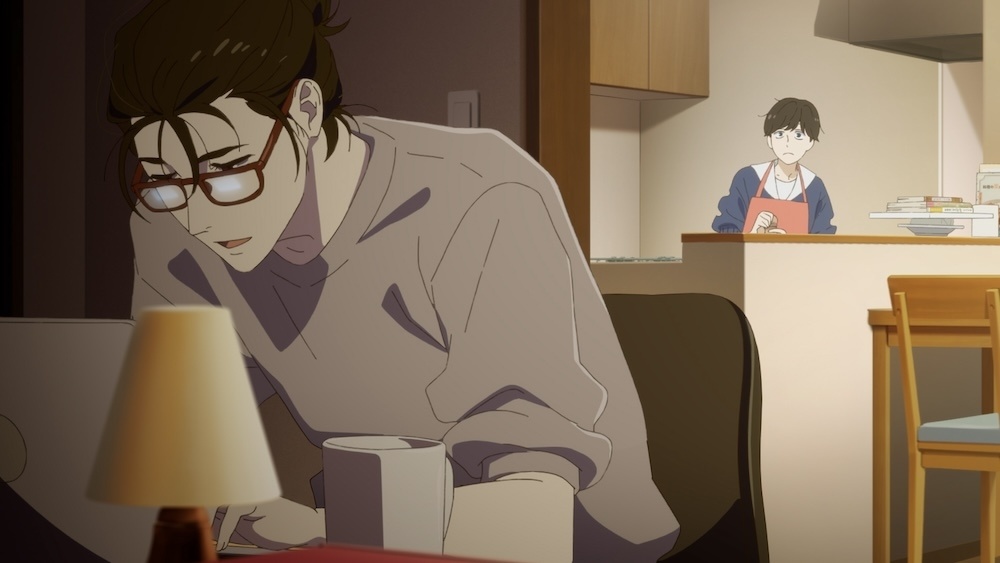
— Please, tell us about the recording sessions and casting as well. The two characters at the heart of this story, Kodai Makio and Takumi Asa, are voiced by Sawashiro Miyuki-san and Mori Fuko-san respectively. What were the deciders for these castings?

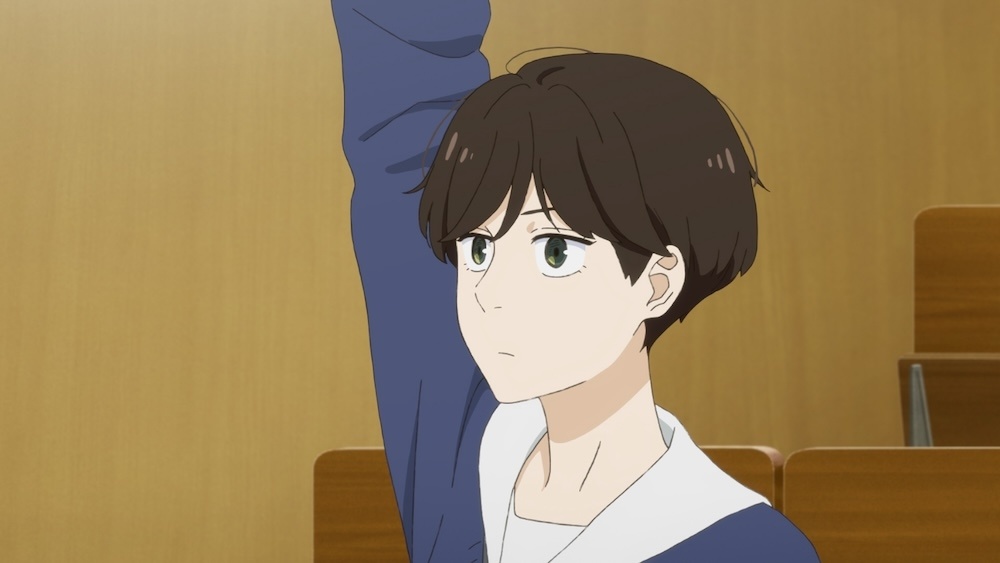
Both roles were decided through an audition. Starting with Sawashiro-san, she was overwhelmingly Makio. When we first heard her voice, everyone went “She’s Makio”, and we all agreed on entrusting the role to her. The deciding factors for Mori-san were her bright and innocent tone. Her voice quality left a positive impression on me; the fact I couldn’t feel any darkness in her voice was really Asa-like. Another factor might have been that, including her freshness, she really reminded me of Asa.
— Did you make any specific requests to them in regard of the voice acting?

As for Makio, I felt like at first her emotions were coming through a little too strongly in some places. Sawashiro-san is very charming and considerate, she’s a very nice person. On the other hand, Makio is blunt and easy to misunderstand. I imagine there are quite a few differences between Sawashiro-san and Makio, and probably many aspects of her character she had a hard time grasping. A few times, I asked her to dial her emotions back a little, but without feeling downright cold, while still having a mechanical quality to her acting. I understand it was a very difficult request.

— I think you made such a complex request precisely because you knew Sawashiro-san could pull it off.

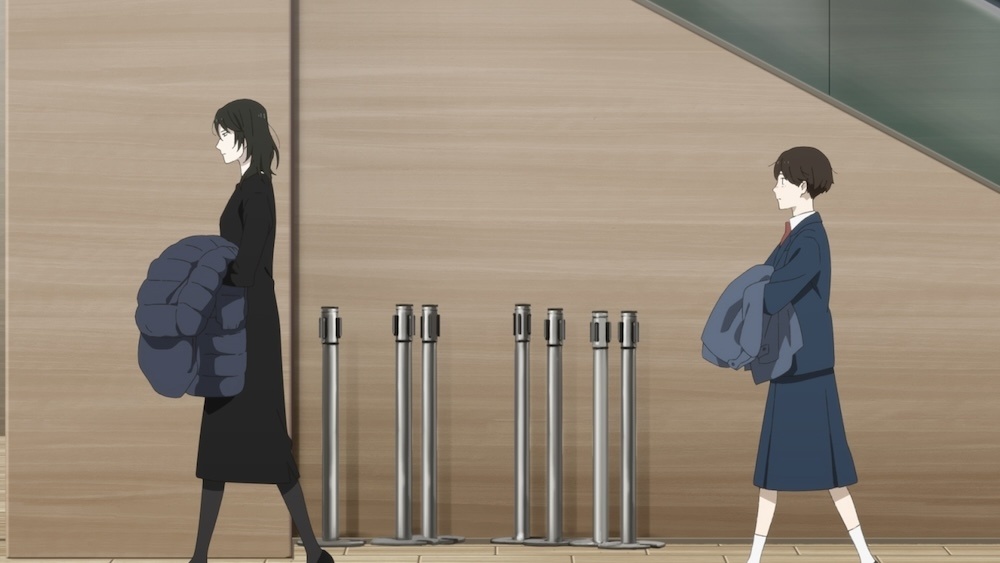
You’re right. One that stands out in my memory is the desert imagery scene in episode 1. There’s a line that goes: “I get it. This is what they call… loneliness”, but with the initial take, I felt that in that moment, she was leaning a little too close to Asa. It’s not like Makio is pushing Asa away in that scene, but she’s not quite trying to get closer to her either. But the difference in nuance between “understanding” and “sympathy” is particularly different to evoke.
Sawashiro-san too was struggling to figure out how to express it. Then, Yamashita-sensei told her that “Makio was saying I see, not I understand”, and after hearing those words, Sawashiro-san‘s performance was truly magnificent!

— A single direction or piece of advice can completely change a performance. In every sense, I think this is what professional work looks like.

I agree. I’d be really happy if you watched that scene again. I believe Sawashiro-san had a hard time at first, but episode after episode, she gradually started to sound more and more like Makio and I was really moved.

— What about Asa’s voice actress, Mori-san? Did you make any particular request to her?

Mori-san has interpreted Asa naturally from the very beginning, and there was almost nothing I needed to ask her. She had clearly done a thorough read of the source material, yet she was also flexible enough to adapt in the many back-and-forths during the sessions. Also, she is really talented at singing. I believe you were all able to hear her by now. She did a fantastic job.


Daigo inhales while laughing, you know.

— Other than that, was there anything else from the recording sessions that left an impression on you?

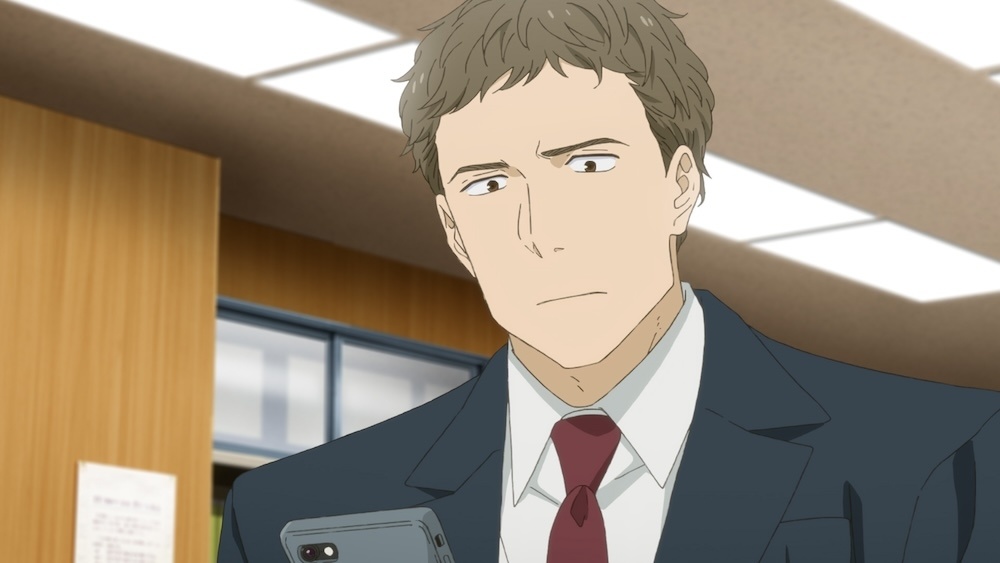
The performance for Minori in episode 7 was really outstanding. Despite it being the same line, the emotional warmth of Ohara Sayaka-san‘s delivery in the opening scene where Minori is speaking, and in the later scene when the image of her appears as Asa is reading her journal, felt completely different. I was deeply moved. Ohara-san too happened to like the original work, so she acted with an extraordinarily high degree of understanding of source material. For (Shingo) Kasamachi-kun, Suwabe Junichi-san delivered a very sexy performance. Actually, it was a bit too arousing, so I had to ask him to dial it down a bit (laughs).

— So that was your request for him (laughs).

However, I believe Kasamachi-kun has this innate seductiveness to him, so it wasn’t entirely out of place. He was able to carefully enact a different performance for the younger Kasamachi-kun, which I thought was really remarkable. (Kazunari) Tono-san‘s voice actor, Kondo Takashi-san too immediately felt like he was a perfect fit for the character since the moment of the audition. He was such a perfect match it almost made me laugh. It moved me. (Nara) Emiri’s actress, Morohoshi Sumire-san was also super good. Especially in episode 3. I could see it form her performance that she was really worried sick for Asa until she finally called her. I found her acting to be incredibly convincing. The fact that she can make you cry with just her their voice is really incredible.
— So you were feeling, in every little moment, the added richness that the voice brings.

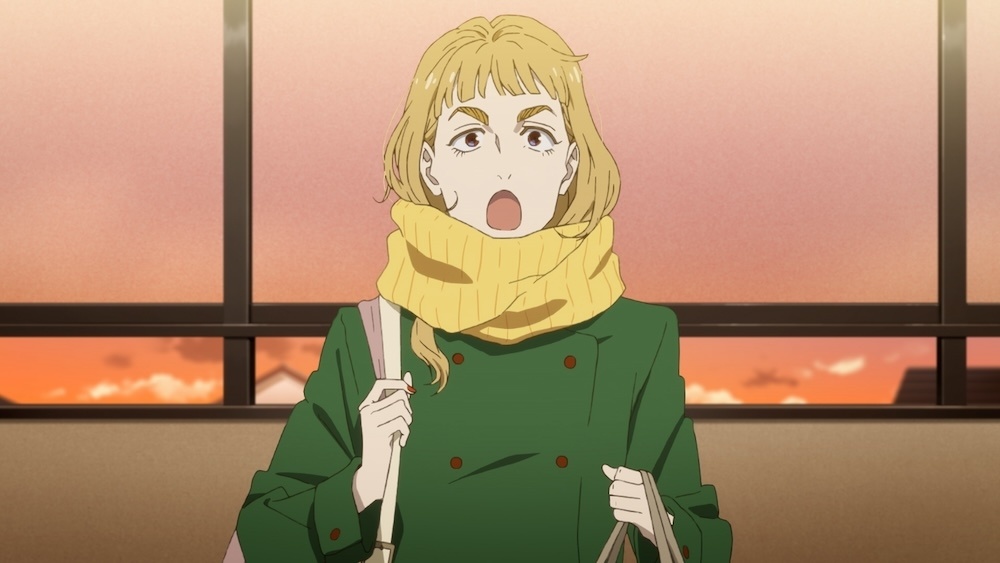
Exactly. Speaking of which, there’s Daigo (Nana) in episode 2. Actually, during the recording session, Yamashita-sensei mentioned to me: “Daigo inhales while laughing, you know”. And indeed, when I had read the lines written out in the original work, I did think they were a little unusual. But I never imagined they were meant to express that kind of laughter.

— Yamashita-sensei has a very clear image of her character in her mind, doesn’t she?

I was really surprised, but at the same time, I had to go with that. The only problem was that, when writing the script, we didn’t realize she had that peculiar way of laughing, so we had to adjust the timing of the lines. And Matsui Eriko-san was also able to adjust her performance accordingly, including this peculiar quirk. She tried right away, and asked: “Is it something like this?”. By the time Daigo appeared again in episode 7, Matsui-san had already mastered the inhaled laugh, and was able to perform her role smoothly and naturally. I realized how amazing voice actors really are.
— I believe this peculiarity of Daigo’s character became easier to notice thanks to the anime medium.

I believe the impression she gives off changed now that she actually has a voice. These shifts in perception between mediums is really interesting, isn’t it?


The creator’s intent is ultimately just one element that makes up and supports the story.

— Is there any other things we didn’t talk about yet that you focused on while working on this project?

When I first read the original, I figured that the scenes in the imaginary desert were a key of this work, so I absolutely wanted to recreate them in the anime. However, I thought that if I inserted those scenes with the same timing and flow as the manga, it would often end up feeling too abrupt. So, I added those scenes only at selected points, when they would feel as less obtrusive as possible. I wanted the timing to be as seamless as possible too. I started adding it little by little from the very first episode, in order to get the viewers gradually more acquainted with it, so that this change of setting to an imaginary landscape wouldn’t feel out of place.
— What you just mentioned is essentially one of those creative choices stemming from the inherent differences between “reading a comic” and “watching an anime”.

Exactly. In a comic, the passage of time can be defined as the space between panels. So, if when you turn the page, the setting has turned into an imaginary landscape, it doesn’t feel off. But as video, pictures come in sequentially, so it will inevitably feel out of place. That’s why I intentionally added many of those scenes, to the point a fan of the original might think: “Aren’t they overdoing it a bit?”… (wry smile). I did add them in on purpose, though. That said, without something like this interview, this kind of thing is hard to get across, isn’t it.

— Maybe it’s not something you should expect viewers to pick up on in the first place.

I think so too. That kind of intent is ultimately just one element that makes up and supports the story. If you’re making the audience conscious of your intentions, that might actually mean that they couldn’t properly focus on the story. And that would be putting the cart before the horse. I’m always striving to make sure the audience can just lose themselves in the story above all else.

— Thank you so much for the valuable conversation we had today. Lastly, with the show now approaching its climax, could you tell us once more what you see as its highlights?

In order to wrap things up as a single-cour anime, there are quite a few original developments woven in around the final episodes. I am a bit worried about how they’ll be received, but I believe it is shaped to end satisfyingly, so I hope you will enjoy it. There are also some hidden touches, so once you’ve seen the final episode, I’d be really happy if you went back and watched it all again from episode one.
Takahiro Omori – Interview on Natsume Yuujinchou Shichi (Natsume’s Book of Friends Season 7)

Original interview from Cocotame, published in two parts, Part 1 and Part 2, on October 21st 2024, original title: “TV Anime「Natsume Yuujinchou」Season 7 Starts Airing ― Chief Director Omori reflects on the 6,000 days spent together”, original interviewer: Hidekuni Shida; genga from Natsume Yuujinchou Shichi Episode 2, from Studio Shuka’s official Twitter account.


Part ①

Natsume Yuujinchou” is a manga series by Midorikawa Yuki, first published in 2003 and still beloved to this day. The anime adaptation began airing its first season in 2008, and since then, a total of 80 episodes (including special OVAs) and a feature film have been produced.
What kind of feelings has Chief Director Takahiro Omori poured into this work, having been involved as both the director and chief director of the anime series? He shares the appeal of the seventh season, which started airing on October 7 (2024), and his passion for creating this work.


~ Looking back at the origin of the beloved 16-year-long series ~

The TV anime Natsume Yuujinchou Shichi (Season 7) starts airing on October 7, 2024. Counting from the first season (which started airing on July 8, 2008), it has become a long-running series that has lasted a remarkable 16 years. Chief Director Omori, what do you think is the reason Natsume Yuujinchou has been loved all this time?

The anime Natsume Yuujinchou has a very easy-to-follow structure, as each story is fundamentally concluded within one episode. Furthermore, as you continue watching you begin to notice a larger, overarching story, and even with all the episodes released so far, there are still some mysteries left unresolved. I believe those elements are part of the reason why many people have been able to enjoy it for such a long time.

However, while it’s indeed a long-running series, there’s been a gap of around 7 years since the last broadcast [Natsume Yuujinchou Roku, the 6th season, began airing on April 12, 2017, and ended on June 21 of the same year], so out of the 16 years, it feels like half of that time has been spent on hiatus.

I’d like you to look back at 16 years ago. Do you remember when the proposal to adapt Natsume Yuujinchou into an anime first came to you, Chief Director Omori?

Yes. Originally, Studio Shuka’s (“Brain Base” at the time) producer Yumi Sato expressed a strong desire to adapt the original work, so she reached out to the former producers at ANX [Aniplex], who immediately contacted Hakusensha. On that occasion, other companies that were already interested in the work, such as ADK [ADK Emotions Inc.], reportedly made a production proposal to the committee. She then reached out to me, since we had previously worked together on other projects, and that’s how I became involved in the anime adaptation.

At that time, though, I honestly thought that portraying the atmosphere and tone created by the original work would have been a very difficult task. Additionally, the manga had only just begun serialization at the time, and the author, Yuki Midorikawa-sensei, was still in the process of developing the story, so we were able to make adjustments to the roles of the characters and the timing of their appearances under her guidance.

There were some meticulous changes to the original work, then.

Initially, in the original work, the protagonist Natsume Takashi had a somewhat detached and mysterious air, but we slightly adjusted his character to make him a little more relatableーan ordinary boy who, due to the single fact that he can see ayakashi, ends up distanced from the people around him.

In the manga Takashi has silver hair, but giving him silver hair in the anime would have inevitably made him stand out visually, so we opted for a light brown hair color. Furthermore, to make the everyday drama easier to follow, we adjusted the story so that Takashi’s friends not only include Nishimura (Satoru) and Kitamoto (Atsushi), but also Sasada (Jun), the only main female friend, who we decided would no longer transfer out [In the original work, Sasada transfers schools, but in the anime, she appears as one of Takashi’s classmates].

I imagine you had quite a few detailed exchanges with Midorikawa Yuki-sensei, what were your impressions from those conversations?

First of all, she struck me as a very kind and thoughtful person. The first time I met her was at the initial greeting with the art direction department, the characters and yokai designers, and all of the main staff. On that occasion, I asked her various question about the work, and I remember being struck by how sincerely she answered each one. She was so enthusiastic in answering our questions that I heard she came down with a fever [the term used here is 知恵熱 (chie-netsu), literally “wisdom fever”, which colloquially means “a fever that comes from using one’s head too much” t.n.] the day after meeting with us (laughs).

Not only did I get the impression of her kindness from our face-to-face meeting, but I also felt that the good qualities of her personality shined through in Natsume Yuujinchou, the work itself. What I especially realized after starting the anime production and working on the storyboards for each episode was that Yuki Midorikawa-sensei has a strong desire to “entertain the readers”.

She often adds little playful touches throughout the work, incorporates unexpected and interesting twists into the story structure, and includes elements designed to entertain the readers. I feel that she’s very in tune with her readers.

It is said that the model for Natsume Yuujinchou’s setting is Hitoyoshi-shi in the Kumamoto prefecture. I’ve heard that you went location scouting in Hitoyoshi too, Chief Director Omori. 

Since my debut as a director, I’ve never missed a single location scouting. The purposes of location scouting is not only to see the actual locations where the work will be set, but also to walk the site together with the staff, including the art director, and have discussions to develop a shared understanding of the vision behind the work. 

Of course, there are times like with Durarara!! [“デュラララ!!”, 2010, another TV anime series directed by Omori] where the landscape and spatial relationships are portrayed exactly as they are in real life, but that’s not the case for Natsume Yuujinchou, where we’re just using the overall atmosphere of Hitoyoshi in Kumamoto.

I wonder what kind of town Hitoyoshi-shi is. How are the townscape and scenery of Hitoyoshi reflected into the anime?

One thing that I clearly remember is the kindness of the people who live there. Especially, when you cross paths with middle-school or high-school students, they always greet you. When I asked Midorikawa-sensei about it, she explained that Hitoyoshi, due to its geographical location in a basin, has historically been a region wary of invasions from surrounding forces.

That’s why the courtesy of greeting someone they’ve never met before as a way of confirming what kind of person the other is has become a local tradition. I thought, “I see, so those greetings also hold that meaning”, but still, it’s always nice to be greeted with a smile by middle and high school students, isn’t it? (laughs). Also, perhaps for the same reason of being cautious of their surroundings, the fences around the houses are quite low.

The fences are low?

Exactly. The fences around the houses in Tokyo are approximately 170cm to 180cm tall [about 5’7” to 5’11”], and you can’t quite look inside even if you stretch, whereas the fences in Hitoyoshi are about chest-height, allowing you to see the surroundings over them. Rather than making them taller to prevent intrusions, the low fences, like the greetings, allow for assessing the surroundings for self-defense, and that custom has been deeply rooted to this day. These are some of the elements we’ve carefully preserved in the art direction of Natsume Yuujinchou.

~ Portraying the world of Natsume Yuujinchou in a captivating way through visuals and sounds ~

When creating the anime, what aspects of the original did you focus on the most?

In every chapter of the manga, Takashi’s monologues are used in a very impactful way. That particular way of using them was one of those aspects. Takashi’s monologues have two layers to them: one is used to express the emotions of the other characters, while the other is a separate, more subtle monologue that occasionally emerges to convey his own personal feelings.

However, when trying to combine the two types of monologues into a single prose, the meaning becomes disconnected. So, we arranged the monologues and structured the dialogue (script) by choosing which of the two types to use.

The one type we don’t convey through the actual dialogue, we depict with the drawings. One type is conveyed thought the words, and the other through the character’s expressionsーa quality unique and inherent to the visuals.

Additionally, we have to decide whether the monologue should be delivered in a more narrative style or a more emotional tone. For that, we arbitrarily choose one of the two when writing the script, then I consult with Natsume Takashi’s voice actor, Kamiya Hiroshi-san at the recordings whether a more narrational and firm tone or something in-between works best, and thoroughly adjust the balance as we record. 

Chief Director Omori, you not only worked as the director for the Natsume Yuujinchou series, but also took on the role of sound director. The free and unrestricted acting of the members of the cast is as well one of Natsume Yuujinchou’s most charming aspects. In the conversation scenes with the mid-rank yokai, the so-called “Dog’s Circle”, there are often fun exchanges, including puns and ad-libs, which create very pleasant and enjoyable dialogues.

I mostly leave the recording of the Dog’s Circle scenes up to the cast. At first, I used to reject their ideas because I didn’t understand the puns they made (laughs). Nowadays, Matsuyama Takashi-san, the one-eyed mid-rank yokai’s voice actor, basically acts as the leader on set, he preps the manuscript (the ad-lib lines) for the Dog’s Circle scenes, coordinating with the cast outside the studio before the recordings. This kind of fun and collaborative recording sessions are one of the unique charms of working on Natsume Yuujinchou.

~ The development and growth of the protagonist Natsume Takashi and the yokai NyankoSensei ~

The protagonist, Natsume Takashi, is a boy who, unlike ordinary people, has the ability to see ayakashi and hear their voices. Having depicted him since Season 1, do you feel his character has shown any development or growth?

In both Season 1 and 7, he’s got his friends by his side and not much has changed around him. However, what has changed is how much he has opened his heart to those friends.

In the beginning, he probably acted more reserved, with a guarded manner that subtly signaled that he couldn’t fully trust others. Over time, he gradually got used to his friends, and now, even when minor issues come up, he can brush them off with a joke. I feel he’s developed a certain warmth or ease that wasn’t there before. 

His feelings towards the ayakashi have seen some developments too; as of now (Season 7), I believe that his ayakashi and human friends have both become fairly closer to Takashi’s heart. He still retains a sense of caution and tension when interacting with the exorcist clans, but he’s gradually become more emotionally open. 

Especially with Matoba (Seiji, the young head of the Matoba exorcist clan), Takashi’s starting to show a calmer, more thoughtful side as he works to understand him, which I believe is a sign that reflects his growth. I think this seventh season is series that shows the unexpected sides of all the characters, so it’s not just about Takashi’s growth. I hope the viewers will enjoy how the way the other characters are perceived evolves as well.

Takashi has spent a lot of time together with his yokai partner Nyanko-Sensei as well, and their relationship feels like a bond of fate. Nyanko-Sensei’s true identity is the high-rank yokai Madara, and he acts as Takashi’s partner on the condition that once the boy dies, he will inherit the Yuujinchou (the Book of Friends), but Nyanko-Sensei has changed and grown too. 

I think Nyanko-Sensei has changed a lot as well. Probably, it’s the presence of Takashi that has softened him. Actually, in Season 7, after a long time he declares once again his goal to inherit the Yuujinchou upon Takashi’s death, however, their relationship has evolved to the point where it feels natural, as if he has forgotten about that initial promise. It almost feels like his objective has become nothing more than a jest. In a certain sense, it’s a positive relationship. 

What kind of difficulties and appeal does depicting the characters’ growth present for you, Chief Director Omori?

I originally started working in the field of visual production exactly because I wanted to depict the movements of people’s hearts, the changes in their expressions, and the shifts in their demeanor. Not just in Natsume Yuujinchou, I really enjoy portraying the growth and evolution of the characters in every work. I believe that carefully portraying the movements of people’s hearts is the true charm of this work. 


Part ②

In this second part of the interview, director and chief director,Takahiro Omori shares his thoughts on the anime production process, particularly in the context of digital technology’s rise over the past 16 years, focusing on what has and has not changed in the production of Natsume Yuujinchou


~ The unforgettable episodes from the past 16 years ~

It’s been 16 years since you started working on the Natsume Yuujinchou anime series. Are there any episodes in particular that left a lasting impression on you, Chief Director Omori?

Last year, during the “Revacomme!! × TV Anime Natsume Yuujinchou Anime Adaptation 15th Anniversary” event [December 2, 2023] fan-voted popular episodes were selected.

Among the episodes that were ranked highly in the fan vote, there were some where the protagonist, Natsume Takashi, and Nyanko-Sensei weren’t the main focus [the top-ranked episode in the fan poll was Episode 10 of Season 5, titled “Toko and Shigeru,” and the third-ranked episode was Episode 4 of Season 3, “Young Days”]. I thought that the fans attending the event chose the episodes they were particularly passionate about, but as the director, I was still surprised.

I understand that the fans who attended the event must have had a strong passion for the series, so, albeit surprising, those results make sense. There are many fans who prefer secondary characters over Takashi and Nyanko-Sensei, which, if anything, proves that the series is beloved in every facet.

I feel this every time there’s an event, but Natsume Yuujinchou fans are really devoted and trustworthy—every time I revealed something and asked them to keep it to themselves, they’ve never broken their promise and kept everything under wraps. I’m really grateful that highly literate and strongly passionate fans gather for these events.

Furthermore, their deep understanding of the work is impressive. From the creator perspective, it’s something I’m truly grateful for, because even when the direction and presentation are subtle or between the lines, I always get the feeling that my intention is clearly understood.

Throughout the series, there have been a few anime original episodes, right?

Initially, the original manga had just started serialization, so there weren’t enough chapters to adapt into the anime, therefore we decided to add a few original episodes. What I’m most grateful for is that the original author Midoikawa Yuki-sensei herself wanted the anime to include original episodes. “I’d like you to play around and have fun with these characters”, “I’m excited to see what you will do!”, she kept supporting us as a fan of the anime version. 

Hearing “I’m exited” from the original author must be the the highest form of praise an anime creator could possibly receive. 

You’re exactly right. Midorikawa-sensei has always been a tremendous supporter of the Natsume Yuujinchou anime, to the point she set up her social media account and kindly reposts all the content related to the anime.

When creating the original episodes, I wonder what kind of exchanges you had with Midorikawa-sensei.

I’ve written the scenario for the Natsume Yuujinchou Drama CD as well, and generally, during these occasions, I always have very detailed discussions with Midorikawa-sensei while writing the screenplay. I propose a basic idea and concept for the episode, and Midorikawa-sensei accepts it. Then, we discuss aspects like what would this character say in this situation?“ or “perhaps this phrasing would work better?”. Through these exchanges, I always receive valuable input and ideas.

~ We are able to achieve this because the staff remained unchanged ~

I believe the fact that during these 16 years of Natsume Yuujinchou the staff hasn’t practically changed at all is another distinctive trait of the series. What are your feelings in this regard? 

Having worked together for such a long time, there’s a clear advantage in that the staff shares the same vision and goals for the series. Without the need for words, we all share the common understanding of where the line between acceptable expression and something that would detract from the original work’s world-view is. I think this shared insight is a strength of the team. 

On top of that, everyone in the team has a well-established grasp of each character, so it’s also a key strength that many different ideas can come forward. I believe the individual ideas each person brings add a unique touch and accent to the project. 

So, with the production team’s long-term involvement in the project, they’ve come to know the series deeply and thoroughly, making it possible to create an even better work.

We’ve been doing this for seven seasons, so the staff at Studio Shuka has become stronger and more reliable, to the point we can now focus the production around in-house team members. As we’ve worked together on the series over time, we naturally developed these qualities and strengths. 

~ What the veteran staff working on Season 7 hold dear ~

Omori-san, you’re the chief director of Season 7, while Ito Hideki-san, who directed the movie Natsume Yuujinchou: Ishi Okoshi to Ayashiki Raihousha [“夏目友人帳石起こしと怪しき来訪者”,“Natsume’s Book of Friends: The Waking Rock and the Strange Visitor”, 2021], is the new director. 

Ito-san is a person with a very soft touch, capable of creating really tender visuals. I took a step back and observed from a distance, so while Director Ito, who fully immersed himself in the work, might have had some difficulties, I believe that this time, all of his qualities and gentle touches have really come through.

As for the other main staff, it’s still the usual lineup. Composer (Makoto) Yoshimori-san has been creating heartfelt and touching pieces since Season 1, what do you think is his and his music’s main appeal?

Up until now, Yoshimori-san has crafted around 120 musical tracks for Natsume Yuujinchou. I’ve been asking him to compose the music for other works even before this series. The first time we worked closely together on a main project was for the anime Gakuen Alice [“学園アリス”, “Alice Academy”, 2004] but before that, we were just drinking buddies.

Yoshimori-san’s understanding of the original works is incredibly profound, isn’t it? Of course, for each season, I create a music request sheet outlining the overall concept and my vision, and then I ask Yoshimori-san to compose new pieces accordingly, but he always says that the titles of the tracks and the approximate desired length are all he needs to come up with the score. I believe he’s capable of doing that because he thoroughly reads the original work in advance.

Sometimes, he gets so carried away that the resulting music can’t be used in the anime (laughs). However, I truly appreciate that he never loses his spirit of adventure and continues to experiment with music for the series. Recently, he said “I’m fine with however you use the music I’ve composed in the visuals, I’ll leave it all to you”.

Art Director Shibutani Yukihiro-san too has been part of the staff since the first season.

When this series began, the whole anime industry was transitioning from the analogue production environment to the digital one, and, at the time, the resolution of the visuals hadn’t been precisely set yet [the full transition to digital terrestrial broadcasting was completed in July 2011]

As the digitalization advanced, Shibutani-san continued to prefer the texture of real paper. Even as the staff transitioned to digital animation tools, Shibutani-san has consistently worked with watercolors to create his artworks. The final clean-up is done digitally, but he places great importance on the watercolor touches.

From Season 6 onwards, the Art Director (Mao) Miyake-san has joined the team and while successfully expanding the artistic scope of the series, she still maintained the original aesthetic. While I’m getting a lot of inspiration from the two of them, we continue to create new artworks by referring to past works, often asking questions like “what did the sunset look like in that episode?” or “what was the special setting in that moment?”.

You mentioned how the anime production environment has changed during the past 16 years, but did that transition have any impact on Natsume Yuujinchou?

It’s not like it was a sudden change or anything. The things that we originally used to draw on paper, we brought over to the digital supports, maintaining the same touch and style, which I personally prefer as well. So, whether it’s digital or paper, I don’t think the quality of the work has changed.

However, one thing that became particularly noticeable during the production of Season 7 is that, with the increase in digital douga [in-between animation], the thinness of the lines started to change. Back when we were drawing with paper and pencil, there were limitations inherent to that medium; no matter how thin we tried to make the lines, at some point they just couldn’t get any thinner.

But with digital animation, you can make them so thin they’re barely even noticeable. There are some instances in the douga where the lines are thinner than necessary. The characters in Natsume Yuujinchou have simple designs, so I think it’s better to make the strokes a bit thicker to emphasize the variation in the line-art. I value the expressive power lines have, and if they become too thin, no matter how carefully made the douga is, it becomes difficult to approve and utilize. 

So the gentle yet delicate tone of the anime Natsume Yuujinchou is expressed through the variation in the lines.

Another thing that changed with the shift to digital is the number of color options available for selection, which has expanded enormously. I believe it was also very important to figure out how to maintain a color palette that still captured the essence of Natsume Yuujinchou

~ Season 7 and the future of the Natsume Yuujinchou anime ~

Season 7 is finally about to air. What would you like people to pay attention to in this series, Chief Director Omori?

To be honest, I believe the sixth season ended in a way that left some mysteries unresolved, or rather, with a bit of an unsatisfying conclusion. We made it that way because we thought we could start working on Season 7 right after the end of Season 6, but unfortunately it took way longer than we planned, and I feel incredibly sorry for all the fans. That’s why, this time, I’m sincerely glad we were able to complete everything without troubles.

Your involvement with the series has become quite long. I believe Natsume Yuujinchou will continue after this season, but do you have any goals for the future?

It’s the work I’ve been involved with for the longest time in my career, and we were able to continue Natsume Yuujinchou alongside the manga up until now. Talking about the future, when the original work eventually comes to its conclusion, I hope to give the to anime as well a proper ending that satisfies the fans.

—— Over the 16 years of its history, I believe the number of fans watching Natsume Yuujinchou has increased, and I’m sure they’re all looking forward to the future developments.

By taking part in the events, I realized that among the fans there are some who watch it along with their families. Since it’s not a work made with the influence of current trends, I’m glad it has become something people still enjoy after all this time. It’s an easy-to-watch series regardless of which episode you start with, and I would be happy if people continue to enjoy it in the future.