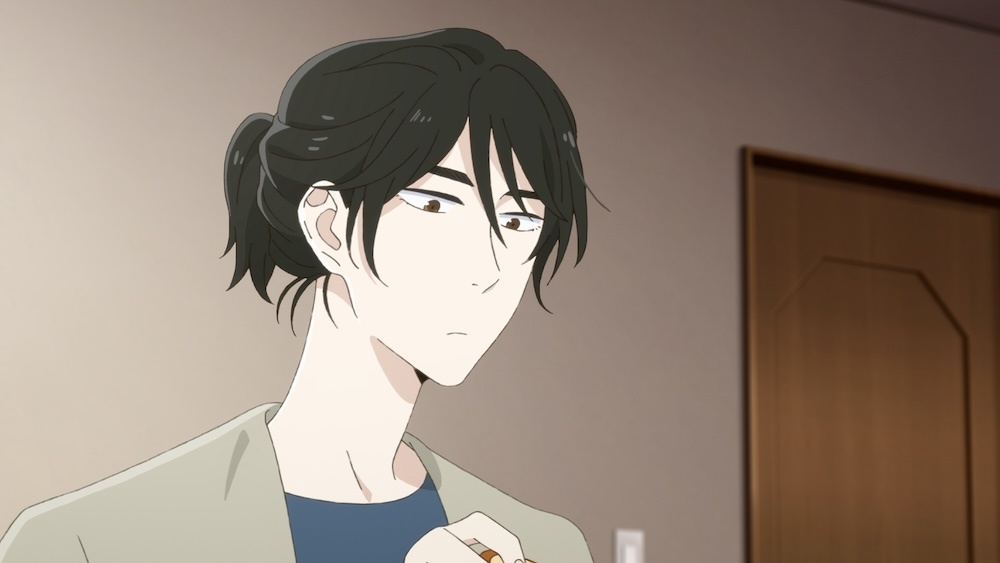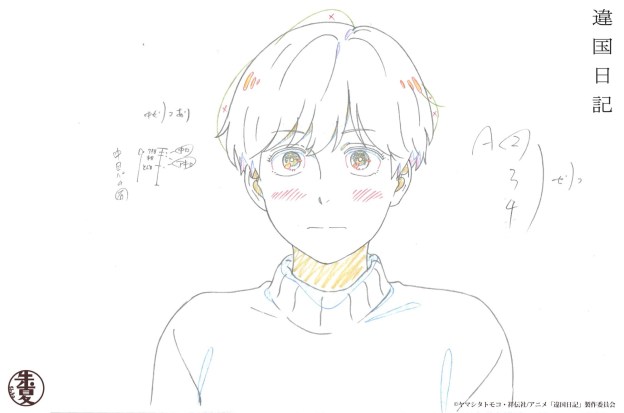
Original interview from the Animate Times series of interviews on Ikoku Nikki, published on March 29th 2026, original interviewer: M.TOKU; genga from the official studio Shuka Twitter account.
I believe there doesn’t exist another work that depicts negative emotions quite as plainly as this one.
— I heard that you already liked the original manga. What do you think the main appeal of this work is?
This is something I’ve only recently found the words for. This work depicts human emotions while telling simple stories of daily life; those emotions aren’t always beautiful or positive, they can also have negative parts, and in this work, the negatives are portrayed in a way that is intentionally not exaggerated. I believe this is the reason why I find it so compelling.
— I think this delicate and not overstated presentation makes it feel more real and relatable.
Exactly. There are so many human dramas out there, but I believe there doesn’t exist another work that depicts negative emotions quite as plainly as this one. I feel like there are more works that exaggerate the unpleasant aspects as unpleasant, and even go so far as to depict them as excessively negative, sometimes to the point of creating outright antagonistic relationships. This work however, isn’t like that, and that’s why it feels more realistic. I remember that Yamashita-sensei mentioned in some interview that she’s not “trying to create bad people”, and I believe that’s the main reason why I like Ikoku Nikki so much.
— Why did you think to adapt this work into an anime?
In part because I’ve been asked: “Is there any work you like?”, and also because, since I don’t think there are many anime adaptations of works with this sort of expressions, it felt a bit challenging. I wanted to test out if it was possible to translate it into moving pictures while also maintaining its atmosphere intact.
— I’ve always thought it would be quite a challenging work to adapt.
That’s right. I didn’t intend to direct it in a too unconventional way, but judging from the viewers’ reactions, I feel like it ended up being the kind of anime you don’t see often these days.
Don’t make the presentation excessively tear-jerking.
— When working on an anime adaptation, I believe that carefully choosing the members of the staff is especially important. For this project, Kiyasu Kohei-san was in charge of the script and series composition. Why did you ask him?
When I had the chance to read a bit of the scripts Kiyasu-san wrote for other works, I got the impression that he’s a writer who does some pretty interesting things. I also felt he was a stoic person, and potentially a good fit for this project, so I invited him. I’m glad he took an interest in the original work.
— What kind of conversations did you have with Kiyasu-san when discussing the script?
At the time, the original hadn’t concluded yet, so at first I told him I wanted to start with adapting Volumes 1 to 7 into a 1 cour anime. Then, I remember talking about how I wanted the anime to feel as close as possible to the sensations that reading the original leaves you with. We didn’t really discuss many practical things. After that, Kiyasu-san turned in the initial draft of the script, and it was already amazingly perfect, so I didn’t have to worry about anything.
— When it came to writing the script, did you get any specific requests from the original work-side?
In particular, they requested that we “didn’t make the presentation excessively tear-jerking”. I payed attention to this during the script-writing and story-boarding stages, but when you add the voice and music, the flavor changes substantially… Of course, I didn’t try to overdo it, but after episode 1 aired, I read a lot of comments saying: “That made me cry so much”. Maybe I really did exaggerate it…? That made me a little worried. I’d rather it be more subtle, like you start shedding tears before you realize it. That’s the ideal way for me (laughs).
— Let’s also talk about the visuals. Hayama Kenji-san was in charge of character design and the animation direction. What were your requests for him?
From the beginning, I had the impression that Hayama-san was very close to this work as a person. Additionally, he’s just overwhelmingly good at drawing, so I didn’t provide him with any specific instructions. There has never been anything I worried about in that regard.
— When we interviewed Hayama-san for this series, he said that he was “Very worried about his work and might have caused troubles to the staff”.
It’s true, he does have a reputation of drawing rather muscular and brawny male characters. But in a previous work titled “Kuragehime” [“Princess Jellyfish”, 2010] he also depicted more comedic-styled art, and the delicate linework you might associate with a female creator. So, personally, I wasn’t too worried. And watching his work as an animation director, I really realized how amazing he is. Especially when it comes to acting and expressions. He adjusted the facial expressions with his corrections in ways I didn’t expect, which resulted in the final drawings being even more compelling.
The higher the quality the better, but too much movement tends to pull your focus in that direction.
— Including the designs, please tell us about the things you particularly focused on and kept in mind when creating the visuals.
Now that I think of it, I didn’t want the animation to get in the way. If the animation is too intrusive, it distracts the audience from the story. So, I tried not to overdo it, while also handling it with care. It’s not like it’s a work that needs to be flashy about movement anyways.
— I feel like what you’re talking about now is something on a different level of what’s usually referred to as “quality”.
Of course, the higher the quality the better, but when there’s too much movement, it tends to pull your focus in that direction. In a scene where I want the main focus to be on the voice acting and the music, if the drawings move excessively, they end up pulling the viewer’s attention away. That might be what people call “incredible sakuga”, but there are times when that’s not what I want to convey. What to move and what not to move is something I’ve been payed special attention to since the story-boarding phase.
— It’s about the balance of what you show.
Yes, exactly that! I think there are all kinds of anime out there, but personally, I’m the type who gets tired watching something that’s constantly moving. I believe everything should have a good sense of rhythm and variation in pace.
— Thank you so much for this valuable discussion. I also felt that this work put a lot of care into its cooking scenes.
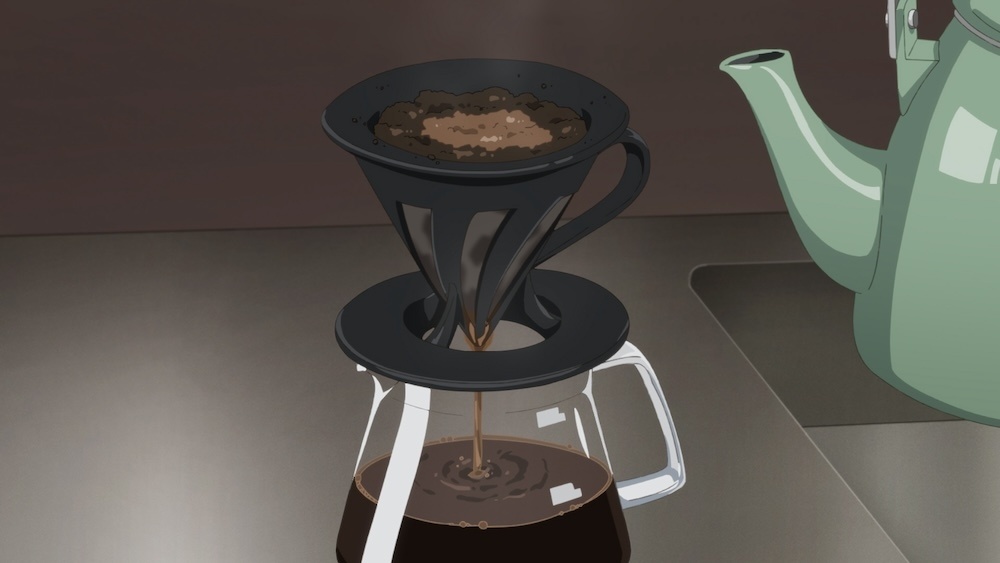
It’s a drama about everyday life, so cooking scenes require a certain degree of realism to them. When I wanted the cooking to look tasty, I specifically asked for tasty-looking drawings, and when in turn I wanted the food to not look good, like the sushi in episode 1 for example, I adjusted the colors to be less vibrant.
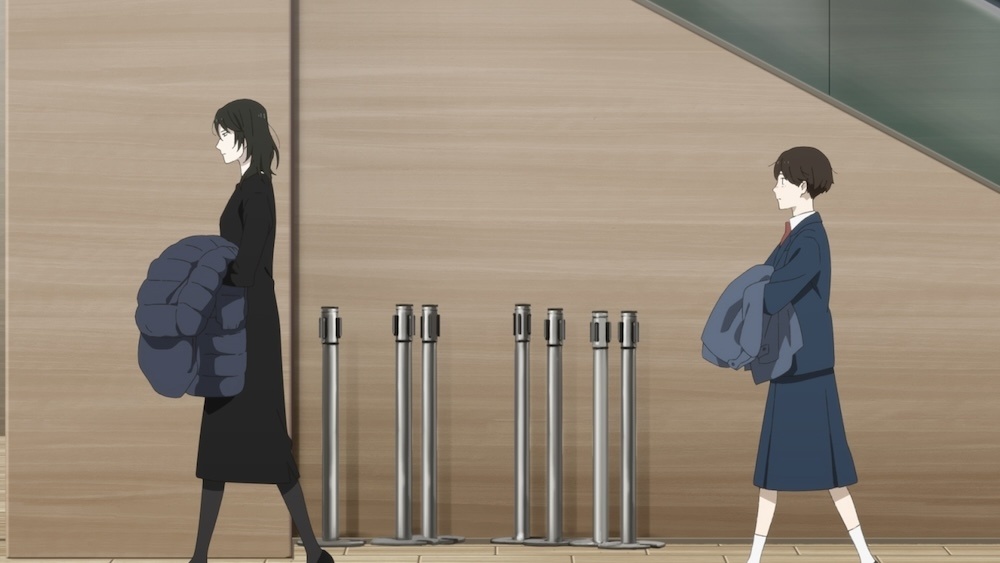
— A direction technique to make the food look not tasty!
It was pretty difficult, you know. You also need technique to make it look not good. To figure out what “un-tasty food” would look like, we actually went and bought some sushi, and left it sitting in the fridge for a while. From there, we studied things like how the highlights fell on that dried-out sushi. Looking back now, eating that sad, dried-out sushi together with the staff is a fond memory I have of this project (laughs).
— Experimenting and seeing things first-hand is very important when you don’t understand them fully.
There really are many things you can’t understand unless you see them. Not just the animators, I think that we were able to bring upon that level or realism because we all observed and examined the real thing. I heard that the sound effects team actually went and made some deep-fried food to record the sound it makes. That’s amazing, isn’t it?
Makio was saying “I see”, not “I understand”.
— Ushio Kensuke-san was in charge of the music for this work. What kind of requests did you make to him at first?
I told him I’d love the piano to be the main instrument, and that’s about it. The music composition began around the time we had finished recording up through episode 2, and it was actually Ushio-san who suggested: “I’ll look at the materials and footage available at this point and try composing a few tracks based on the impression I get from them”. The tracks he created after that were already amazing, so we decided on that direction. Then, I lightheartedly requested for more tracks that could be played during everyday scenes, as well as a more bright and a more sad track, which he proceeded to compose right after.
— Personally, I had the impression that many of the tracks were quiet and gentle.
That’s likely what Ushio-san perceived from the work itself. Actually, separately from my meetings with Ushio-san, sound director Omori Takahiro-san and I had been talking about not wanting to score the music too densely. Omori-san already had the same interpretation, and he shared the same vision as mine. The music Ushio-san composed was already exactly in line with that intention as well. I had a lot of fun listening to his tracks.
— Please, tell us about the recording sessions and casting as well. The two characters at the heart of this story, Kodai Makio and Takumi Asa, are voiced by Sawashiro Miyuki-san and Mori Fuko-san respectively. What were the deciders for these castings?
Both roles were decided through an audition. Starting with Sawashiro-san, she was overwhelmingly Makio. When we first heard her voice, everyone went “She’s Makio”, and we all agreed on entrusting the role to her. The deciding factors for Mori-san were her bright and innocent tone. Her voice quality left a positive impression on me; the fact I couldn’t feel any darkness in her voice was really Asa-like. Another factor might have been that, including her freshness, she really reminded me of Asa.
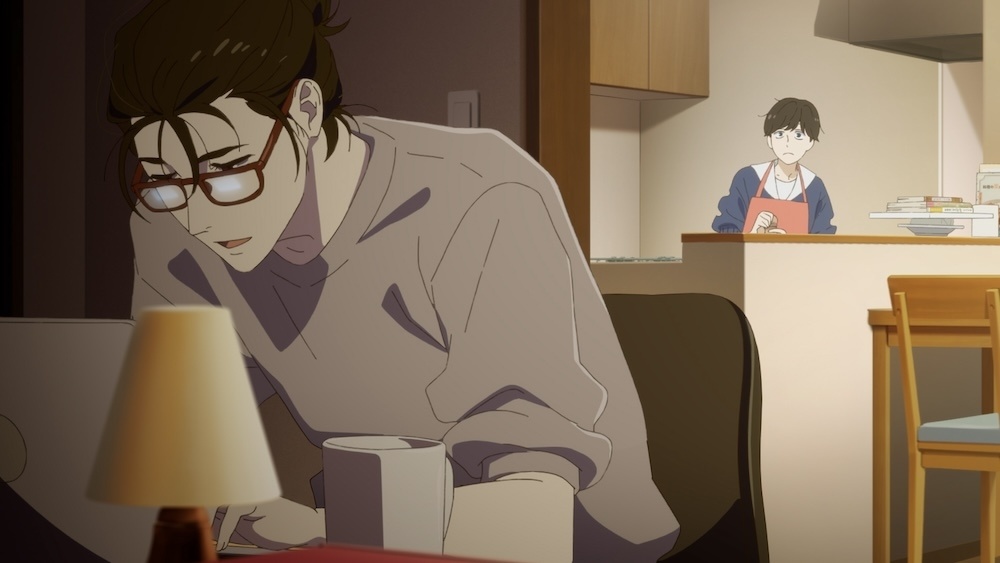
— Did you make any specific requests to them in regard of the voice acting?
As for Makio, I felt like at first her emotions were coming through a little too strongly in some places. Sawashiro-san is very charming and considerate, she’s a very nice person. On the other hand, Makio is blunt and easy to misunderstand. I imagine there are quite a few differences between Sawashiro-san and Makio, and probably many aspects of her character she had a hard time grasping. A few times, I asked her to dial her emotions back a little, but without feeling downright cold, while still having a mechanical quality to her acting. I understand it was a very difficult request.
— I think you made such a complex request precisely because you knew Sawashiro-san could pull it off.
You’re right. One that stands out in my memory is the desert imagery scene in episode 1. There’s a line that goes: “I get it. This is what they call… loneliness”, but with the initial take, I felt that in that moment, she was leaning a little too close to Asa. It’s not like Makio is pushing Asa away in that scene, but she’s not quite trying to get closer to her either. But the difference in nuance between “understanding” and “sympathy” is particularly different to evoke.
Sawashiro-san too was struggling to figure out how to express it. Then, Yamashita-sensei told her that “Makio was saying I see, not I understand”, and after hearing those words, Sawashiro-san‘s performance was truly magnificent!
— A single direction or piece of advice can completely change a performance. In every sense, I think this is what professional work looks like.
I agree. I’d be really happy if you watched that scene again. I believe Sawashiro-san had a hard time at first, but episode after episode, she gradually started to sound more and more like Makio and I was really moved.
— What about Asa’s voice actress, Mori-san? Did you make any particular request to her?
Mori-san has interpreted Asa naturally from the very beginning, and there was almost nothing I needed to ask her. She had clearly done a thorough read of the source material, yet she was also flexible enough to adapt in the many back-and-forths during the sessions. Also, she is really talented at singing. I believe you were all able to hear her by now. She did a fantastic job.
Daigo inhales while laughing, you know.
— Other than that, was there anything else from the recording sessions that left an impression on you?
The performance for Minori in episode 7 was really outstanding. Despite it being the same line, the emotional warmth of Ohara Sayaka-san‘s delivery in the opening scene where Minori is speaking, and in the later scene when the image of her appears as Asa is reading her journal, felt completely different. I was deeply moved. Ohara-san too happened to like the original work, so she acted with an extraordinarily high degree of understanding of source material. For (Shingo) Kasamachi-kun, Suwabe Junichi-san delivered a very sexy performance. Actually, it was a bit too arousing, so I had to ask him to dial it down a bit (laughs).
— So that was your request for him (laughs).
However, I believe Kasamachi-kun has this innate seductiveness to him, so it wasn’t entirely out of place. He was able to carefully enact a different performance for the younger Kasamachi-kun, which I thought was really remarkable. (Kazunari) Tono-san‘s voice actor, Kondo Takashi-san too immediately felt like he was a perfect fit for the character since the moment of the audition. He was such a perfect match it almost made me laugh. It moved me. (Nara) Emiri’s actress, Morohoshi Sumire-san was also super good. Especially in episode 3. I could see it form her performance that she was really worried sick for Asa until she finally called her. I found her acting to be incredibly convincing. The fact that she can make you cry with just her their voice is really incredible.
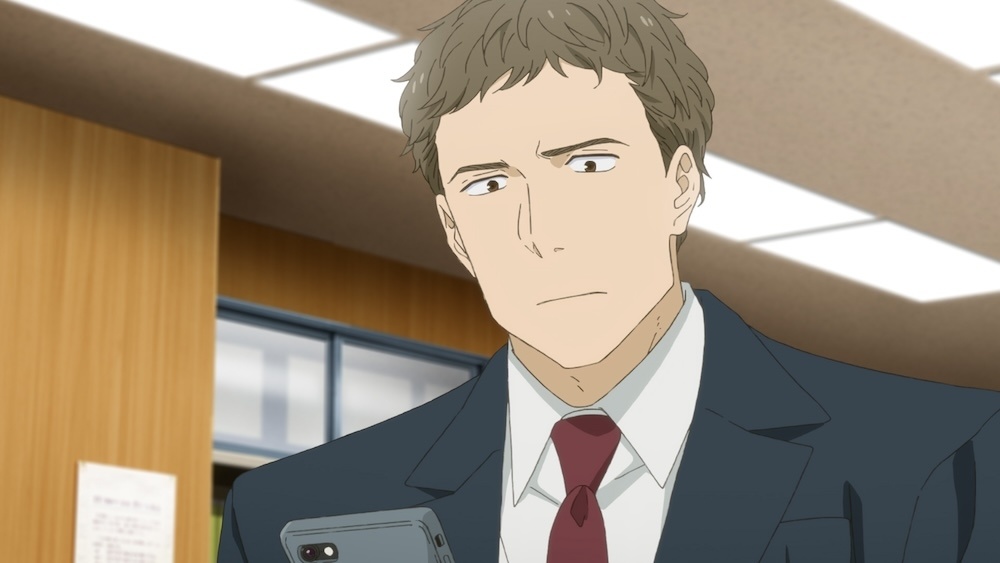
— So you were feeling, in every little moment, the added richness that the voice brings.
Exactly. Speaking of which, there’s Daigo (Nana) in episode 2. Actually, during the recording session, Yamashita-sensei mentioned to me: “Daigo inhales while laughing, you know”. And indeed, when I had read the lines written out in the original work, I did think they were a little unusual. But I never imagined they were meant to express that kind of laughter.
— Yamashita-sensei has a very clear image of her character in her mind, doesn’t she?
I was really surprised, but at the same time, I had to go with that. The only problem was that, when writing the script, we didn’t realize she had that peculiar way of laughing, so we had to adjust the timing of the lines. And Matsui Eriko-san was also able to adjust her performance accordingly, including this peculiar quirk. She tried right away, and asked: “Is it something like this?”. By the time Daigo appeared again in episode 7, Matsui-san had already mastered the inhaled laugh, and was able to perform her role smoothly and naturally. I realized how amazing voice actors really are.
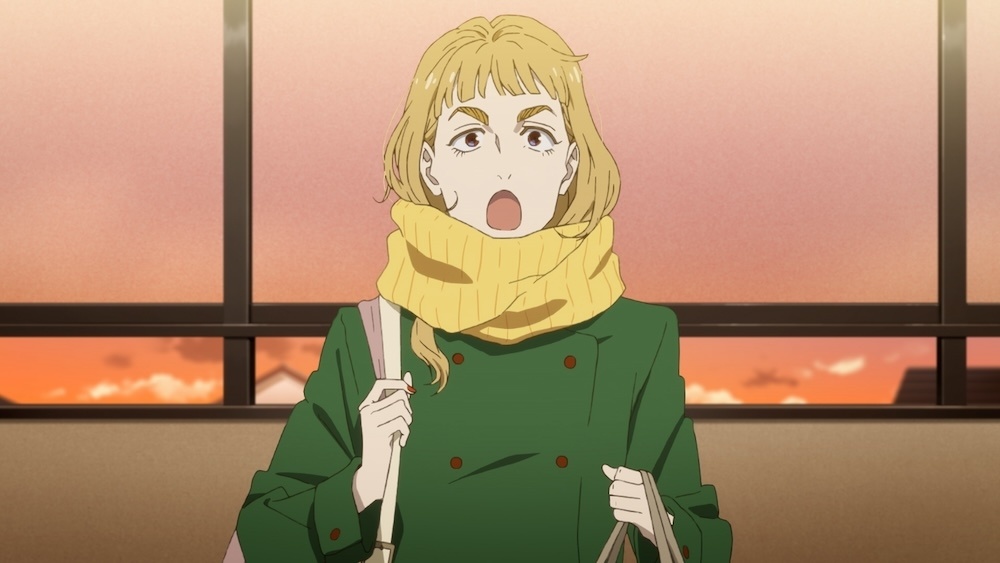
— I believe this peculiarity of Daigo’s character became easier to notice thanks to the anime medium.
I believe the impression she gives off changed now that she actually has a voice. These shifts in perception between mediums is really interesting, isn’t it?
The creator’s intent is ultimately just one element that makes up and supports the story.
— Is there any other things we didn’t talk about yet that you focused on while working on this project?
When I first read the original, I figured that the scenes in the imaginary desert were a key of this work, so I absolutely wanted to recreate them in the anime. However, I thought that if I inserted those scenes with the same timing and flow as the manga, it would often end up feeling too abrupt. So, I added those scenes only at selected points, when they would feel as less obtrusive as possible. I wanted the timing to be as seamless as possible too. I started adding it little by little from the very first episode, in order to get the viewers gradually more acquainted with it, so that this change of setting to an imaginary landscape wouldn’t feel out of place.
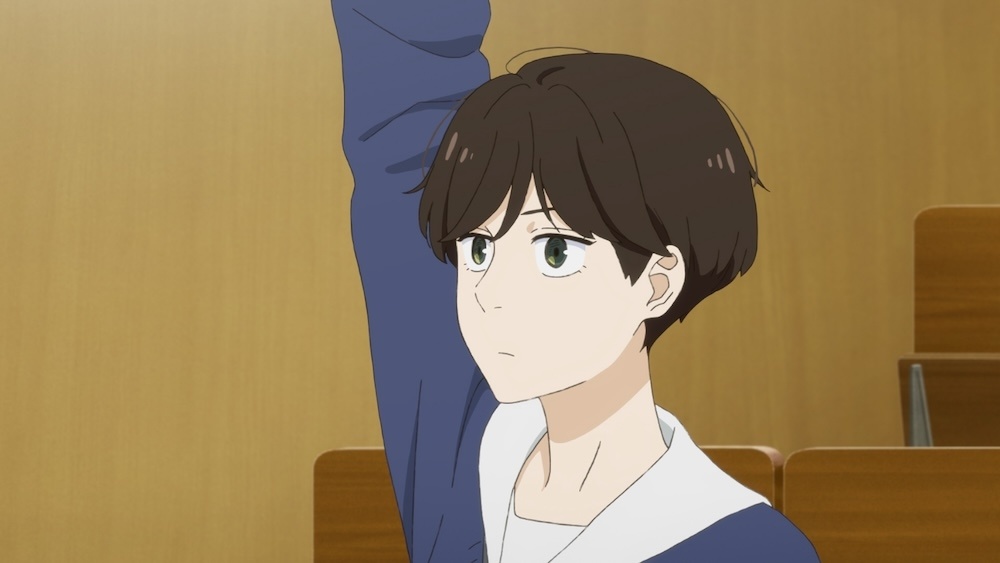
— What you just mentioned is essentially one of those creative choices stemming from the inherent differences between “reading a comic” and “watching an anime”.
Exactly. In a comic, the passage of time can be defined as the space between panels. So, if when you turn the page, the setting has turned into an imaginary landscape, it doesn’t feel off. But as video, pictures come in sequentially, so it will inevitably feel out of place. That’s why I intentionally added many of those scenes, to the point a fan of the original might think: “Aren’t they overdoing it a bit?”… (wry smile). I did add them in on purpose, though. That said, without something like this interview, this kind of thing is hard to get across, isn’t it.
— Maybe it’s not something you should expect viewers to pick up on in the first place.
I think so too. That kind of intent is ultimately just one element that makes up and supports the story. If you’re making the audience conscious of your intentions, that might actually mean that they couldn’t properly focus on the story. And that would be putting the cart before the horse. I’m always striving to make sure the audience can just lose themselves in the story above all else.
— Thank you so much for the valuable conversation we had today. Lastly, with the show now approaching its climax, could you tell us once more what you see as its highlights?
In order to wrap things up as a single-cour anime, there are quite a few original developments woven in around the final episodes. I am a bit worried about how they’ll be received, but I believe it is shaped to end satisfyingly, so I hope you will enjoy it. There are also some hidden touches, so once you’ve seen the final episode, I’d be really happy if you went back and watched it all again from episode one.