
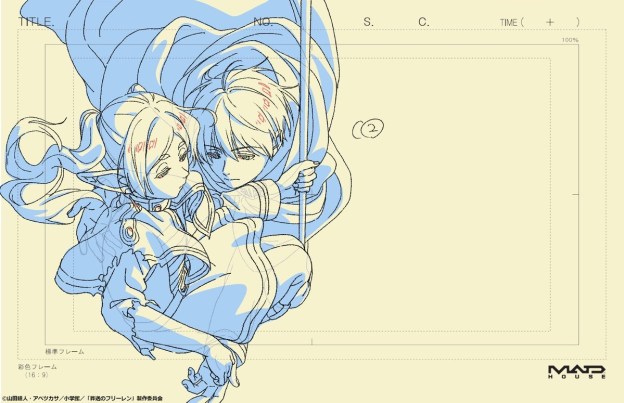
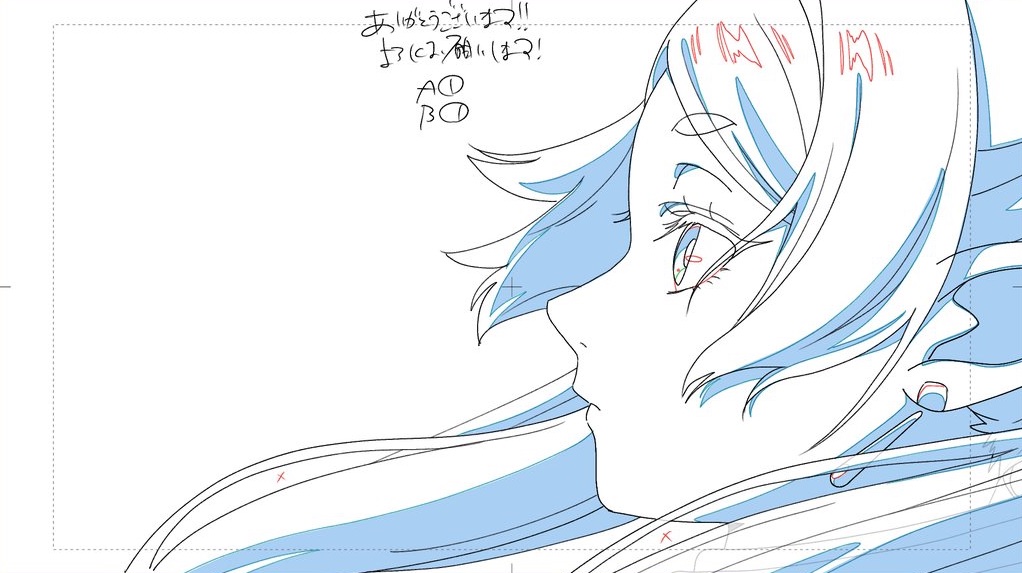
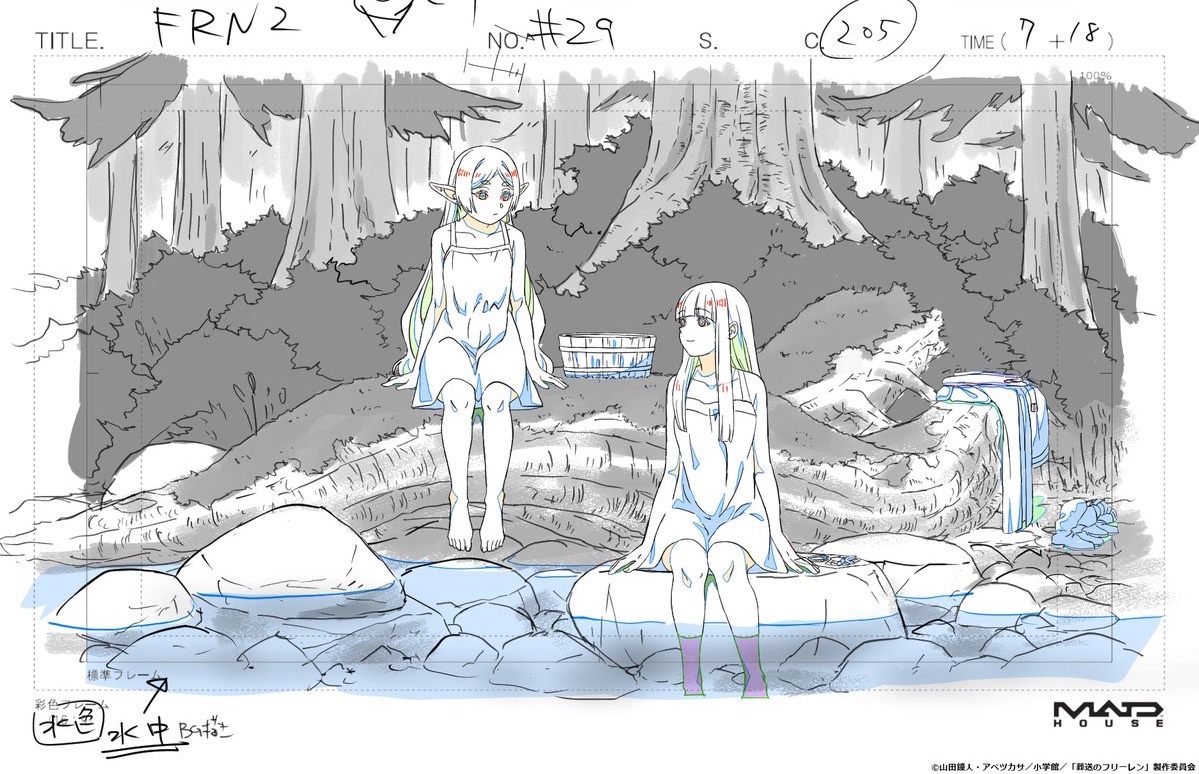
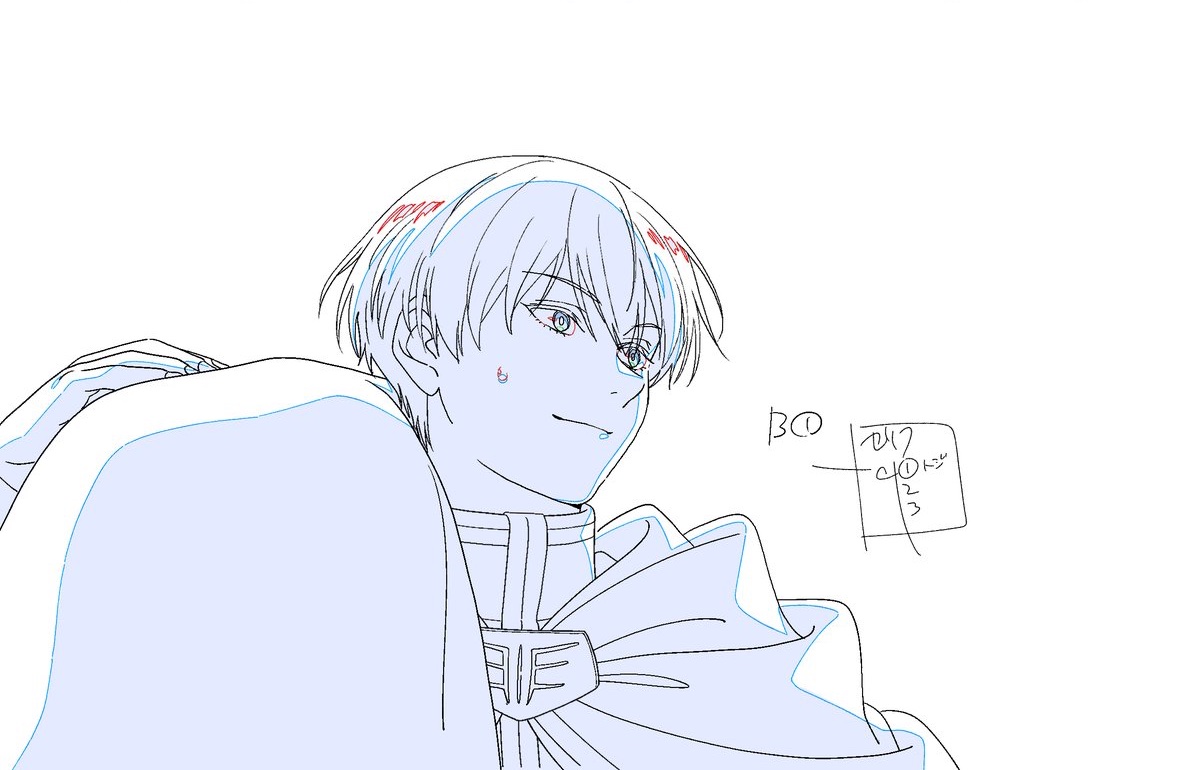
Original interview from MANTANWEB published on January 2nd 2026, original interviewer: 阿仁間満; genga corrections by Akiko Takase, from the official studio Madhouse Twitter account.
The second season of the anime adaptation of “Sousou no Frieren”, the manga series written by Kanehito Yamada and illustrated by Tsukasa Abe currently serialized on “Weekly Shōnen Sunday” (Shougakukan), is airing every Friday at 11 p.m. on NIPPON TV’s “Friday Anime Night” slot, starting January 16th 2026. The manga series boasts a total circulation of more than 32 million copies, and the first season of its anime adaptation aired on “Friday Anime Night” from September 2023 to March 2024, attracting widespread attention for its careful direction and visual beauty.
This second season features Season One’s episodes 2 & 8 and second cour’s chief Episode Director Kitagawa Tomoya-san as the Director, and Season One’s Director Saito Keiichiro-san supporting the production as Direction Cooperation.
How will the second season take shape under a new Director? We spoke with Kitagawa-san, Saito-san, and Series Composition & Scriptwriter Suzuki Tomohiro-san.
What does the “Direction Cooperation” do?
— What’s the division of roles between Kitagawa-san and Saito-san, and how did this team come together?
Saito: When Season One ended, discussions began about what to do for Season Two. I had already poured all of my energy into the first season, and when thinking about how to deliver “Frieren” to the world in an even stronger form, I realized I genuinely wanted to take a short break from on-site production, and assist the team by sharing my know-how and knowledge with them. That’s how I ended up participating under the Direction Cooperation credit. I supervised the script and storyboards, and worked as an advisor, suggesting corrections and revisions. I also took on practical tasks when it was necessary. For the second episode of Season Two, I was in charge of part of the storyboard, and in connection with that, I was also present during editing as well. At first, I intended to be involved in pre-production only, but ultimately I ended up lending a hand in post-production as well.
— What’s the reason Kitagawa-san was selected as the Director?
Saito: When working together in Season One, I felt like Kitagawa-san‘s thinking and technique were really solid and on point. There were things I really should have overseen myself, but I couldn’t keep up with everything and Kitagawa-san helped me a lot with them. When it came to asking someone for the Director role, there really was no other candidate except for him, so that’s the why I asked Kitagawa-san.
Kitagawa: When I was offered the Director role, I was genuinely very happy, but also felt the pressure of being in charge of such a popular series. I’ve put my best effort into this production, in order for it to live up to the viewers’ expectations.
— Have you two worked together on other projects before?
Kitagawa: I worked on the TV show “Sonny Boy” [2021] in the same roles of Storyboarder and Episode Director. At that time, I had Saito-san participating as a key animator in an episode I supervised, and we’ve been working closely together ever since.
— Are there many members of the staff who also worked on Season One?
Kitagawa: Yes. There are many, including main staff like the Art Director, Color Designer and Director of Photography, as well as many Episode Directors and animators, who have continued to participate, and it’s really reassuring. There are some new entries too.
Saito: Fukushi-san (the Animation Producer, Fukushi Yuuichiro-san) has continued managing things on-site, and the talented team from the first season is once again bringing the full extent of their strength to this second season.
— Since you’ve been building upon the know-how of Season One, are there even more things you could achieve in this new season, compared to the first one?
Saito: I believe there are. At times, overseeing the works for Season Two made me feel a little jealous (laughs). Aspects we couldn’t fully bring to life in Season One are now being executed to their full potential.
— How do you feel about the current state of the production?
Kitagawa: Everyone, from the Scriptwriter Suzuki-san, to the sound team, the voice actors, the animators and photography team, the background artists —I can’t list each one of them, but we’re all highly motivated and working hard in order to make this into a great work. I believe it’s turning out to be a very entertaining show.
The charm of words
— Kitagawa-san, including Season One, what do you feel is the charm and appeal of “Sousou no Frieren”, and how are you trying to express it in anime?
Kitagawa: The original work is very solid and entertaining, and when adapting it, I’m constantly thinking about how to effectively translate that appeal into anime. The anime’s script contains quite a few original elements, so I also think about how to make them as entertaining. In “Sousou no Frieren”, there’s a slight gap between what the characters say and what they think; it’s a work that depicts the complexities of human emotions. When bringing it to animation, I direct with a focus on how to portray these aspects effectively onto the screen.
— Suzuki-san, how do you feel about the “charm of words” in “Sousou no Frieren”?
Suzuki: From the first time I read it, I felt it had a serene and soothing atmosphere, with careful and delicate use of language. The dialogues also have a pleasing sound when spoken aloud. In the first season, the Director’s spacious sense of rhythm carefully conveyed this tranquility, and I think it also emphasized the pleasantness of the words’ sound. The balance and pacing of the comedy scenes are also remarkable.
Kitagawa: Gags too are one of “Sousou no Frieren”‘s appeals. In Season Two as well, we continued to make them stand out properly, while also expanding on them a little. It has slice-of-life elements, it has comedy, and it has battles; it has everything people want to see, and it’s a work capable of depicting all of it. It feels so rewarding.
— Season One was met with a strong response from overseas as well.
Saito: I used to worry about whether its lyricism would resonate with viewers all around the world, but now, I’m really glad that people were able to really connect with the emotional qualities this work radiates. It also features flashy action sequences, so I think it was thanks to the series’ great balance as well.
Suzuki: It still doesn’t feel real, but I’m truly happy about that.
Kitagawa: As you mentioned, I felt that aspect too, so I wanted to make sure we kept that same balance in the second season as well.
It’s fundamentally an extension of Season One, but…
— When writing the script for Season Two, what kind of discussions did you have?
Suzuki: At the very beginning, (Animation Producer) Fukushi-san said he wanted to maintain a consistent core throughout the series. He wanted to compile it in such a way you’d feel the desire to watch it all over again the moment you finish it. Kitagawa-san remarked how he wanted to show the main trio’s harmony and maturity gradually growing stronger, as well as how the flashbacks featuring Himmel slightly differ from Season One’s, as Frieren recalls them in a more assertive and proactive way. We talked about how we wanted to focus on that aspect.
Kitagawa: Season One featured many scenes of Frieren reminiscing and reflecting on Himmel’s words, and consequentially learning more and more about humans. Season Two however, is more about her teaching to Fern and Stark what she learned from Himmel. In that sense, I think what I want to deliver is the story of how the trio matures as a party, and how, thanks to Frieren’s presence, both Fern and Stark are able to grow. As this becomes more and more core to Season Two’s narrative, even the party’s battling style changes, with Fern evolving little by little by observing Frieren. I tried to incorporate this aspect into the show.
— Are there also aspects you changed in Season Two?
Kitagawa: It’s fundamentally an extension of Season One, so we tried to keep the already strong aspects exactly the way they were. I believe there are many who are fond of the peculiar tempo and atmosphere, so I made sure to preserve that feeling while centering the story around the trio’s journey.
Saito: I personally would have been fine with Season Two being completely re-imagined in Kitagawa-san’s own style and sensibility, but since they’re carefully modeling it on Season One, I can’t help but feel a bit conflicted (laughs). Of course, I also feel genuinely happy that they’re using the first season as the model.
— Even so, do you feel that Kitagawa-san‘s personal touch still manages to come through?
Saito: I do feel his style in subtle ways, but even in the first season, there were various Episode Directors involved, and I think it’s through the contributions of many people that a single work can come together.
In Season Two, the shot compositions and small pauses, as well as the mise-en-scène are a bit different from my own style, and I think that’s where Kitagawa-san‘s style, or rather, his idiosyncrasies come through. At the beginning of the first episode of Season Two, Kitagawa-san added a scene that originally wasn’t present in the script, and I believe it really communicates what he’s trying to achieve with this second season.
Kitagawa: It really isn’t that big of a deal, but the new season is finally about to begin after nearly two years, and Frieren and the others are back; I was thinking about how I could build up that sense of excitement, the feeling that a new journey is about begin. With that in mind, I made a few small additions, including how the title shows up on the screen.
— Kitagawa-san, you worked on the first season as well, but when it came to the production of Season Two, did you do any analysis or specific study of Season One?
Kitagawa: To avoid Season One’s atmosphere coming apart, I tried my best to bring it over to Season Two. I worked on elements like the depiction of natural landscapes, the sense of rhythm and the staging of important dialogues with the first season’s approach in mind. I also put careful thought into the division of cuts and transitions, so that the important lines won’t just get glossed over.
— A big topic of Season One was also its battle scenes. How about Season Two?
Kitagawa: There will be just as many, perhaps even more. The manga’s rhythm is very entertaining, but when adapting them into moving pictures, you have to be thoughtful of how to stage them. In Season Two, the trio’s battles become the main focus, so we staged them emphasizing their coordination and teamwork.
Saito: In Season One, I did everything I could in terms of Episode Direction and Editing, but a large part of the action came from having Iwasawa Toru-san on board as the Action Director and allowing him to fully showcase his skills.
Kitagawa: For the second season, we’re relying on the skills of the staff in charge of each episode and its action direction.
Saito: We have many animators who also worked on Season One, so I hope you have high expectations for it.
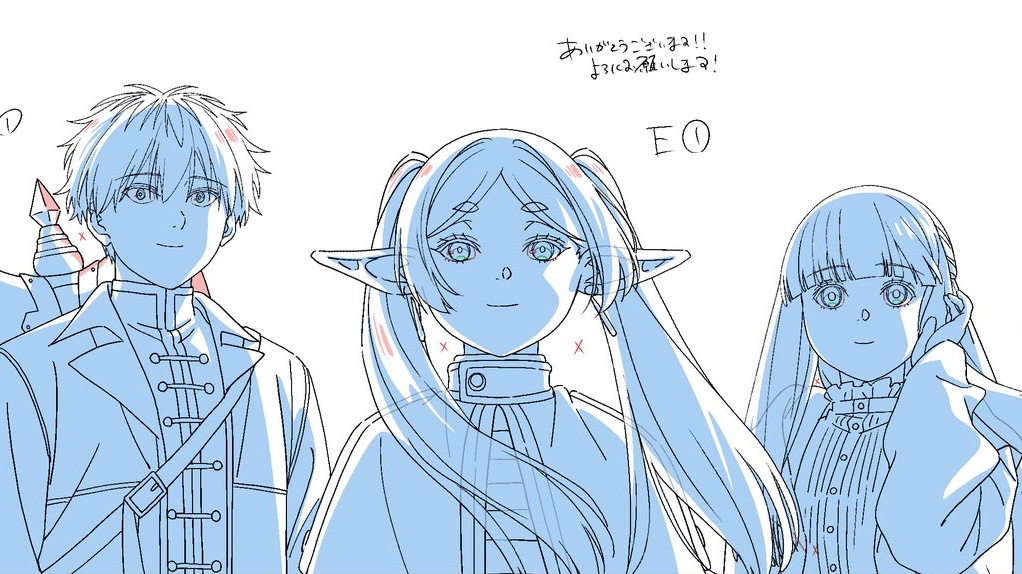
The change and growth of the main trio
— What are the intrinsically challenging aspects of “Sousou no Frieren”?
Saito: The delivery of the dialogues has to be convincing in a way that comes across naturally when the lines are spoken. So, we paid close attention to that when directing.
Kitagawa: We added some anime original parts as well, so I worked on the storyboard while thinking about how to make them appealing and entertaining to fans of the original work. There are also aspects that deviate from the manga in the way they’re portrayed. For example, in Episode 25 of Season One [this episode was storyboarded and directed by Tomoya Kitagawa himself t.n.] I changed the way kid Flamme is portrayed, and was worried it wouldn’t be well received by fans. I was focusing on how to adapt that scene into anime in order to make Serie’s feelings come through more effectively.
Suzuki: The original creators asked us to treat each line of dialogue with care. At the same time, they were very open and encouraging when it came to fleshing things out, which I’m deeply grateful for. That hasn’t changed in Season Two.
Saito: I think we expanded on more elements in Season Two than we did in Season One.
— How did you “expand” on the original work’s content?
Saito: At the early stages, we discuss the core ideas; then, Suzuki-san builds on them, and through ongoing discussions we deepen them even further.
Suzuki: It gets clearer once ideas are laid out, so I try to actively put proposals forward.
Saito: When looking at the series as a whole, we talked about showing how the characters change, while also discussing the aspects of them that remain the same.
— Finally, could you share a message for the viewers who’re looking forward to Season Two?
Kitagawa: In the second half of the first season, Stark mostly stayed on the sidelines, but in Season Two, he’s gonna play a much more central role. Please look forward to the trio’s teamwork and bonds!
Saito: This time, I’m only assisting in Direction Cooperation, but starting with Kitagawa-san, the amazing staff managed to craft some truly wonderful visuals, so please, have high expectations for it!
Suzuki: Because there was a long gap before Season Two aired, both Kitagawa-san and Saito-san have been working while focusing on maintaining a strong continuity with Season One. In the second half of the first season, our trio takes a break from their journey, but in this new season, they set off for new adventures. Centered on the themes of “change” and “growth”, I hope it becomes a work that leaves viewers with a warm feeling of fulfillment at the end. Please, enjoy it to the fullest!

Pingback: Sousou no Frieren Season 2 #1 – Direction Notes | SHINSEIKI