

Original interview from the official Your Forma website; genga from the official Studio Geno Twitter account. All the images used in this post are directly sourced from the official Your Forma Twitter account.
I really wanted to portray the “connection between people”
— First of all, Director Ozaki, please tell us what you believe the appeal of Your Forma is.
Your Forma has the look of a regular SF, but actually, I believe it’s a very contemporary work. For example, the virtual world depicted in the story is like having the functions of a smartphone embedded directly in your brain, and AIs like Harold, assisting humans in their daily lives, already exists in our society, albeit not in the form of humanoid robots.
It creates an easily recognizable and familiar worldview by cleverly incorporating topics of interest of today’s society, and I believe that’s one of the appealing aspects of this work.
Then, the ubiquitous human drama that unfolds within this SF-like setting is the real essence of the story, and I think it’s its greatest appeal.
— Adapting such story in a single-cour anime, what are the important points you primarily focused on?
It connects back to what I was just saying, but what I really wanted to portray through this work is ultimately the “connection between people”. Therefore, rather than the SF aspects, what I valued most was placing emphasis on the human drama.
This story features “Amicus”, robots in the shape of humans, but the way I approached it was by treating every character as a real human being. We humans have a tendency to treat others, whether they are robots or dolls, objects or even nature itself, as if they “have a heart”, don’t we? That sense of familiarity you feel when chatting with an AI, for example. If that “heart” we feel was actually real, then what exactly would it be connecting us to one another? I want to explore this direction as one possibility.
— Did you receive any specific request from the author of the original novel, Kikuishi-sensei?
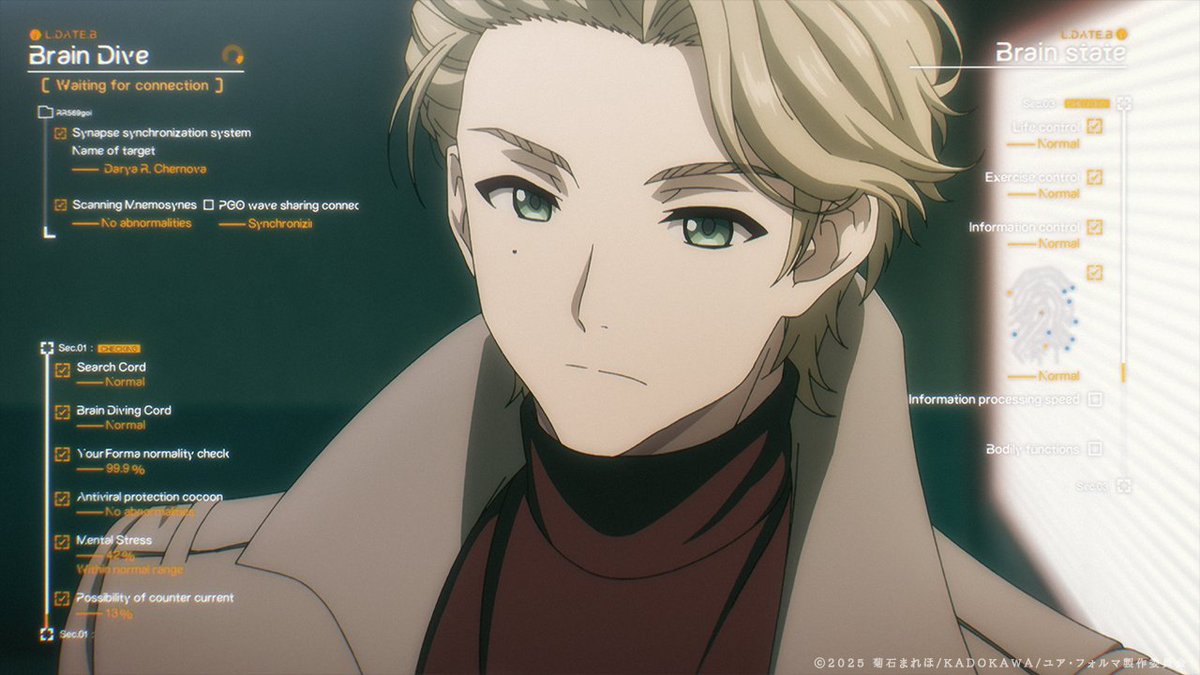
Kikuishi-sensei often came to observe the dubbing sessions, and willingly collaborated with us during production, which I’m really grateful for. It was all basically left up to us, and we didn’t receive any significant requests. Though, since the original is a novel and has no visuals, we asked many times for advices about the SF-esque items and elements. For example, in the novel, the 3D images that serve as user interfaces are called “holograms”, and the screens visible to ordinary humans are called “holo browsers”; at first, I confused them to be the same thing. But thanks to an advice by Kikuishi-sensei, I was able to understand the difference.
Additionally, the story takes places in many different countries, and I thought that the customs and habits of each were meticulously taken into account. I’m sure that Kikuishi-sensei did a lot of thorough research when writing the original novel. Cultural differences between countries were a rather tricky and complex aspect. For example, in Russia, people wear their wedding rings on the right hand, a custom that’s different from Japan, so it’s easy to get wrong if you don’t pay enough attention. It would have been great if we, the anime production team, could have gone to each location to do further research, but due to the instability of the global situation in these past few years, for this project we ended up gathering information through the internet and other sources.
— Please tell us about the appeal of the protagonist duo, Echika and Harold.
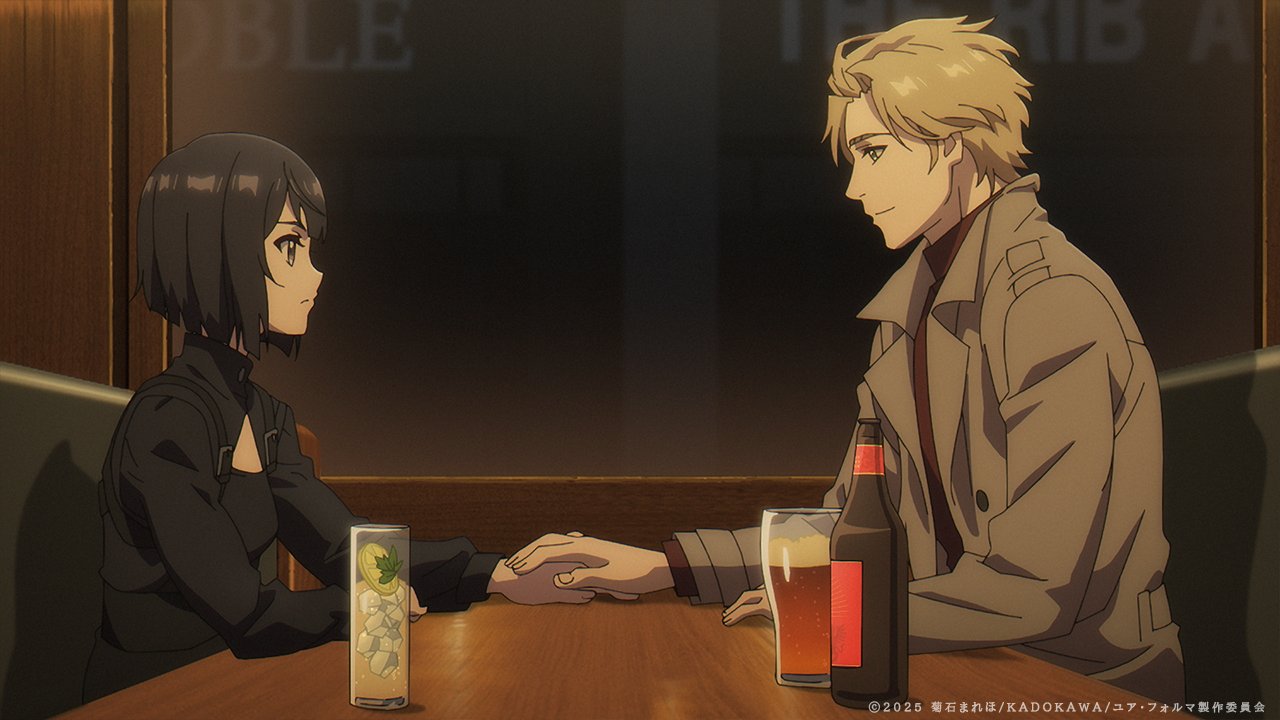
Echika, a cold, machine-like human, and Harold, a robot who’s friendly with everyone. At a first glance, the two seem like polar opposites, but in reality, they share a common ground: their complete inability to convey their true feelings and inner thoughts to others. Throughout this drama, they misunderstand each other repeatedly, and only come to understand each other’s true emotions at the end. I think this clumsiness is part of their charm and what makes them so endearing.
— What are your thoughts on Kana Hanazawa-san and Kenshou Ono-san, Echika and Harold’s voice actors’ performances?
I always had the impression that Ono-san speaks in a gentle and friendly tone, so I felt he was a perfect fit right from the start. On the contrary, at first I couldn’t picture Hanazawa-san playing an introverted and clumsy role like Echika. However, when I actually heard her perform the role, she conveyed the emotional intensity so brilliantly that I was genuinely impressed; exactly what you’d expect from someone of her caliber. Her performance holding back her voice while still letting the emotion spill through, is really wonderful, and even the casual conversations between Echika and Harold are incredibly engaging. I hope viewers too will pay attention to the natural flow of their conversations, like when Harold, with a hint of mischief, teases Ethica with a question and she responds to him in kind.
— Lastly, a message to the viewers looking forward to episode 1!
This is a drama that simply portrays the connection between people, so I hope you won’t find it too difficult to watch, and that you’ll grow fond of Echika and Harold as you enjoy following their story. I hope you’ll stay by our side and watch the story unfold until the final episode. I look forward to your support!

Pingback: Your Forma #1 #4 – Episode Notes | SHINSEIKI