Monthly Archives: November 2024

Takahiro Omori – Interview on Natsume Yuujinchou Shichi (Natsume’s Book of Friends Season 7)

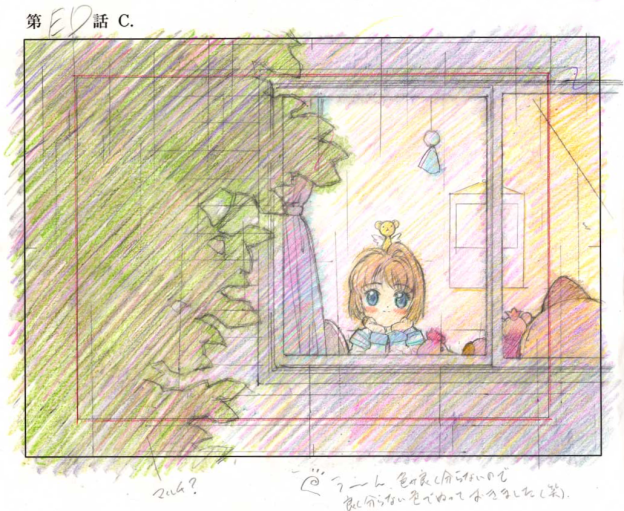
Original interview from Cocotame, published in two parts, Part 1 and Part 2, on October 21st 2024, original title: “TV Anime「Natsume Yuujinchou」Season 7 Starts Airing ― Chief Director Omori reflects on the 6,000 days spent together”, original interviewer: Hidekuni Shida; genga from Natsume Yuujinchou Shichi Episode 2, from Studio Shuka’s official Twitter account.


Part ①

Natsume Yuujinchou” is a manga series by Midorikawa Yuki, first published in 2003 and still beloved to this day. The anime adaptation began airing its first season in 2008, and since then, a total of 80 episodes (including special OVAs) and a feature film have been produced.
What kind of feelings has Chief Director Takahiro Omori poured into this work, having been involved as both the director and chief director of the anime series? He shares the appeal of the seventh season, which started airing on October 7 (2024), and his passion for creating this work.


~ Looking back at the origin of the beloved 16-year-long series ~

The TV anime Natsume Yuujinchou Shichi (Season 7) starts airing on October 7, 2024. Counting from the first season (which started airing on July 8, 2008), it has become a long-running series that has lasted a remarkable 16 years. Chief Director Omori, what do you think is the reason Natsume Yuujinchou has been loved all this time?

The anime Natsume Yuujinchou has a very easy-to-follow structure, as each story is fundamentally concluded within one episode. Furthermore, as you continue watching you begin to notice a larger, overarching story, and even with all the episodes released so far, there are still some mysteries left unresolved. I believe those elements are part of the reason why many people have been able to enjoy it for such a long time.

However, while it’s indeed a long-running series, there’s been a gap of around 7 years since the last broadcast [Natsume Yuujinchou Roku, the 6th season, began airing on April 12, 2017, and ended on June 21 of the same year], so out of the 16 years, it feels like half of that time has been spent on hiatus.

I’d like you to look back at 16 years ago. Do you remember when the proposal to adapt Natsume Yuujinchou into an anime first came to you, Chief Director Omori?

Yes. Originally, Studio Shuka’s (“Brain Base” at the time) producer Yumi Sato expressed a strong desire to adapt the original work, so she reached out to the former producers at ANX [Aniplex], who immediately contacted Hakusensha. On that occasion, other companies that were already interested in the work, such as ADK [ADK Emotions Inc.], reportedly made a production proposal to the committee. She then reached out to me, since we had previously worked together on other projects, and that’s how I became involved in the anime adaptation.

At that time, though, I honestly thought that portraying the atmosphere and tone created by the original work would have been a very difficult task. Additionally, the manga had only just begun serialization at the time, and the author, Yuki Midorikawa-sensei, was still in the process of developing the story, so we were able to make adjustments to the roles of the characters and the timing of their appearances under her guidance.

There were some meticulous changes to the original work, then.

Initially, in the original work, the protagonist Natsume Takashi had a somewhat detached and mysterious air, but we slightly adjusted his character to make him a little more relatableーan ordinary boy who, due to the single fact that he can see ayakashi, ends up distanced from the people around him.

In the manga Takashi has silver hair, but giving him silver hair in the anime would have inevitably made him stand out visually, so we opted for a light brown hair color. Furthermore, to make the everyday drama easier to follow, we adjusted the story so that Takashi’s friends not only include Nishimura (Satoru) and Kitamoto (Atsushi), but also Sasada (Jun), the only main female friend, who we decided would no longer transfer out [In the original work, Sasada transfers schools, but in the anime, she appears as one of Takashi’s classmates].

I imagine you had quite a few detailed exchanges with Midorikawa Yuki-sensei, what were your impressions from those conversations?

First of all, she struck me as a very kind and thoughtful person. The first time I met her was at the initial greeting with the art direction department, the characters and yokai designers, and all of the main staff. On that occasion, I asked her various question about the work, and I remember being struck by how sincerely she answered each one. She was so enthusiastic in answering our questions that I heard she came down with a fever [the term used here is 知恵熱 (chie-netsu), literally “wisdom fever”, which colloquially means “a fever that comes from using one’s head too much” t.n.] the day after meeting with us (laughs).

Not only did I get the impression of her kindness from our face-to-face meeting, but I also felt that the good qualities of her personality shined through in Natsume Yuujinchou, the work itself. What I especially realized after starting the anime production and working on the storyboards for each episode was that Yuki Midorikawa-sensei has a strong desire to “entertain the readers”.

She often adds little playful touches throughout the work, incorporates unexpected and interesting twists into the story structure, and includes elements designed to entertain the readers. I feel that she’s very in tune with her readers.

It is said that the model for Natsume Yuujinchou’s setting is Hitoyoshi-shi in the Kumamoto prefecture. I’ve heard that you went location scouting in Hitoyoshi too, Chief Director Omori. 

Since my debut as a director, I’ve never missed a single location scouting. The purposes of location scouting is not only to see the actual locations where the work will be set, but also to walk the site together with the staff, including the art director, and have discussions to develop a shared understanding of the vision behind the work. 

Of course, there are times like with Durarara!! [“デュラララ!!”, 2010, another TV anime series directed by Omori] where the landscape and spatial relationships are portrayed exactly as they are in real life, but that’s not the case for Natsume Yuujinchou, where we’re just using the overall atmosphere of Hitoyoshi in Kumamoto.

I wonder what kind of town Hitoyoshi-shi is. How are the townscape and scenery of Hitoyoshi reflected into the anime?

One thing that I clearly remember is the kindness of the people who live there. Especially, when you cross paths with middle-school or high-school students, they always greet you. When I asked Midorikawa-sensei about it, she explained that Hitoyoshi, due to its geographical location in a basin, has historically been a region wary of invasions from surrounding forces.

That’s why the courtesy of greeting someone they’ve never met before as a way of confirming what kind of person the other is has become a local tradition. I thought, “I see, so those greetings also hold that meaning”, but still, it’s always nice to be greeted with a smile by middle and high school students, isn’t it? (laughs). Also, perhaps for the same reason of being cautious of their surroundings, the fences around the houses are quite low.

The fences are low?

Exactly. The fences around the houses in Tokyo are approximately 170cm to 180cm tall [about 5’7” to 5’11”], and you can’t quite look inside even if you stretch, whereas the fences in Hitoyoshi are about chest-height, allowing you to see the surroundings over them. Rather than making them taller to prevent intrusions, the low fences, like the greetings, allow for assessing the surroundings for self-defense, and that custom has been deeply rooted to this day. These are some of the elements we’ve carefully preserved in the art direction of Natsume Yuujinchou.

~ Portraying the world of Natsume Yuujinchou in a captivating way through visuals and sounds ~

When creating the anime, what aspects of the original did you focus on the most?

In every chapter of the manga, Takashi’s monologues are used in a very impactful way. That particular way of using them was one of those aspects. Takashi’s monologues have two layers to them: one is used to express the emotions of the other characters, while the other is a separate, more subtle monologue that occasionally emerges to convey his own personal feelings.

However, when trying to combine the two types of monologues into a single prose, the meaning becomes disconnected. So, we arranged the monologues and structured the dialogue (script) by choosing which of the two types to use.

The one type we don’t convey through the actual dialogue, we depict with the drawings. One type is conveyed thought the words, and the other through the character’s expressionsーa quality unique and inherent to the visuals.

Additionally, we have to decide whether the monologue should be delivered in a more narrative style or a more emotional tone. For that, we arbitrarily choose one of the two when writing the script, then I consult with Natsume Takashi’s voice actor, Kamiya Hiroshi-san at the recordings whether a more narrational and firm tone or something in-between works best, and thoroughly adjust the balance as we record. 

Chief Director Omori, you not only worked as the director for the Natsume Yuujinchou series, but also took on the role of sound director. The free and unrestricted acting of the members of the cast is as well one of Natsume Yuujinchou’s most charming aspects. In the conversation scenes with the mid-rank yokai, the so-called “Dog’s Circle”, there are often fun exchanges, including puns and ad-libs, which create very pleasant and enjoyable dialogues.

I mostly leave the recording of the Dog’s Circle scenes up to the cast. At first, I used to reject their ideas because I didn’t understand the puns they made (laughs). Nowadays, Matsuyama Takashi-san, the one-eyed mid-rank yokai’s voice actor, basically acts as the leader on set, he preps the manuscript (the ad-lib lines) for the Dog’s Circle scenes, coordinating with the cast outside the studio before the recordings. This kind of fun and collaborative recording sessions are one of the unique charms of working on Natsume Yuujinchou.

~ The development and growth of the protagonist Natsume Takashi and the yokai NyankoSensei ~

The protagonist, Natsume Takashi, is a boy who, unlike ordinary people, has the ability to see ayakashi and hear their voices. Having depicted him since Season 1, do you feel his character has shown any development or growth?

In both Season 1 and 7, he’s got his friends by his side and not much has changed around him. However, what has changed is how much he has opened his heart to those friends.

In the beginning, he probably acted more reserved, with a guarded manner that subtly signaled that he couldn’t fully trust others. Over time, he gradually got used to his friends, and now, even when minor issues come up, he can brush them off with a joke. I feel he’s developed a certain warmth or ease that wasn’t there before. 

His feelings towards the ayakashi have seen some developments too; as of now (Season 7), I believe that his ayakashi and human friends have both become fairly closer to Takashi’s heart. He still retains a sense of caution and tension when interacting with the exorcist clans, but he’s gradually become more emotionally open. 

Especially with Matoba (Seiji, the young head of the Matoba exorcist clan), Takashi’s starting to show a calmer, more thoughtful side as he works to understand him, which I believe is a sign that reflects his growth. I think this seventh season is series that shows the unexpected sides of all the characters, so it’s not just about Takashi’s growth. I hope the viewers will enjoy how the way the other characters are perceived evolves as well.

Takashi has spent a lot of time together with his yokai partner Nyanko-Sensei as well, and their relationship feels like a bond of fate. Nyanko-Sensei’s true identity is the high-rank yokai Madara, and he acts as Takashi’s partner on the condition that once the boy dies, he will inherit the Yuujinchou (the Book of Friends), but Nyanko-Sensei has changed and grown too. 

I think Nyanko-Sensei has changed a lot as well. Probably, it’s the presence of Takashi that has softened him. Actually, in Season 7, after a long time he declares once again his goal to inherit the Yuujinchou upon Takashi’s death, however, their relationship has evolved to the point where it feels natural, as if he has forgotten about that initial promise. It almost feels like his objective has become nothing more than a jest. In a certain sense, it’s a positive relationship. 

What kind of difficulties and appeal does depicting the characters’ growth present for you, Chief Director Omori?

I originally started working in the field of visual production exactly because I wanted to depict the movements of people’s hearts, the changes in their expressions, and the shifts in their demeanor. Not just in Natsume Yuujinchou, I really enjoy portraying the growth and evolution of the characters in every work. I believe that carefully portraying the movements of people’s hearts is the true charm of this work. 


Part ②

In this second part of the interview, director and chief director,Takahiro Omori shares his thoughts on the anime production process, particularly in the context of digital technology’s rise over the past 16 years, focusing on what has and has not changed in the production of Natsume Yuujinchou


~ The unforgettable episodes from the past 16 years ~

It’s been 16 years since you started working on the Natsume Yuujinchou anime series. Are there any episodes in particular that left a lasting impression on you, Chief Director Omori?

Last year, during the “Revacomme!! × TV Anime Natsume Yuujinchou Anime Adaptation 15th Anniversary” event [December 2, 2023] fan-voted popular episodes were selected.

Among the episodes that were ranked highly in the fan vote, there were some where the protagonist, Natsume Takashi, and Nyanko-Sensei weren’t the main focus [the top-ranked episode in the fan poll was Episode 10 of Season 5, titled “Toko and Shigeru,” and the third-ranked episode was Episode 4 of Season 3, “Young Days”]. I thought that the fans attending the event chose the episodes they were particularly passionate about, but as the director, I was still surprised.

I understand that the fans who attended the event must have had a strong passion for the series, so, albeit surprising, those results make sense. There are many fans who prefer secondary characters over Takashi and Nyanko-Sensei, which, if anything, proves that the series is beloved in every facet.

I feel this every time there’s an event, but Natsume Yuujinchou fans are really devoted and trustworthy—every time I revealed something and asked them to keep it to themselves, they’ve never broken their promise and kept everything under wraps. I’m really grateful that highly literate and strongly passionate fans gather for these events.

Furthermore, their deep understanding of the work is impressive. From the creator perspective, it’s something I’m truly grateful for, because even when the direction and presentation are subtle or between the lines, I always get the feeling that my intention is clearly understood.

Throughout the series, there have been a few anime original episodes, right?

Initially, the original manga had just started serialization, so there weren’t enough chapters to adapt into the anime, therefore we decided to add a few original episodes. What I’m most grateful for is that the original author Midoikawa Yuki-sensei herself wanted the anime to include original episodes. “I’d like you to play around and have fun with these characters”, “I’m excited to see what you will do!”, she kept supporting us as a fan of the anime version. 

Hearing “I’m exited” from the original author must be the the highest form of praise an anime creator could possibly receive. 

You’re exactly right. Midorikawa-sensei has always been a tremendous supporter of the Natsume Yuujinchou anime, to the point she set up her social media account and kindly reposts all the content related to the anime.

When creating the original episodes, I wonder what kind of exchanges you had with Midorikawa-sensei.

I’ve written the scenario for the Natsume Yuujinchou Drama CD as well, and generally, during these occasions, I always have very detailed discussions with Midorikawa-sensei while writing the screenplay. I propose a basic idea and concept for the episode, and Midorikawa-sensei accepts it. Then, we discuss aspects like what would this character say in this situation?“ or “perhaps this phrasing would work better?”. Through these exchanges, I always receive valuable input and ideas.

~ We are able to achieve this because the staff remained unchanged ~

I believe the fact that during these 16 years of Natsume Yuujinchou the staff hasn’t practically changed at all is another distinctive trait of the series. What are your feelings in this regard? 

Having worked together for such a long time, there’s a clear advantage in that the staff shares the same vision and goals for the series. Without the need for words, we all share the common understanding of where the line between acceptable expression and something that would detract from the original work’s world-view is. I think this shared insight is a strength of the team. 

On top of that, everyone in the team has a well-established grasp of each character, so it’s also a key strength that many different ideas can come forward. I believe the individual ideas each person brings add a unique touch and accent to the project. 

So, with the production team’s long-term involvement in the project, they’ve come to know the series deeply and thoroughly, making it possible to create an even better work.

We’ve been doing this for seven seasons, so the staff at Studio Shuka has become stronger and more reliable, to the point we can now focus the production around in-house team members. As we’ve worked together on the series over time, we naturally developed these qualities and strengths. 

~ What the veteran staff working on Season 7 hold dear ~

Omori-san, you’re the chief director of Season 7, while Ito Hideki-san, who directed the movie Natsume Yuujinchou: Ishi Okoshi to Ayashiki Raihousha [“夏目友人帳石起こしと怪しき来訪者”,“Natsume’s Book of Friends: The Waking Rock and the Strange Visitor”, 2021], is the new director. 

Ito-san is a person with a very soft touch, capable of creating really tender visuals. I took a step back and observed from a distance, so while Director Ito, who fully immersed himself in the work, might have had some difficulties, I believe that this time, all of his qualities and gentle touches have really come through.

As for the other main staff, it’s still the usual lineup. Composer (Makoto) Yoshimori-san has been creating heartfelt and touching pieces since Season 1, what do you think is his and his music’s main appeal?

Up until now, Yoshimori-san has crafted around 120 musical tracks for Natsume Yuujinchou. I’ve been asking him to compose the music for other works even before this series. The first time we worked closely together on a main project was for the anime Gakuen Alice [“学園アリス”, “Alice Academy”, 2004] but before that, we were just drinking buddies.

Yoshimori-san’s understanding of the original works is incredibly profound, isn’t it? Of course, for each season, I create a music request sheet outlining the overall concept and my vision, and then I ask Yoshimori-san to compose new pieces accordingly, but he always says that the titles of the tracks and the approximate desired length are all he needs to come up with the score. I believe he’s capable of doing that because he thoroughly reads the original work in advance.

Sometimes, he gets so carried away that the resulting music can’t be used in the anime (laughs). However, I truly appreciate that he never loses his spirit of adventure and continues to experiment with music for the series. Recently, he said “I’m fine with however you use the music I’ve composed in the visuals, I’ll leave it all to you”.

Art Director Shibutani Yukihiro-san too has been part of the staff since the first season.

When this series began, the whole anime industry was transitioning from the analogue production environment to the digital one, and, at the time, the resolution of the visuals hadn’t been precisely set yet [the full transition to digital terrestrial broadcasting was completed in July 2011]

As the digitalization advanced, Shibutani-san continued to prefer the texture of real paper. Even as the staff transitioned to digital animation tools, Shibutani-san has consistently worked with watercolors to create his artworks. The final clean-up is done digitally, but he places great importance on the watercolor touches.

From Season 6 onwards, the Art Director (Mao) Miyake-san has joined the team and while successfully expanding the artistic scope of the series, she still maintained the original aesthetic. While I’m getting a lot of inspiration from the two of them, we continue to create new artworks by referring to past works, often asking questions like “what did the sunset look like in that episode?” or “what was the special setting in that moment?”.

You mentioned how the anime production environment has changed during the past 16 years, but did that transition have any impact on Natsume Yuujinchou?

It’s not like it was a sudden change or anything. The things that we originally used to draw on paper, we brought over to the digital supports, maintaining the same touch and style, which I personally prefer as well. So, whether it’s digital or paper, I don’t think the quality of the work has changed.

However, one thing that became particularly noticeable during the production of Season 7 is that, with the increase in digital douga [in-between animation], the thinness of the lines started to change. Back when we were drawing with paper and pencil, there were limitations inherent to that medium; no matter how thin we tried to make the lines, at some point they just couldn’t get any thinner.

But with digital animation, you can make them so thin they’re barely even noticeable. There are some instances in the douga where the lines are thinner than necessary. The characters in Natsume Yuujinchou have simple designs, so I think it’s better to make the strokes a bit thicker to emphasize the variation in the line-art. I value the expressive power lines have, and if they become too thin, no matter how carefully made the douga is, it becomes difficult to approve and utilize. 

So the gentle yet delicate tone of the anime Natsume Yuujinchou is expressed through the variation in the lines.

Another thing that changed with the shift to digital is the number of color options available for selection, which has expanded enormously. I believe it was also very important to figure out how to maintain a color palette that still captured the essence of Natsume Yuujinchou

~ Season 7 and the future of the Natsume Yuujinchou anime ~

Season 7 is finally about to air. What would you like people to pay attention to in this series, Chief Director Omori?

To be honest, I believe the sixth season ended in a way that left some mysteries unresolved, or rather, with a bit of an unsatisfying conclusion. We made it that way because we thought we could start working on Season 7 right after the end of Season 6, but unfortunately it took way longer than we planned, and I feel incredibly sorry for all the fans. That’s why, this time, I’m sincerely glad we were able to complete everything without troubles.

Your involvement with the series has become quite long. I believe Natsume Yuujinchou will continue after this season, but do you have any goals for the future?

It’s the work I’ve been involved with for the longest time in my career, and we were able to continue Natsume Yuujinchou alongside the manga up until now. Talking about the future, when the original work eventually comes to its conclusion, I hope to give the to anime as well a proper ending that satisfies the fans.

—— Over the 16 years of its history, I believe the number of fans watching Natsume Yuujinchou has increased, and I’m sure they’re all looking forward to the future developments.

By taking part in the events, I realized that among the fans there are some who watch it along with their families. Since it’s not a work made with the influence of current trends, I’m glad it has become something people still enjoy after all this time. It’s an easy-to-watch series regardless of which episode you start with, and I would be happy if people continue to enjoy it in the future.
Shuko Murase – Interview on Mobile Suit Gundam: Hathaway’s Flash [Gundam Info]

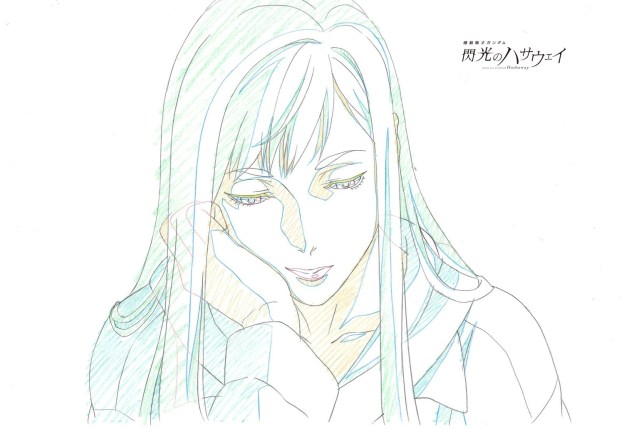
Original interview from Gundam Info published on June 25th 2021, titled: “Exclusive long interview!『Mobile Suit Gundam: Hathaway’s Flash』director Shuko Murase on the ‘broken’ Hathaway and the ‘indecipherable’ Gigi“, original interviewer: Ryota Fujitsu; genga from the official Mobile Suit Gundam: Hathaway’s Flash Twitter account.


— I believe that adapting the 3-volume novel written by Director Yoshiyuki Tomino into a movie trilogy calls for a lot of ingenuity and intuition. In the case of “Mobile Suit Gundam: Hathaway’s Flash” Part 1, the opening features the sound of a ticking clock, and the film ends with a scene where the clock left behind by the protagonist, Hathaway, is in Gigi’s hands, creating the impression that “the time that had stopped started to move again”. 

Actually, the sound of the ticking clock at the beginning was an idea of (Koji) Kasamatsu-san [the movie’s sound director]. To begin with, the clock that Hathaway buys was introduced as a prop to remind Gigi of him as the two eventually drift apart. After learning about this idea, Kasamatsu-san decided to add the ticking clock sound in the opening. When I asked him if that [“creating the impression that the time that had stopped started to move again” t.n.] was his intention with the addition, he confirmed it. Kasamatsu-san wondered if he might have gone a bit overboard with it, but since it was such a great idea, I decided to use it as it was.

— So the cohesive feel of the addition was the result of that kind of exchange. By the way, had you already read the novel, Director Murase?

I read it for the first time after taking on the role of director. Short after the novel was released, I started working on Mobile Suit Gundam F91 [March 1991, Murase worked on the movie as an animation director and key animator] so I was aware of its existence, but I did’t read it at the time.

— What were your thoughts after reading the novel from the director’s perspective? 

(Reading through the novel) I could clearly picture the scenes. It felt as if it was written like a storyboard. Though, of course, the characters’ emotions and thoughts were much more detailed. There were parts where I actually felt that Director Tomino himself had written it with the same mindset he had when writing TV series. For example, early on, characters with names are introduced, but then they never appear again. I think that was probably the result of trying out many different characters and keeping only the ones that seemed interesting or had potential. I intend to follow along with that result in the movies, without changing the story too much. I want to make it clear that characters like Mihessia and Hundley Yeoksam were deliberately shown on camera in the first part,  but their relevance doesn’t go much beyond that. 

— Talking about the movie, the Davao air raid sequence around the midpoint, spanning from midnight to dawn, was truly impressive in many ways. For instance, in terms of the mecha direction, I was impressed by how many shots featured interactions between mobile suits and humans.

For the consecutive battle scenes about halfway through the movie, I explained to the mecha animators that I didn’t want them to depict the mobile suits, but rather to portray the phenomenon of their presence. The mobile suits themselves weren’t the focus of the sequence; instead, the real focus was on the people in the foreground and the reactions happening around them. The presence of mobile suits, which are far bigger in size than humans, involves things like trees being eradicated and falling to the ground, strong wind passing through… That was the kind of phenomenon I wanted to depict. I feel like we were able to somehow bring that out on screen.

Did you place the emphasis there because you thought that you needed to go that far in order to make a mobile suit battle scene interesting?

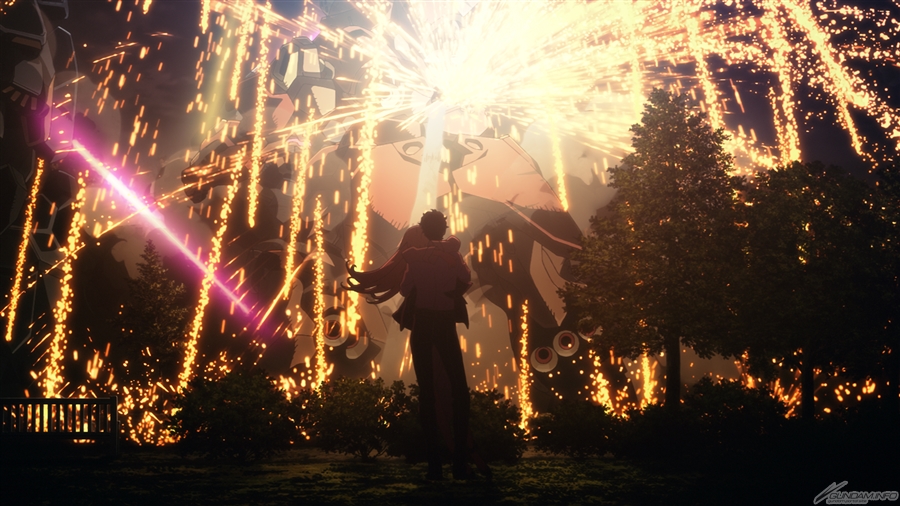
No, it was because that’s how it’s written in the novel itself. The scene of the Gustav Karl landing on the rooftop of a building and then sliding off from there was also staged and arranged just as it was in the novel, and even the fireworks-like sparks flying around when mobile suits clash into one another and beam particles scattering around and damaging the surroundings are all portrayed exactly according to the novel. The previous works up until now hadn’t been able to bring all that to life, so I thought that if we adapted the novel faithfully, it would surely be interesting. After writing Hathaway’s Flash, Director Tomino went on to direct F91, and a similar scene was featured there as well. Coincidentally, I was the one responsible for the animation in that scene. I tried to achieve the same result in F91 but it didn’t work out, so I wanted to make sure to get it right this time. 

— Watching the movie, the way mobile suits like the Gustav Karl or the Messer were staged really gave them a “giant” feel, but personally, I thought the Penelope went beyond that and was portrayed almost like a “kaiju”.

That’s right. I wanted the Penelope to feel monstrous, something completely different from the other mobile suits. The way light flows and moves across the Minovsky Craft Unit of the machine was also influenced by the parts of kaiju that used to have a similar glowing effect when they moved. The novel also mentions the unique flying sound, but I thought it would be better if it left a lingering sensation after it flew away, as if it were moving by some mysterious force, so I opted for that chirping-like sound effect. For the Penelope, I intentionally created shots with poses that emphasized a bird-like image, such as the flight form, rather than the more conventional standing pose.

— On the topic of mobile suits’ advancement, the Gundam universe has a lot of setting constraints, what are your thoughts on that?

That is indeed a crucial point. The Gundam universe is so vast that even if you ask people who could be considered Gundam experts, each one of them would have a different individual tolerance for what is considered acceptable (laughs). That being said, if we don’t decide on some sort of foundation, those things will always be an inconclusive mess. Therefore, this time we decided to be very strict in regard to those aspects. For instance, the fact that communication isn’t possible under Minovsky particle dispersion is something we’ve strictly adhered to. The novel also includes a scene where Kenneth and Lane are unable to communicate, and we’ve made sure to follow that thoroughly. Fortunately, even with such strict adherence to the setting and constraints, there was no need to alter the story, so that was a relief.

— On the drama side, there’s a depiction of Hathaway, who, despite having to reunite with his comrades, finds himself unable to leave Gigi’s side. This development too follows the novel, but bringing it to the screen with a stronger emphasis really drives home the feeling that Hathaway is a character torn between “emotions” and “ideals”.

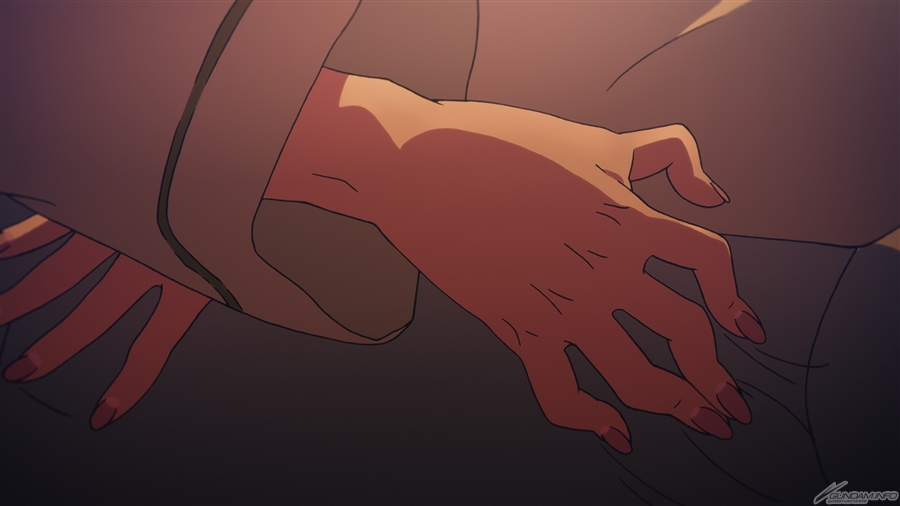
The sequence where Hathaway embraces Gigi while catching a glimpse of his comrade, Emerelda, is a bit chaotic in the novel. By condensing and rearranging it slightly, I believe the meaning of the scene comes across more clearly.

— In terms of adapting this work into a movie, how did you approach Hathaway’s characterization?

Why did Hathaway become Mafty? The novel does provide a reason, but I still find it somewhat unconvincing. Under the name of Mafty, Hathaway carries on Char’s ideal, but why would he embrace the ideology of an opponent he once fought against? The novel just skips over that part, doesn’t it? But I’m sure there must have been another layer to it. I believe that’s the key point of this work. That is the core of Hathaway’s character in the movie. 

— You mean, there must have been a turning point that led Hathaway to become Mafty.

Exactly. On the surface, we’re staying faithful to the novel, but I’m aiming to clarify the meaning and motivations behind Hathaway’s actions, presenting them as part of a coherent guiding principle for his character. As for what exactly happened, we’re going to concretely portray it in the future; the first movie doesn’t touch on it, and even at the recording sessions I didn’t offer any explanations. The only thing I explained was that Hathaway is a “broken person”, someone who “thinks of himself as integral but is, in reality, broken”.

— On the other hand, what about the heroine, Gigi?

Gigi’s a character with a dual natureーshe has an incredibly pure side and yet is also able to perfectly adapt to the adult world. But because there are hardly any people like that, the novel was my only reference, which made it extremely challenging. On the other hand, there was also the difficulty that if I portrayed her exactly as she was in the novel, she would come across as an unpleasant woman. Gigi is a character archetype that often appears in Tomino’s works, but if I portrayed her exactly as she is, I felt like it would make people wonder “why is everyone so drawn to this girl?”. So, I made sure not to have her come across just as an unpleasant woman. I believe she’s probably the kind of person who can get away with saying something unpleasant, not just because she’s beautiful, but because she has a certain charm to her too. In that regard, her design helped out a lot. 

— So Gigi was an even harder character than Hathaway.

That’s right. Director Tomino depicts these type of characters all the time, so it’s probably something he’s fond of. But for me, that’s not the case. However, I chose to portray her including all the sides of her character that I didn’t fully understand, and I believe that’s how the current balance was achieved. If I had made her into something I could fully understand, Gigi wouldn’t have been the person she is (laughs). Adding Ueda Reina-san’s acting to all that, I believe Gigi’s character came together with a great balance. 

— Personally, I found the orange accents in Gigi’s eyes very impactful. 

That was the work of (the character designer) Pablo Uchida-kun. It’s not something you’d typically think of, adding orange highlights like that. He said that it wouldn’t be really noticeable from a distance, but it definitely works well as an accent. It was very effective.

— In the movie, you used the scene where Kenneth rides a horse as a trigger to show the relationship between Quess and Hathaway as depicted in Char’s Counterattack. That scene was placed at the end of the Davao airstrike episode.

When I rewatched Char’s Counterattack in preparation for Hathaway’s Flash, I realized clearly that the moment when Quess rushes toward Char is the true starting point of Hathaway’s Flash. Perhaps one could say that a more concrete starting point would be when Hathaway killed a person on the battlefield, but that scene slightly differs between the movie and the novel versions [Mobile Suit Gundam: Char’s Counterattack — Beltorchika’s Children, 1988], and besides, I believe that was more of a “consequence” than a starting point. I believe that, after all, not being able to stop Quess there was the spark that started it all. For those who haven’t seen Char’s Counterattack, this scene might be confusing, but I felt it was a good addition, even just visually. 

— This is mainly related to the visual aspect, but when Hathaway is recalling his memory of Quess, his face becomes a silhouette and you can’t see his expression. Watching your past works, it seems like you, Director Murase, have a sort of fixation on dark visuals. Could you share the intention behind that?

Perhaps it’s because many of my works tackle that kind of themes. And using dark images is relatively easier. Also, I personally like staging scenes with silhouettes. 

— In this move too there are a few cuts where the ground crew is portrayed as silhouettes. 

There are indeed. When thinking about the balance between the backgrounds and the characters drawings, usually, you would make the characters brighter and keep the backgrounds from standing out too much, but personally I like to make the characters almost fade in and the backgrounds look cleaner. And by staging the scenes with silhouettes, it allows the imagination to expand, so to speak…

— Using dark backgrounds allows for a more effective use of light too, right?

By using light, you can create a sense of depth, or make the viewer feel the space. If you light up everything, the sense of scale disappears. If you depict  giant things like mobile suits as silhouettes and light up just one part of them, it properly conveys their dimension. Even a flat surface gains a sense of distance when light is cast only on certain areas. I made sure to pay close attention to those aspects in my direction. But I also understand the animators’ dissatisfaction when the screen is so dark that you can’t see their drawings and line-arts. In order to draw a clean silhouette, you need to make sure the interior is properly defined as well. The inner lines are still absolutely necessary. So, at first glance, they might look like silhouettes, but if you look closely, you can just barely make out the lines inside—I believe that’s the best balance. In that regard, there wasn’t much room for me to provide precise and detailed guidance this time, but I believe it turned out pretty good in the end. 

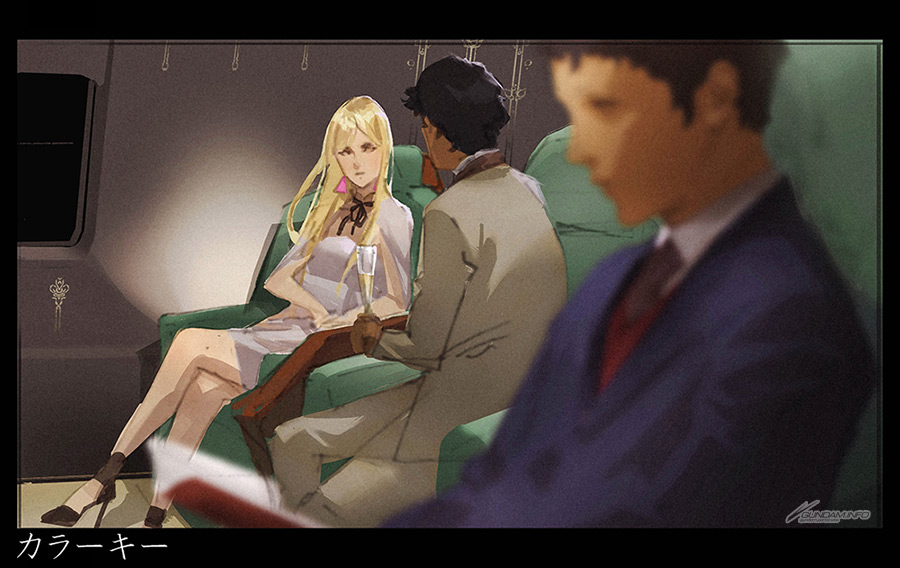
— For the production of this movie, I’ve heard you created color keys [colored illustrations of important cuts from the storyboard to convey the director’s ideas to the various members of the staff] for some of the scenes. What was the purpose behind them?

In anime, even though there’s a general plan and vision, it’s common to create the materials separately—the backgrounds are handled by one team, and the animation by another—and in the end, it’s up to the photography team to pull everything together. As a result, each section can easily become frustrated if the final use of their work doesn’t align with what they envisioned during the process. I figured that if I gave a general sense of direction by providing exact instructions like “I want this scene to look like this, so put a shadow there”, I could solve this problem altogether. 

— Earlier, you mentioned that there wasn’t enough time for you to provide guidance for the final visuals. How do you typically give guidance when you have the chance? Do you write notes, or do you use something like (Adobe) Photoshop to actually compose the screen?

I used to use Photoshop, but while working on Genocidal Organ [虐殺器官 (Gyakusatsu Kikan), 2017] I switched to (Adobe) After Effects. I usually show how I want things like perspectives, incident light, and subtle lighting effects to be handled.

— Do you end up handling the photography [combining materials such as background art, cels, and CG elements into a single piece of footage, while also adding elements like camera work and lighting effects; also referred to as “compositing”] yourself?

The final compositing is completely different. By adjusting the separately crafted materials during the photography phase, the level of completion of the images changes a lot. Unfortunately, I couldn’t do that this time, but I did manage it in key moments, such as the teaser with Hathaway sitting on the beach, the sequence we were talking about earlier where he recalls Quess, and the final shots of Hathaway walking on the ship’s deck. In previous projects, I even joked about working on them just for the fun on the final compositing (laughs). So, it’s actually a very important process that I want to focus on, but since it’s the last step, we often find ourselves racing against the schedule.

— When did you first realize how enjoyable and fun the photography process is?

I guess it was after I became a director… When I was working on Witch Hunter ROBIN [2002], it was a TV production so I didn’t have much leeway to make major adjustments, but when I directed the final episode, I managed to do some compositing arrangements (compiling materials together). From that time on, whenever I direct episodes, I often handle the compositing arrangement work as well. There were also times when I handled it for all the cuts. 

— In this movie, there are many three-dimensional camera movements; did you find it difficult to convey certain ideas through traditional, hand-drawn 2D storyboards?

I did. We used video-storyboards (v-boards) this time, but v-boards themselves are 2D as well. I believe there are many scenes that might make viewers think they’re in 3D, but they’re actually 2D. Many things can be made to appear three-dimensional through camera work and the sliding of 2D materials. One good thing about v-boards in that I can convey the speed and timing of the camerawork myself, but tn the actual production process, we had no choice but to create paper storyboards at some point, and I thought there were various challenges in coordinating and connecting the two.

— Did you create the v-boards using some storyboarding software?

No, I used After Effects. I tried using specialized software too, but personally, I’m more familiar with After Effects so I prefer sticking with that.

— Looking back at Part 1, what do you think went especially well, Director Murase?

I’d say the overall balance. At first, I was concerned that it might drag on a bit. Even though I tried to cut and tighten it as much as possible, the first half still feels a little sluggish. However, when I look at the total picture, it didn’t feel that long, and with the battles scenes added in there was a good sense of pacing, so I was relieved. A big part of that is thanks to the sound team’s direction. Also, when it comes to “pauses” in the dialogues, I think the influence of Tomino-lines in the novel played a big role (laughs). Up until now, in dialogue scenes I would carefully structure the timing so that the characters make sure to listen to the others’ words before responding. But Tomino-san’s style is more like a rapid-fire back-and-forth (laughs). Keeping that in mind, I didn’t focus on my usual timing this time. There are very few pauses this way, but that might have helped making the dialogues feel more connected. Though, I’m sure it must have been somewhat uncomfortable for Director Tomino to have his own lines directed by someone else (laughs).

— The second part seems like it will have even more intense battle scenes compared to the first part…

When depicting battle scenes on a brighter screen, things that we could previously conceal in the darkness can no longer be hidden. The challenge lies in how to elevate those elements. As for Part 1, it may have ultimately been a technical blessing that the battles were set at night.

Cardcaptor Sakura – A Storyboard Journey

In the past few weeks I’ve been making my way through the 1998 anime series Cardcaptor Sakura, which I know very well needs no introduction. I initially meant it as nothing more than a “personal” watch, just a show I wanted to watch for myself and by myself, without necessarily writing anything about it.
Well, that original intention lasted for a whopping 16 episodes out of the total 70, when the storyboard and direction for episode 16, “Sakura and the Rainbow of Memories“, completely caught me off guard with their nuanced and expressive visual approach. That alone was already enough to ignite my writing fuels, but as the credits started rolling and his name popped up, I totally couldn’t help but put together a (somewhat messy) thread about it on Twitter. The person I’m referring to is, of course, director Mamoru Kanbe (神戸 守), whose name should sound very familiar to those who have come across this blog in the past few months.

To my surpriseーwhich was mostly due to my bad habit of never doing my research before watching something newー I learned that he was involved in multiple episodes of Sakura as the storyboard artist and episode director. Throughout my watch, I ended up writing and posting a handful of threads on the (then) bird app about some of the episodes directed and boarded by Kanbe, as well as an artist whose name was new to me, Shigehito Takayanagi (高柳 滋仁).
My intention with this post, then, is to compile all of those rather short write-ups into a single, more substantial and consistent piece, along the lines of my “Episode Notes” series of posts. The primary focus will be the storyboard and direction of each episode, all in the hope of providing some interesting insights on the techniques used to achieve the distinctively captivating visual presentation at play.


Episode 16 – さくらと思い出の虹: Sakura and the Rainbow of Memories

As hinted at before, episode 16 was the first one to actually make me invested in its visual language beyond the pure personal enjoyment I started watching the series for. Despite not being the first episode of the show directed and storyboarded by Mamoru Kanbehe worked on episodes 5, 9 and 12 before this oneー it definitely was the first one where I recognized his style and approach, or to better put it, the first episode whose visual presentation really grabbed my attention to the point that finding out Kanbe was the man behind it didn’t feel all that surprising.

I absolutely love it when anime (and visual media in general) make purposeful use of their many visual elements to subtly embed meaning into their shots and frames, effectively realizing their full expressive potential. This kind of approach to tell purely on a visual basis enhances the viewer’s experience from something passive to an active engagement, and Kanbe has proven to be truly a master of this style.

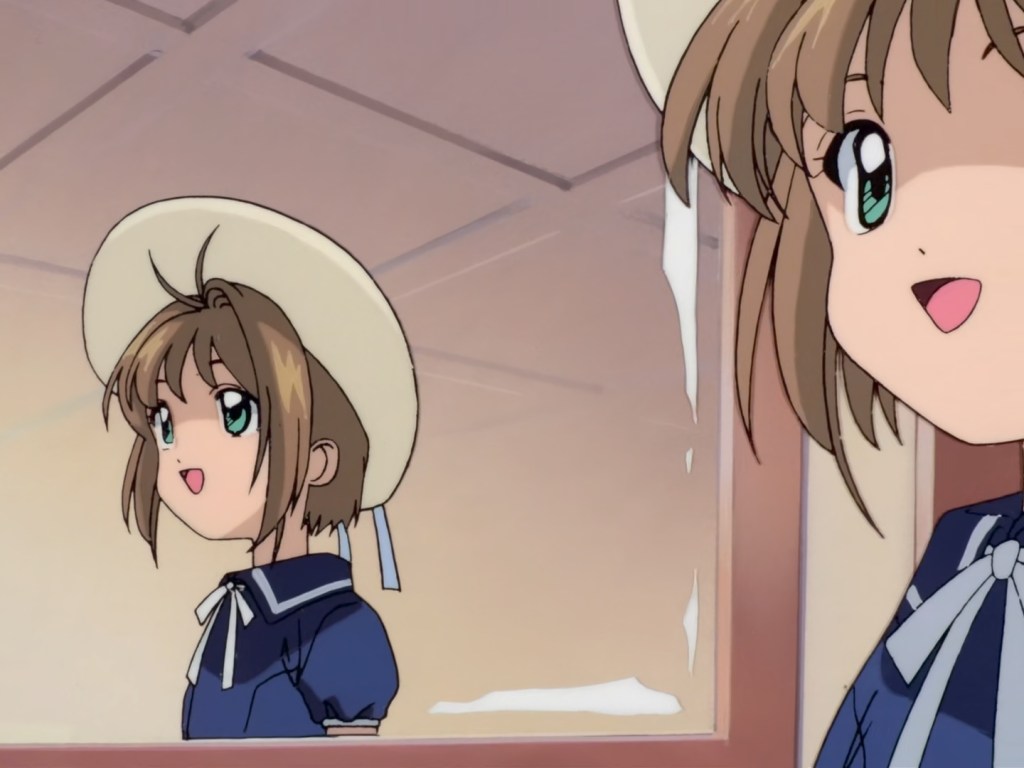
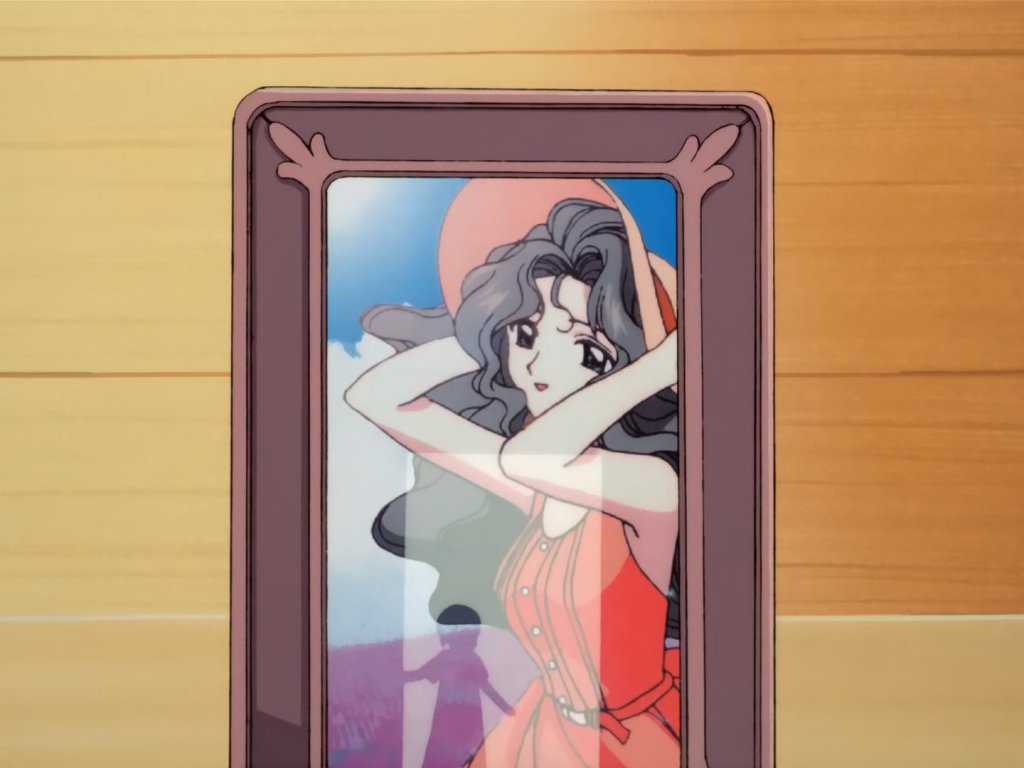
In Cardcaptor Sakura episode 16, elements like the reflections on mirrors and glossy surfaces hint at “reality” parallel to the one being presented through the dialogues and script, providing many visual cues throughout its runtime regarding a certain existing connection between Sakura and the seemingly unrelated vacation house she’s visiting every day. The deliberate placement and focus on Nadeshiko, Sakura‘s mother’s portrait photo, also plays an important role in suggesting the context behind this connection; as ultimately unveiled at the end of the episode, the house was in fact deeply connected to Sakura, belonging to Nadeshiko‘s grandfather, her great-grandfather she’d never met before.

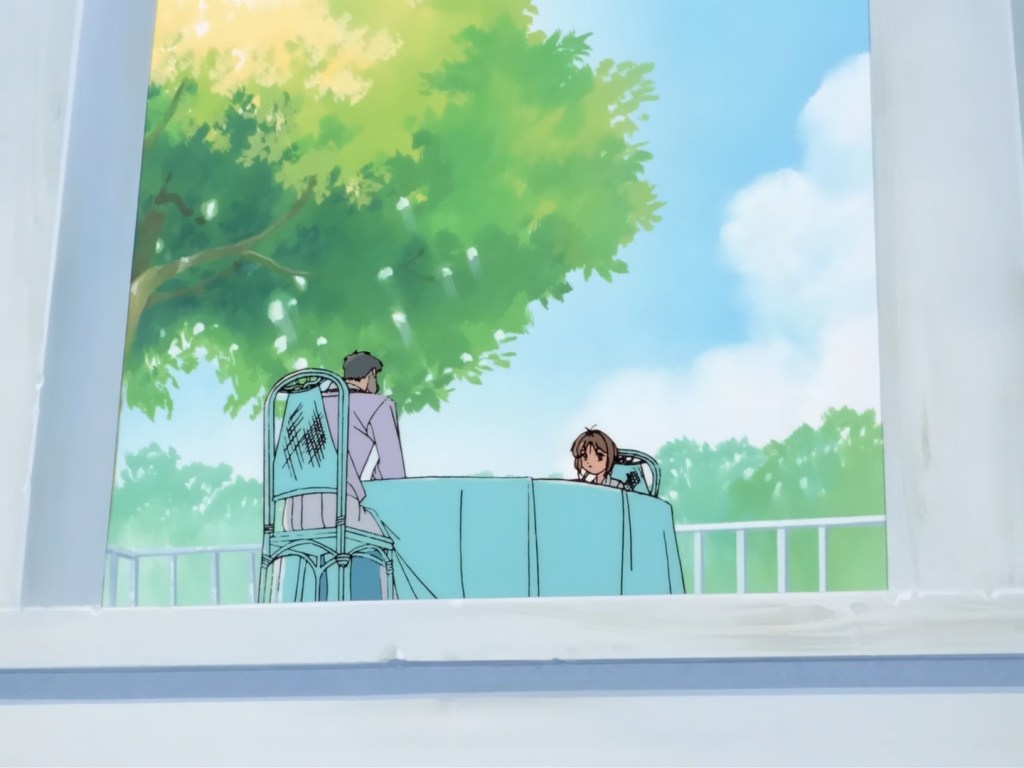
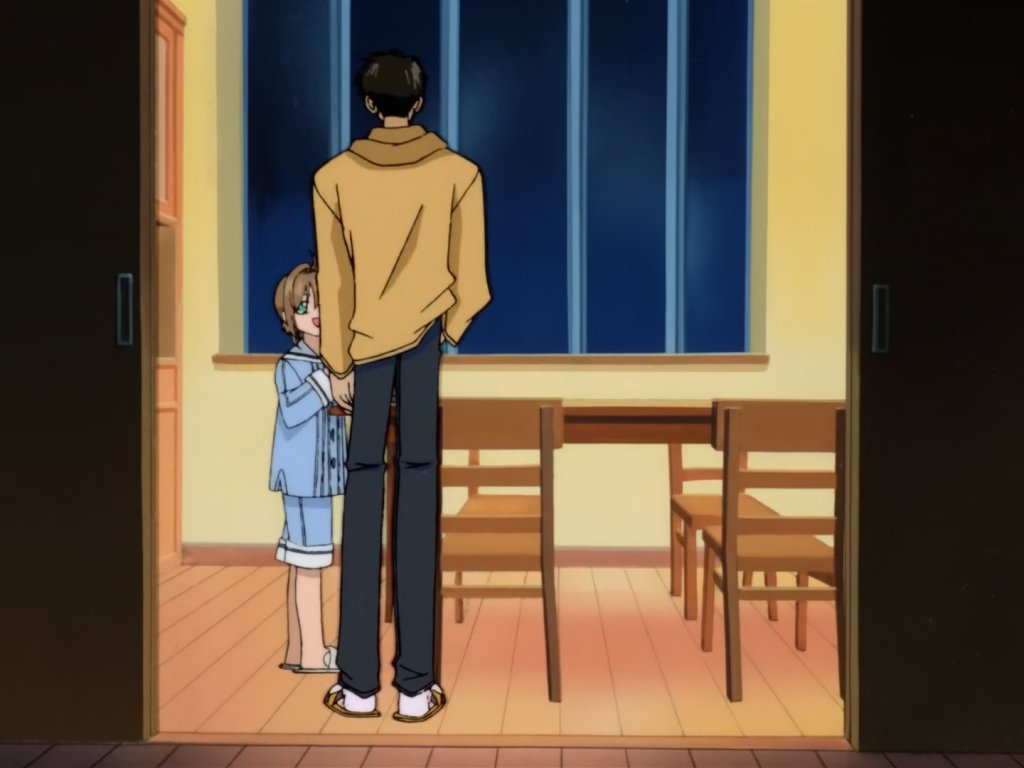
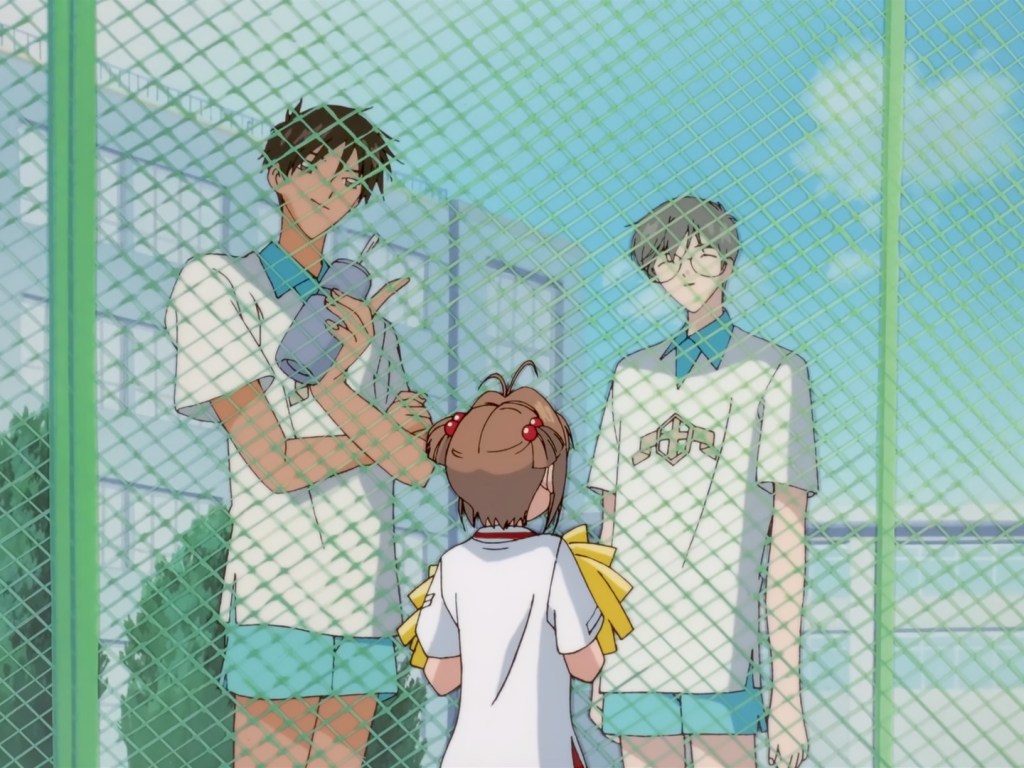
Another element that feels very familiar, especially coming from Kanbe‘s work on Shoushimin Series, is the expressive use of framing and foreground smacking to envelop the characters within the environment around them. In this case, Sakura being enclosed by the terrace’s fences suggests a stronger significance being attributed to her presence at the vacation house, as though the location inherently suits her despite this being her first visit to the place. Additionally, this also serves as a device to place further emphasis on the importance of the setting within the episode’s narrative.
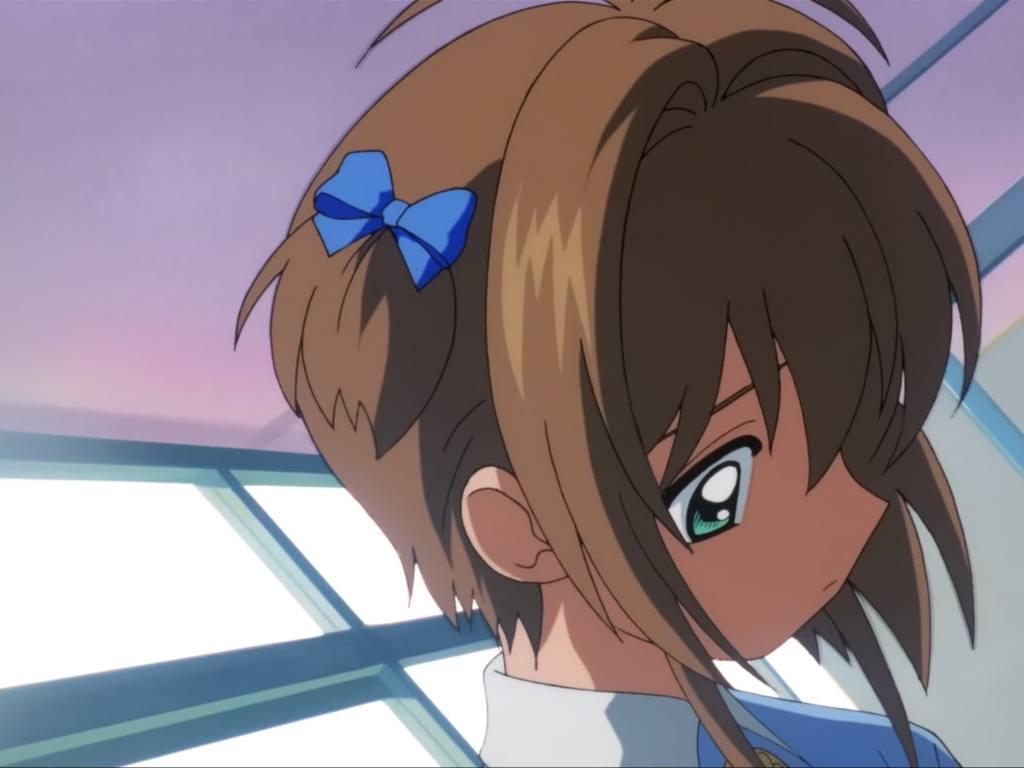
It was quite the welcome surprise to learn that this suite of techniques has long been an integral part of Mamoru Kanbe‘s style and repertoire since the early days of his directorial career ーa discovery I certainly didn’t expect to make thanks to my clueless first watch of Cardcaptor Sakura.


Episode 33 – さくらのさむーいアイススケート: Sakura’s Freezing Ice Skating

The next episode to have caught my attention was episode 33, featuring once again Mamoru Kanbe in the director’s seat. This episode as well is filled with the same familiar visual quirks already presented in the previous section, this time carefully adapted to fit the context and narrative of the new self-contained story.

The icy setting, highlighted since the very first few sequences, allowed for an extensive and substantial use of reflections as the main visual theme of the episode throughout its 25-minutes runtime, primarily in Part B. As it’s common in Kanbe‘s episodes though, the story’s key elements are briefly and subtly introduced at the very beginning, and only later developed upon as the story progresses. Visual elements are not exception to this: one of the first things to meet our eyes as the episode starts is in fact Li‘s reflection on the ice slate outside of the school’s gate.

Unlike with episode 16, this time there isn’t much hinted meaning or subtle nuance attributed to use of reflections ーrather, they’re simply utilized as a recurring visual theme that also plays a significant role in the action choreography.

I also couldn’t help but notice (and appreciate) the peculiar and distinctive shot compositions deployed all throughout the episode; whether it’s the juxtaposition of the characters’ cels with the foreground or the background elements, or the unusual and, to some degree, eccentric camera angles that make the scenes so eye-catching, they always really stand out to me and in Cardcaptor Sakura‘s case somewhat gave away Kanbe‘s involvement in the episode even before I could read his name in the credits.

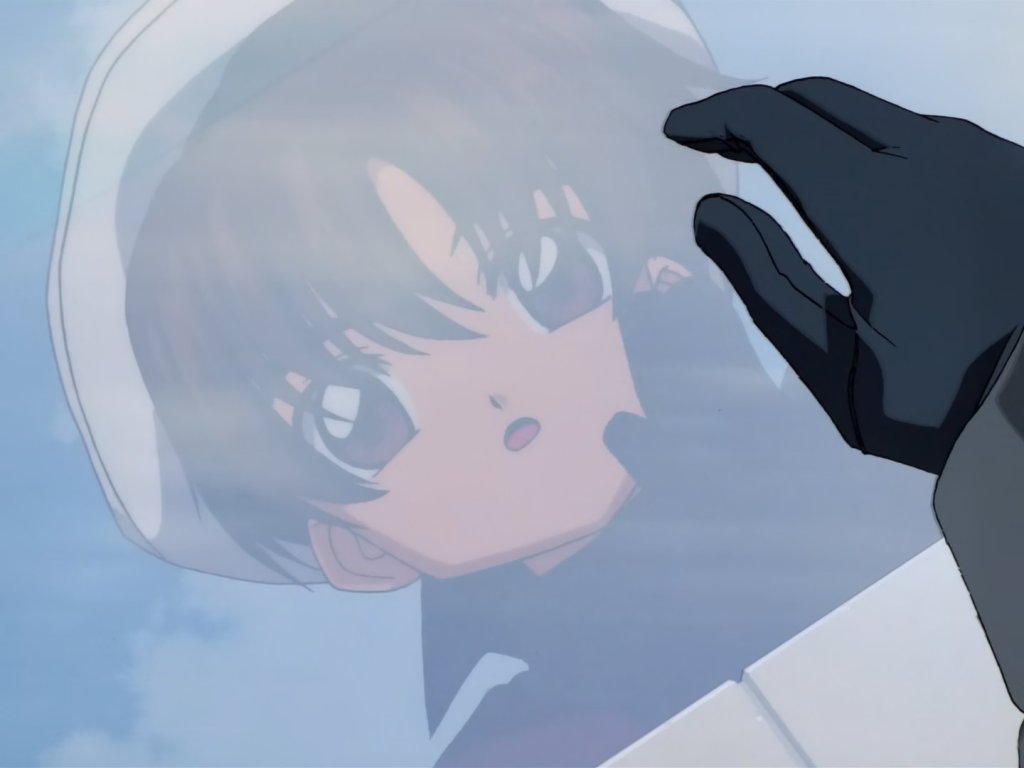
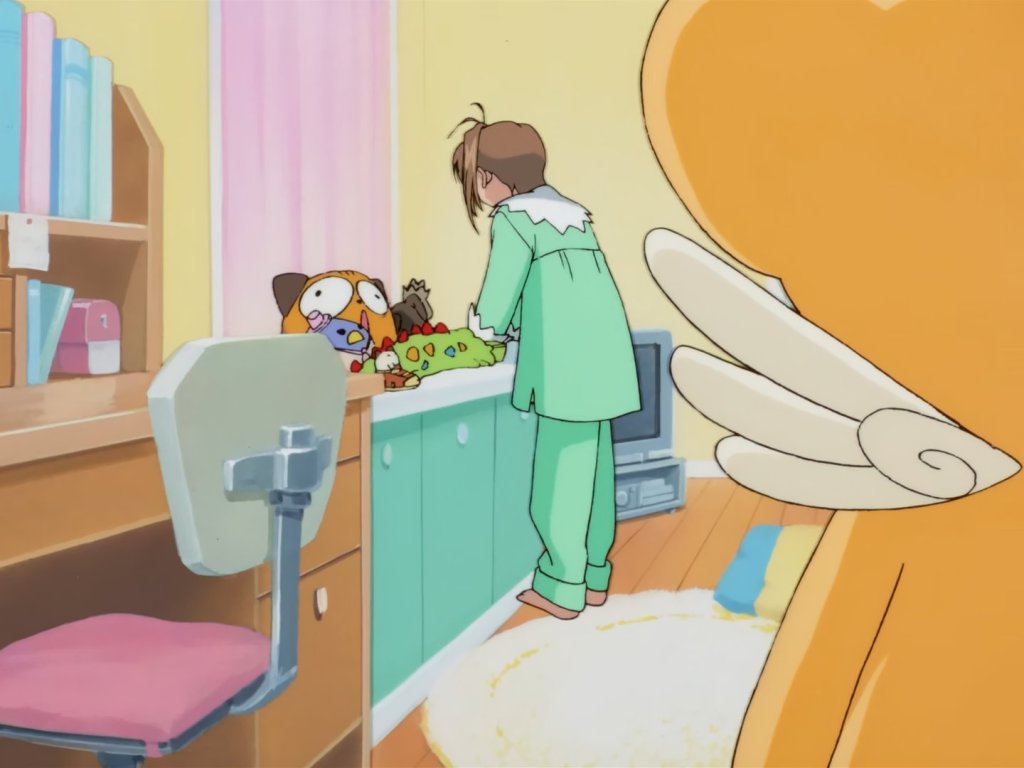
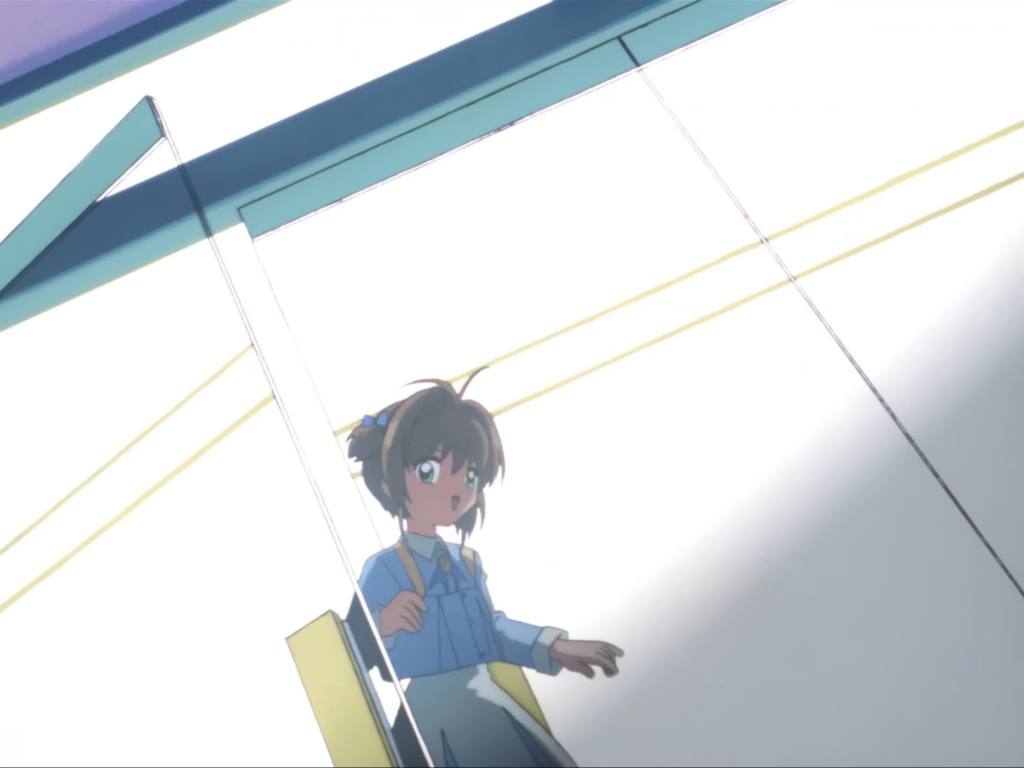
Lastly, there was a shot in particular that I found extremely clever and reminiscent of Kanbe‘s ability to unmistakably convey something to the audience without using a single line of dialogue. Without the need for words, this seemingly unremarkable cut in the beginning phases of the episode clearly foreshadows how Kero-chan won’t play any role in helping Sakura out this time, by physically dividing the two with the window’s glass and using a high camera angle to further increase the distance between them.

It’s subtle details like this that have the biggest impact on how the presentation of an episode is perceived, making even the simplest scenes not only more visually compelling to the viewer but also properly meaningful and worth paying active attention to.


Episode 37 – さくらと消えた知世の声: Sakura and Tomoyo’s Lost Voice

Episode 37, which is the first one directed and boarded by Mamoru Kanbe in the second half of the show, features a familiar yet experimental-feeling approach that introduces some new interesting photography techniques in its vocabulary.

As already hinted at before, it’s customary in Kanbe‘s episodes to have the opening sequence serving as a container for the whole episode, introducing the key elements to both the episode’s “mystery” and visual approach. In this instance, the sakura tree as the former and the shift in camera focus as the latter.

One of the “experimental” photography quirks I mentioned in the first paragraph is indeed the focus pull, here used to create a sense of anticipation in the scenes. While it’s nothing truly remarkable on its own, the extensive use of this visual effect throughout the episode is a declaration of intents on Kanbe‘s part, audibly hinting at his will to experiment with this trope for this episode’s direction, resulting in a very fresh-feeling presentation.

The vignette is the other yet unexplored photography effect that plays a prominent role in this episode’s visual language. Creating a stark contrast in lighting between different zones of the frames is a trick deployed to highlight and remark the ominous and oppressive atmosphere of the many scenes it’s featured in, especially when used in combination with uniform and continuous camera movements such as horizontal pannings.

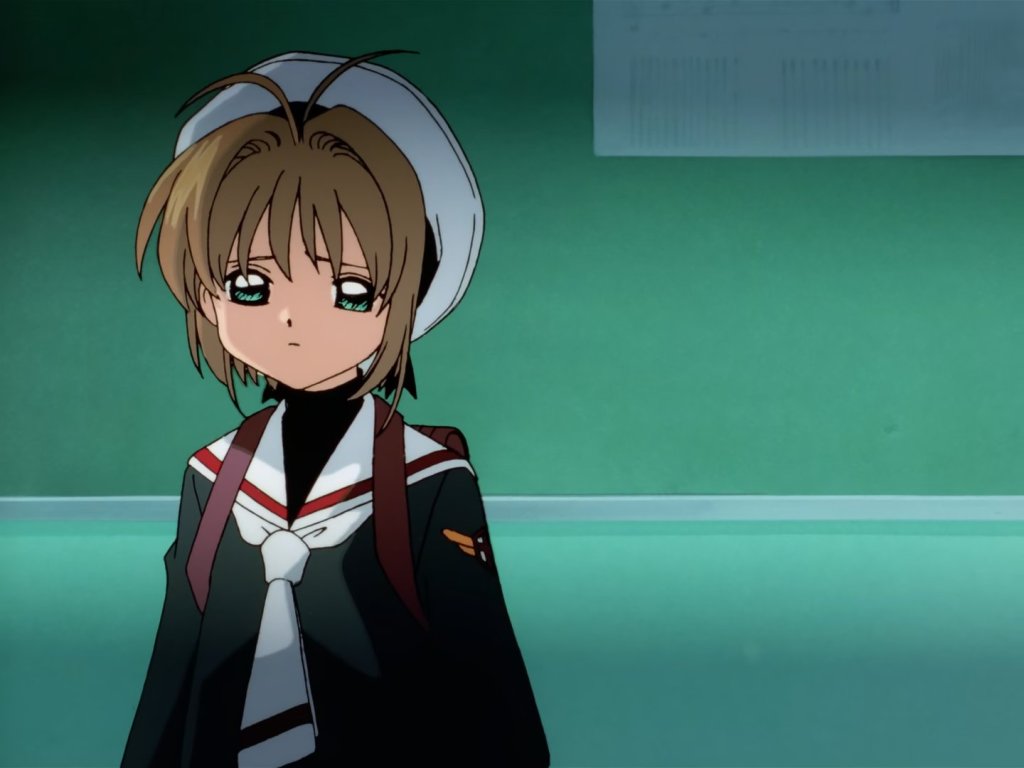
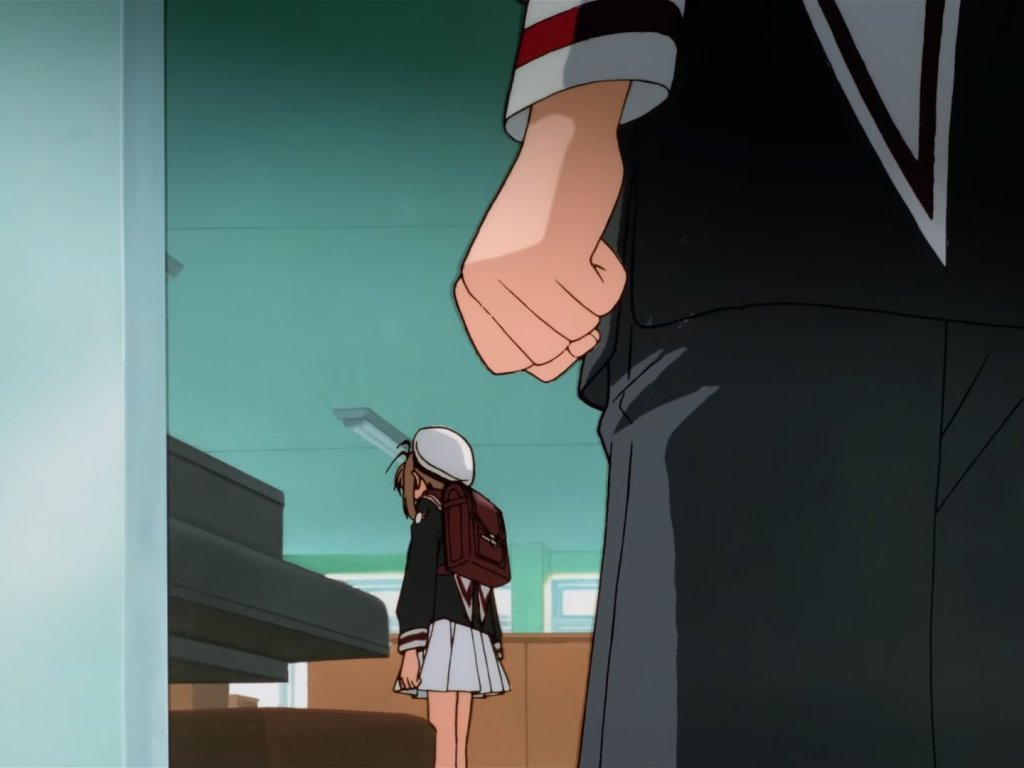
As expected in a Mamoru Kanbe directed episode, the layouts and camera angles do a particularly great job at isolating the characters in the frames, a job especially important in an immersion-focused episode such as this one, where even the minimal use of the soundtracks is designed to maximize the eeriness of the scenes.

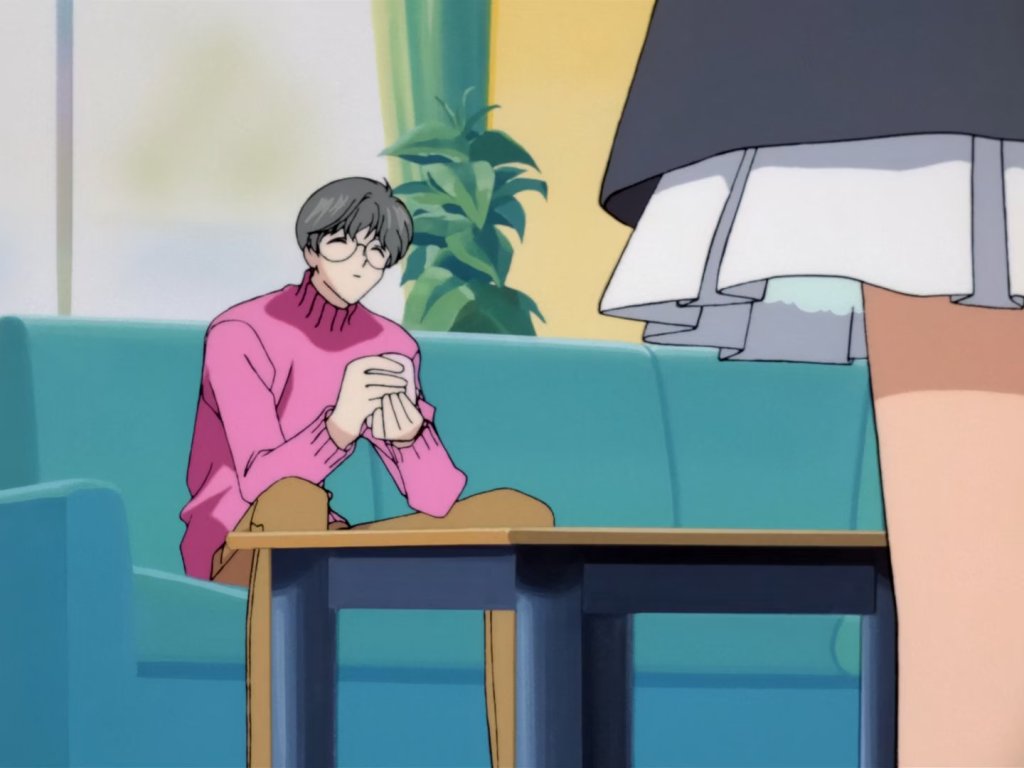
Another extremely familiar technique in Kanbe‘s repertoire, that was also prominently featured in the recent work of his I mentioned at the beginning of this article, Shoushimin Series, and that I’m always looking out for when watching episodes or shows with his name in the credits, is visually grouping the characters via a clever positioning of their cels in relation to the background or foreground elements, implying a remarked sense of distinction and separation between them. Needless to say, Cardcaptor Sakura episode 37 excels at this, using elements like fences and window frames in the background to partition the shots into smaller portions, each assigned to a particular character, or group thereof, to logically divide or separate them.


Episode 40 – さくらと夢の中のさくら: Sakura and the Sakura from the Dream

As Mamoru Kanbe‘s presence in the production of this show grew less and less frequent to then completely disappear by the time the Sakura Card story arc entered its initial phases, another director by the name of Shigehito Takayanagi caught my attention thanks to his methodical approach to direction, full of precise and distinct recurring traits.
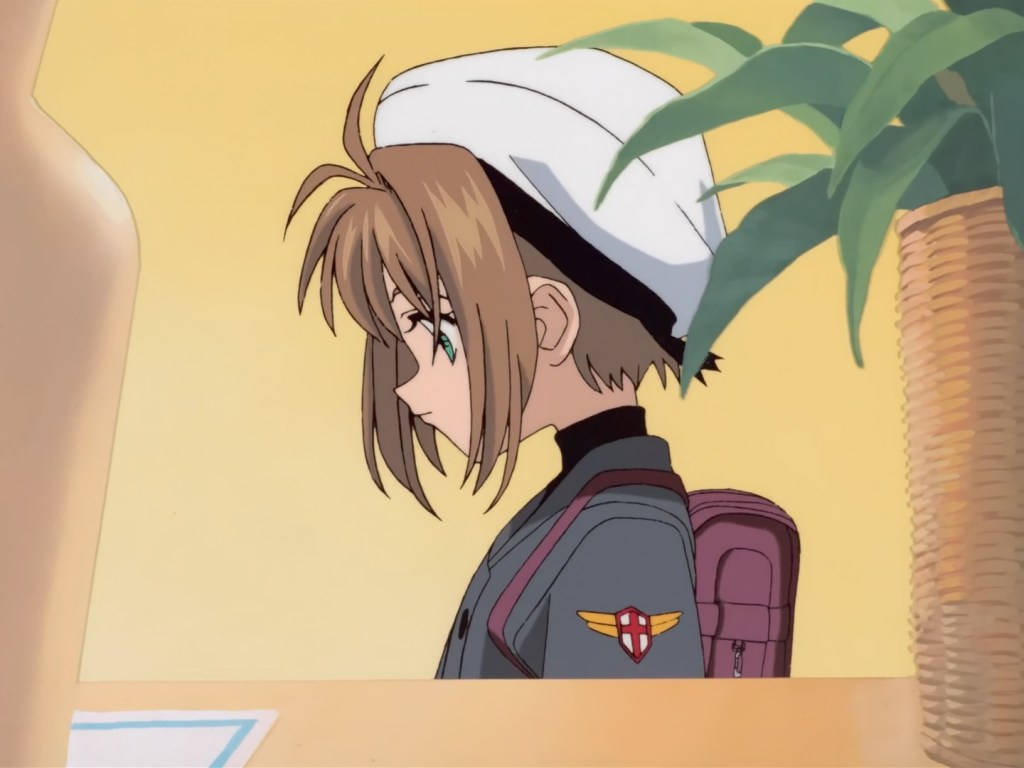
Episode 40, the first one being directed and boarder by Takayangi, has surely left a long lasting impression on me to the point I feel confident in saying it’s distinctly one of my favorites in the entire series.

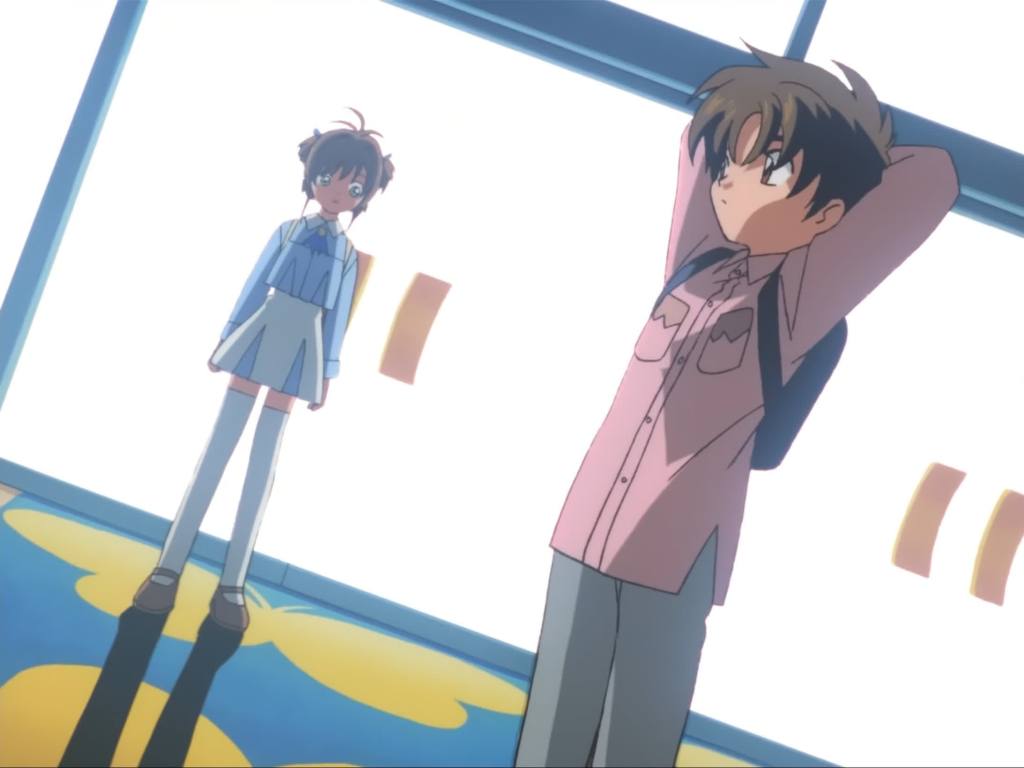
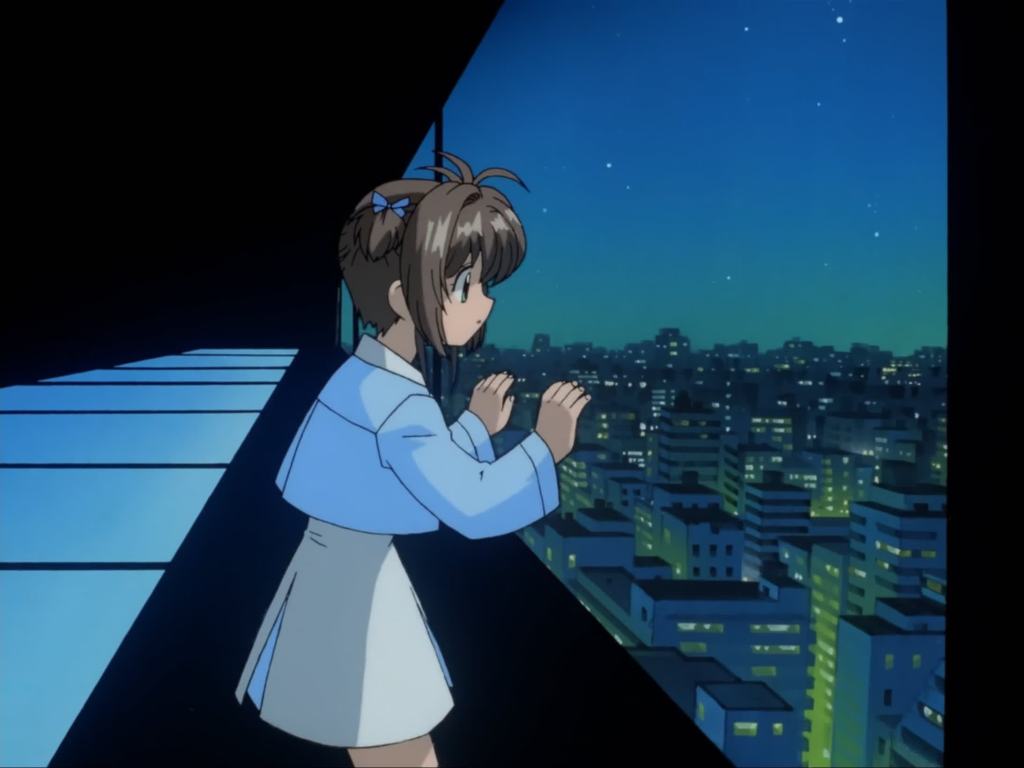
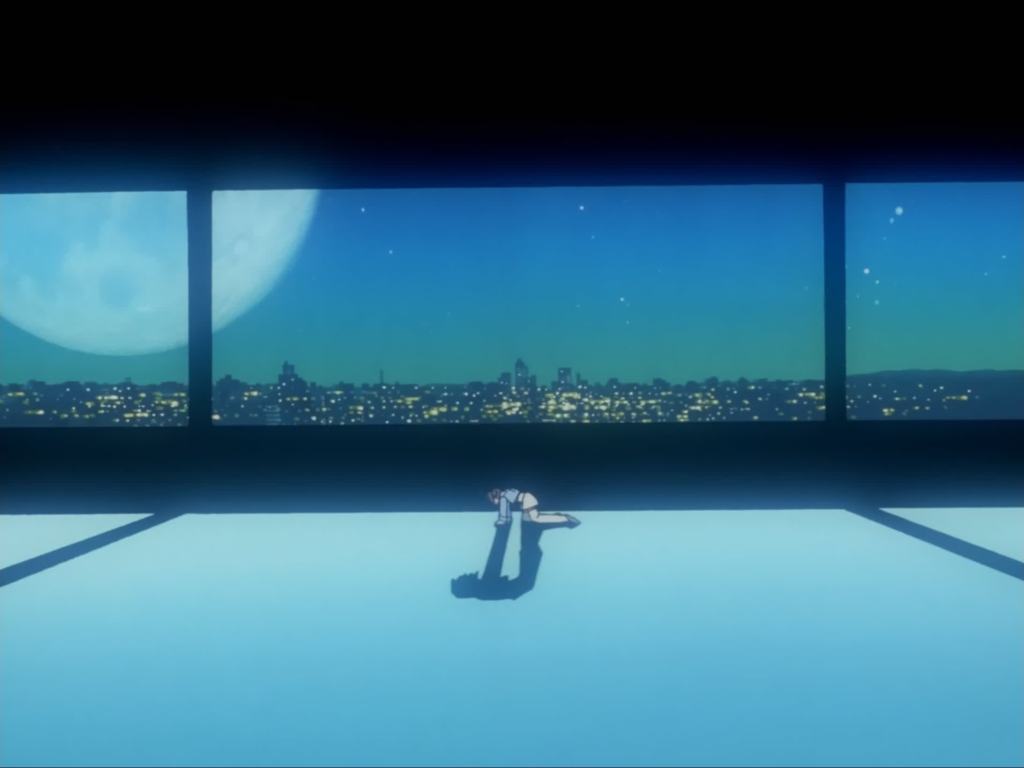
The episode revolved around the concepts of dreams and omens, and was certainly backed up by a strong vision paired with an outstanding execution. While it was great all throughout, coming after a whole first half worth of set up, B Part in particular stood out to me in its stunningly oneiric presentation of Sakura‘s dream sequence, one of the best I’ve seen in recent memory. The second half of the episode was almost entirely shot using dutch angles, in such a tasteful way that didn’t end up feeling overwhelming or forced at all. As we’ll see in the next episode too, this methodical use of well-established filming techniques is core to Takayanagi‘s style and directorial language ーthe textbook use of dutch angles being the most evident and noticeable one.

During this sequence, the thorough sound design played its part too, mainly featuring high-pitched and dissonant tones to remarked the ever increasing tension throughout the scenes.

The setting too greatly contributed in depicting the eeriness of the whole sequence; the transparent glass doors and walls allowed for the extremely bright and indeterminate backgrounds to shine through, reinforcing the dreamlike and otherworldly appearance of the location, almost as if they were trapping Sakura and the others in a place completely detached from reality.

Another visual element I especially liked was the use of negative space towards the end of the sequence, isolating Sakura in the frames and effectively “erasing” the space around her with a very deliberate palette choice, featuring black as its the predominant color, in complete contrast with the previous scenes. This choice not only enhances the presentation of the sequence but also carries a narrative meaning, since the space around Sakura starts blacking out as she slowly realizes she’s being held captive inside of a dream.

Playing around with perspectives was one last trick deployed in the final moments of the episode in order to effectively upgrade the “space”‘s role to a proactive one in the visuals, also featuring some pretty ambitious rotation cuts as well.

This exhaustive control over every aspect of the visuals ーeach element being carefully designed to specifically fulfill the task of conveying a distinct set of emotionsー served as a great presentation of Shigehito Takayanagi‘s qualities as a director, unmistakably outlining his distinctly holistic and systematic approach.


Episode 57 – さくらと小狼とエレベーター: Sakura, Syaoran, and the Elevator

The last episode on this list is episode 57, this time too unsurprisingly crafted by the meticulous hand of Shigehito Takayanagi. If Mamoru Kanbe was the director whose endeavors grabbed my attention the most throughout the first half of the show, Takayanagi definitely became the standout in the second half, to the point I could effortlessly infer his involvement midway through the episodes. It doesn’t boil down to particularly effective observation skills on my part, though; rather, I’d say it was all mostly thanks to the very distinctive and recognizable approach on his end.

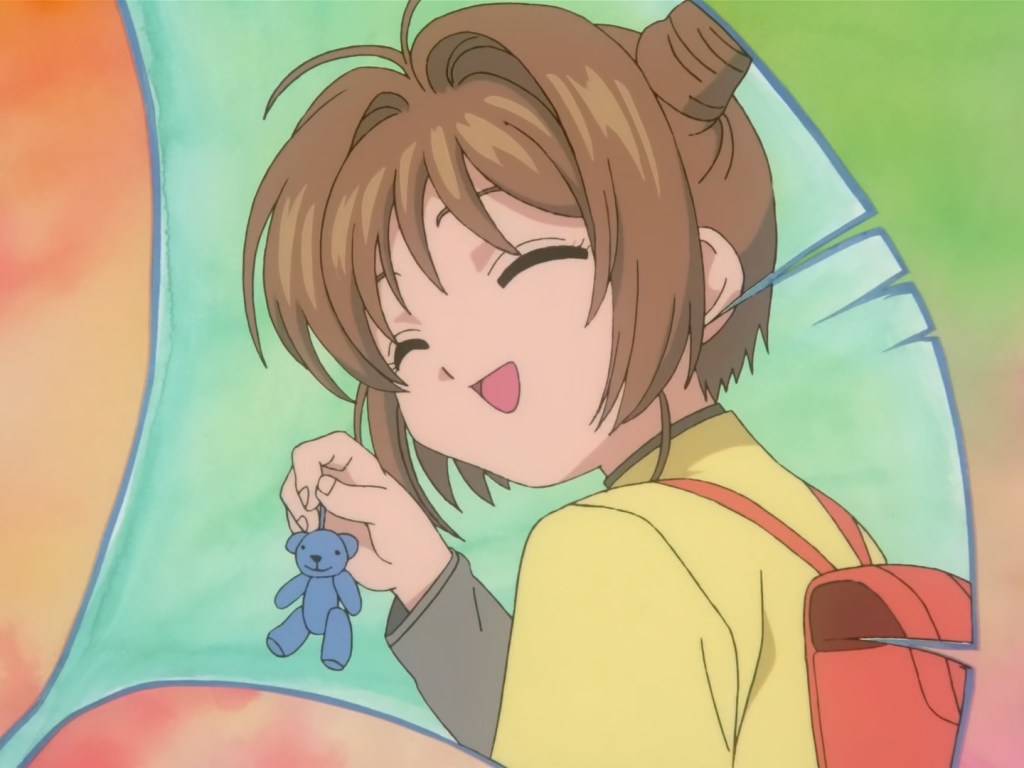
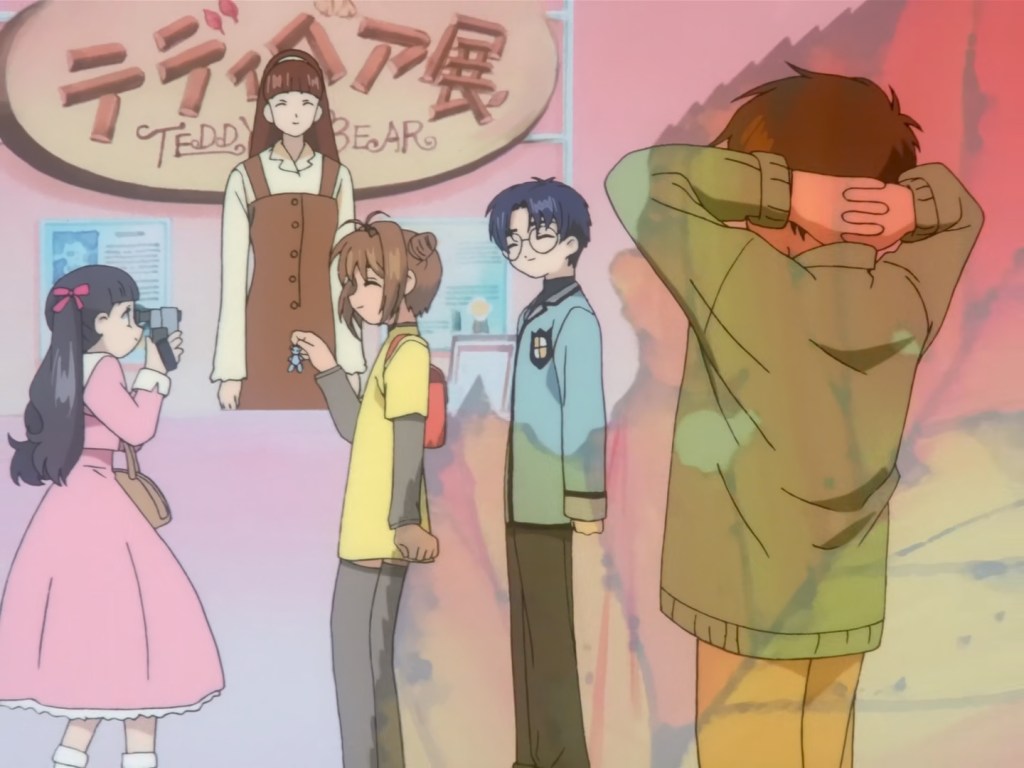
What caught my eye first in this episode was the very simple and straightforward yet effective visual symbolisms at play during the teddy-bear-event montage in B Part, focusing on Syaoran‘s acceptance of his feelings for Sakura.
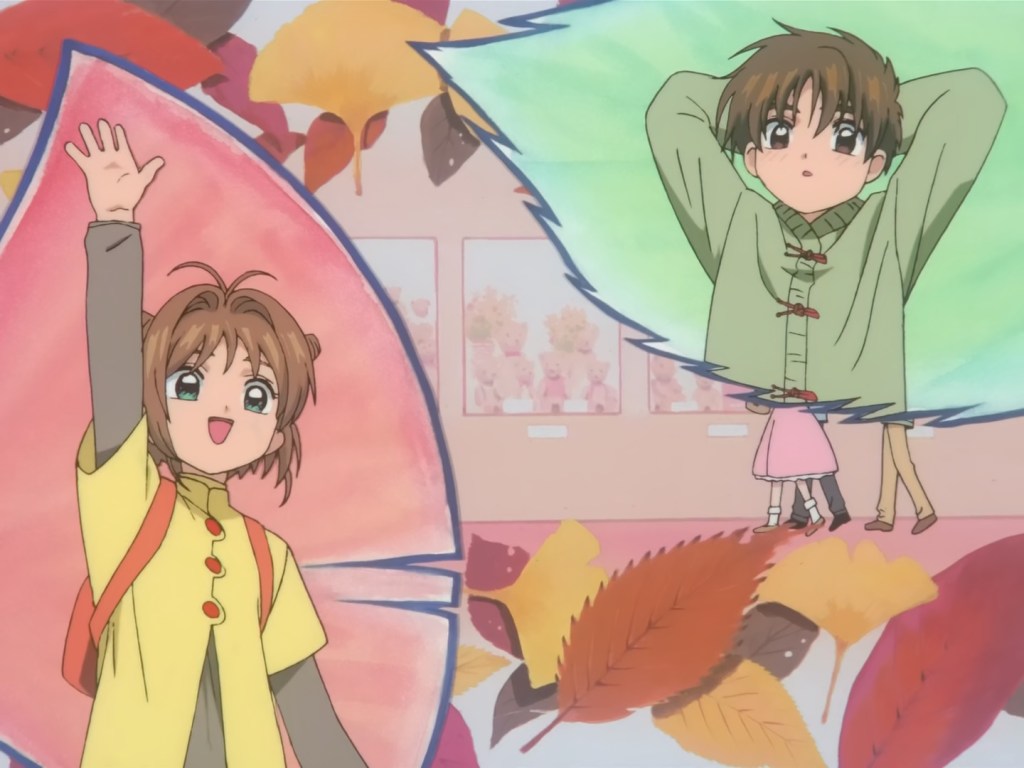
Dry leaves are obviously the main visual theme of the whole sequence, but while Syaoran is always framed within or in relation to a plain, “regular” leaf, Sakura is instead represented by a more unique-looking and distinctively pretty Ginkgo leaf, strongly suggesting how she is the one who stands out in his eyes.

These by-the-book tricks Takayanagi deploys throughout his episodes, as hinted at earlier, are an integral part that defines his style. What makes them stand out is the designed effectiveness they gain under Takayanagi‘s comprehensive direction; even the more straightforward techniques like these can result in a strong and compelling presentation if realized with the due attention to details and an exhaustive and careful control over every audio-visual element, like composition, colors, transitions, rhythm, and soundtracks.

In some instances, the image of the “normal” dry leaf overlaps and envelops Li‘s entire figure in the frame, effectively isolating him from the other characters on the screen, perhaps to reinforce how this montage ーwhich, by the way, is not the first one featured in a Takayanagi episodeー is all about his personal feelings towards Sakura.

Using the interactions between the two distinct type of leaves, as they make ripples on the water or as the consecutive images of Sakura make Li‘s last bit of defiance towards the acceptance of his own feelings tremble at the mere sight of them, to describe the concrete interactions between the actual characters during their visit at the event was another really impactful and tender idea, expanding on the otherwise unadorned symbolism.

That of the dry leaves is not a theme introduced only in the second half of the episode though; reminiscent of Kanbe‘s habit, that key element is present since the very beginning, with the fragmented sequence slowly following the brown leaf as it floats on the pond until it reaches Syaoran‘s reflection on the water playing throughout the entirety of A Part.

As the events of the episode unfold and get closer to the end, we are yet again grated with a very extensive and appropriate use of dutch angles, time time as well paired with an appropriate soundtrack choice to unmistakably denote the impending threat of a sinister event. Another of Shigehito Takayanagi‘s methodical touches, once again executed with the utmost care and meticulousness.

As a closing note, I have to say I really enjoyed the commitment to present all of the events in this episode solely from Li‘s POV. Episode 57 was also possibly the first one (or at the very least, the first self-contained story) to not include any sequence of Sakura summoning a card or performing a spell at all.


This concludes our little journey through the episodes of the 90s classic Cardcaptor Sakura, which was really just a compilation ーthough not without a few substantial additions here and thereー of the otherwise unorganized thoughts and write-ups I produced while watching the series for the first time. I hope this piece provided you, dear reader, with some interesting insights on the direction of this timeless show, or at least entertained you throughout your reading. Until next time~


Support Shinseiki on Ko-fi